Serving Columbus, GA & nearby
(706) 205-1352
Columbus, GA

When the Power Goes Out, Your Opener Is the Weak Link

Most Columbus homes were built between 1972 and 2011, and a lot of those openers are original. Here's what breaks first when the power drops and why.

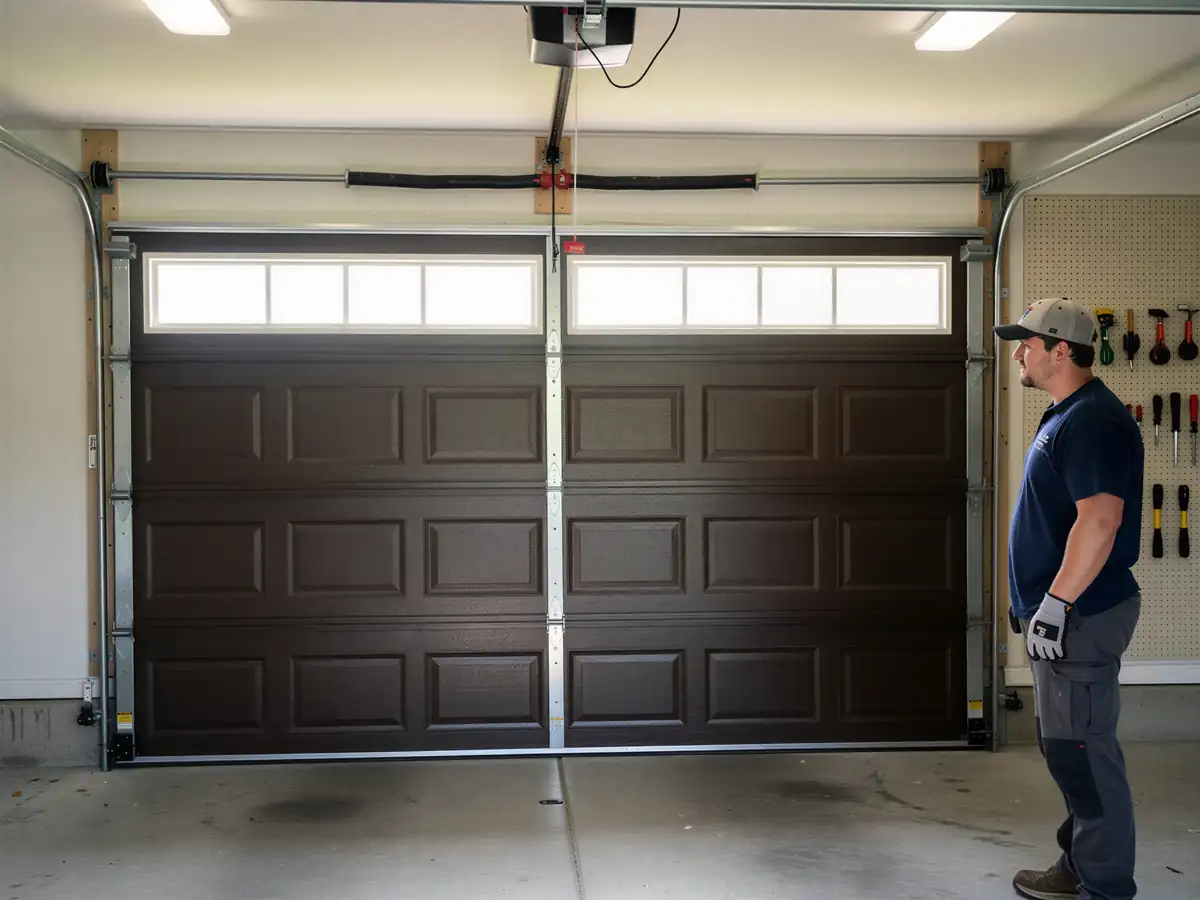
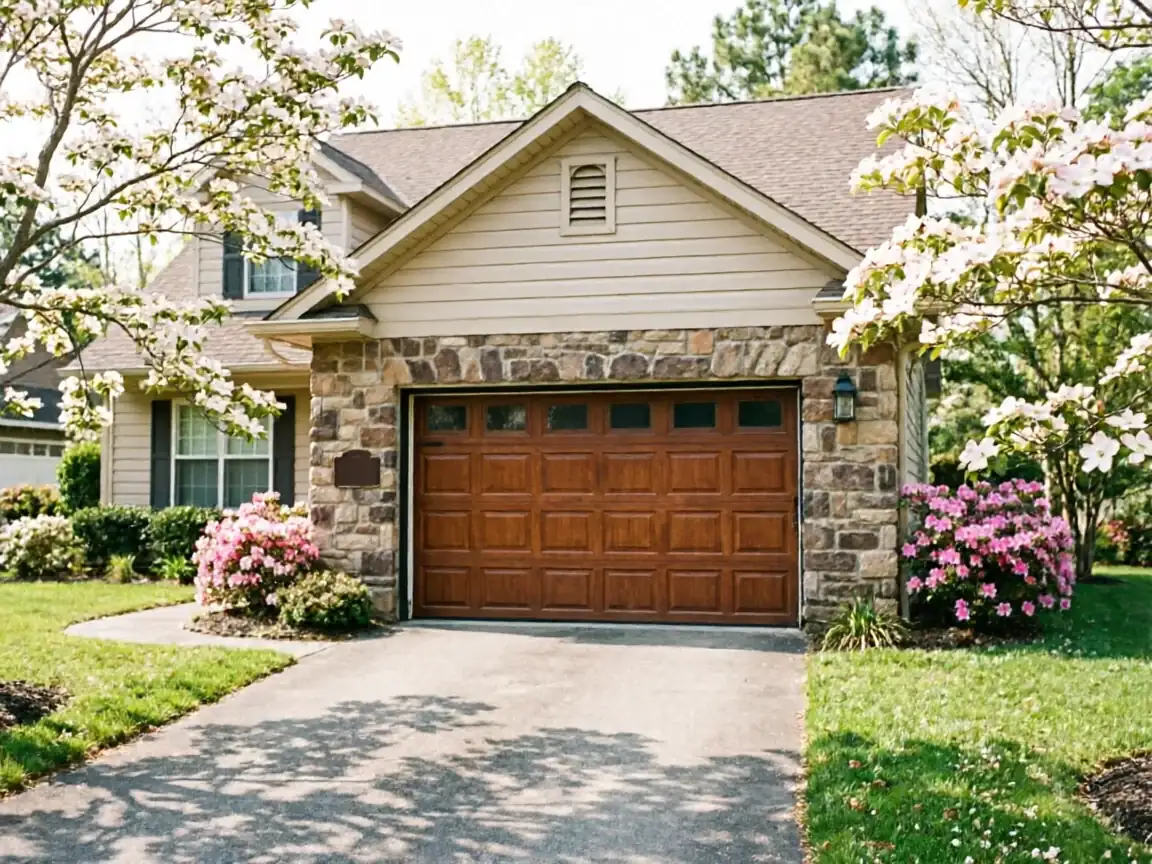
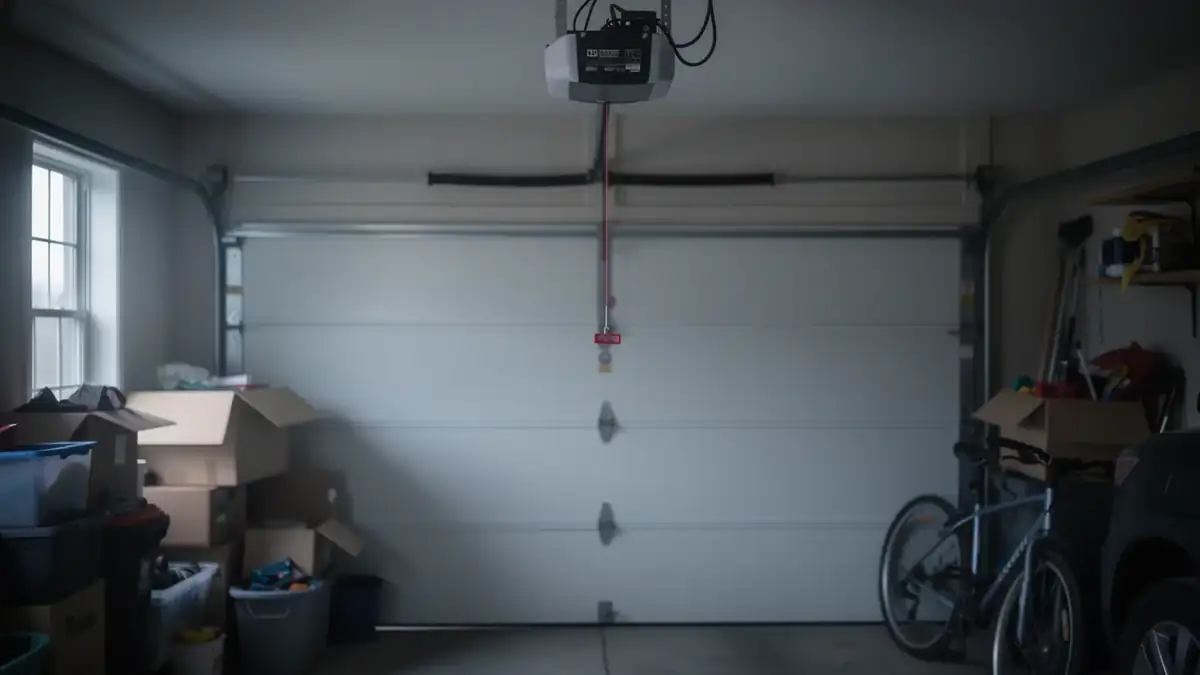
The garage door is closed, with an opener and torsion springs visible above it.

What Most People Get Wrong

The biggest mistake we see around here is homeowners assuming their garage door is manual-only once the power cuts out. It isn't - every opener has a release cord, usually a red handle hanging from the trolley, that disconnects the carriage from the chain or belt so you can lift the door by hand. The problem is that most people in this area have never pulled it, and on a house built in the 1980s or 90s (which covers a lot of the stock in the two main areas we work), that cord has been sitting untouched long enough that the mechanism behind it is stiff or the spring tension is off. Pulling it cold, during an actual outage, is when people throw their back out or bend a track. The second mistake is treating battery backup as optional. Openers installed when these houses were new, median year 1991, almost never shipped with one. If yours hasn't been swapped since, you don't have it, and you won't know until the lights go out with the car in the driveway and groceries melting in the trunk.

The Cost of This Job

We won't quote a number we don't have, but here's how to think about it. Replacing an opener outright is a bigger job than adding a battery backup unit to an existing opener that's still mechanically sound - most units built in the last 10-15 years can accept one without a full swap. If your opener is original to a house from the early part of that 1972-2011 build window, the motor and logic board are old enough that a backup battery is money spent on a unit near the end of its life anyway. That's the honest trade-off: patch the old one or replace it and get the backup built in. We won't talk you into a full replacement if a $40 part solves the actual problem.

What Local Conditions Do

This area sits in a mild climate band with occasional freeze days, not the hard winters that force people to think about this stuff every year. That's part of why it catches people off guard - a cold snap and the ice that comes with it is rare enough here that most households haven't built a habit around it. When it does hit, it's usually paired with downed lines and short outages, not long multi-day events. A door that won't open because the power's out for two hours is an inconvenience. The same door jammed shut because nobody's pulled the manual release in years is a bigger problem, and that's the one worth fixing before the next cold snap rather than during it.

What Is Going On

Across the 862 households we're talking about here, with 592 owner-occupied houses, the opener situation splits pretty cleanly by when the house was built. Homes toward the older end of the 1972-2011 range are more likely to be running original or first-replacement openers with no backup power and a release mechanism that's never been exercised. With a median household income of $73,654, a battery backup add-on is a reasonable upgrade for most owners in this area - it's not a stretch purchase, it's a maintenance item that keeps getting put off because outages are infrequent enough to forget about. We serve the stretch out toward and the pattern holds pretty consistently across that footprint.
How it works

From “it’s stuck” to “it’s fixed”

1
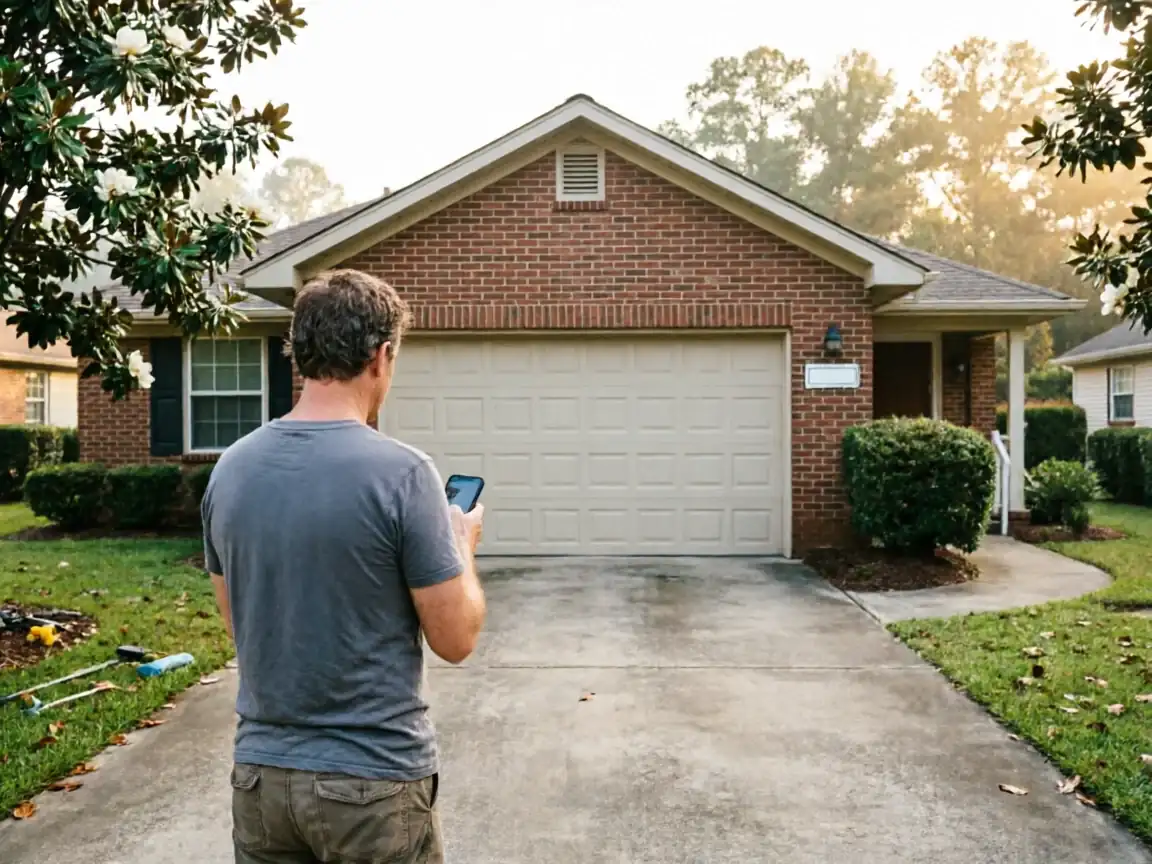
A man stands in a driveway looking at his phone in front of a house.

Tell us what’s wrong

Describe the symptom - won’t open, loud bang, opener runs but the door won’t move.

2
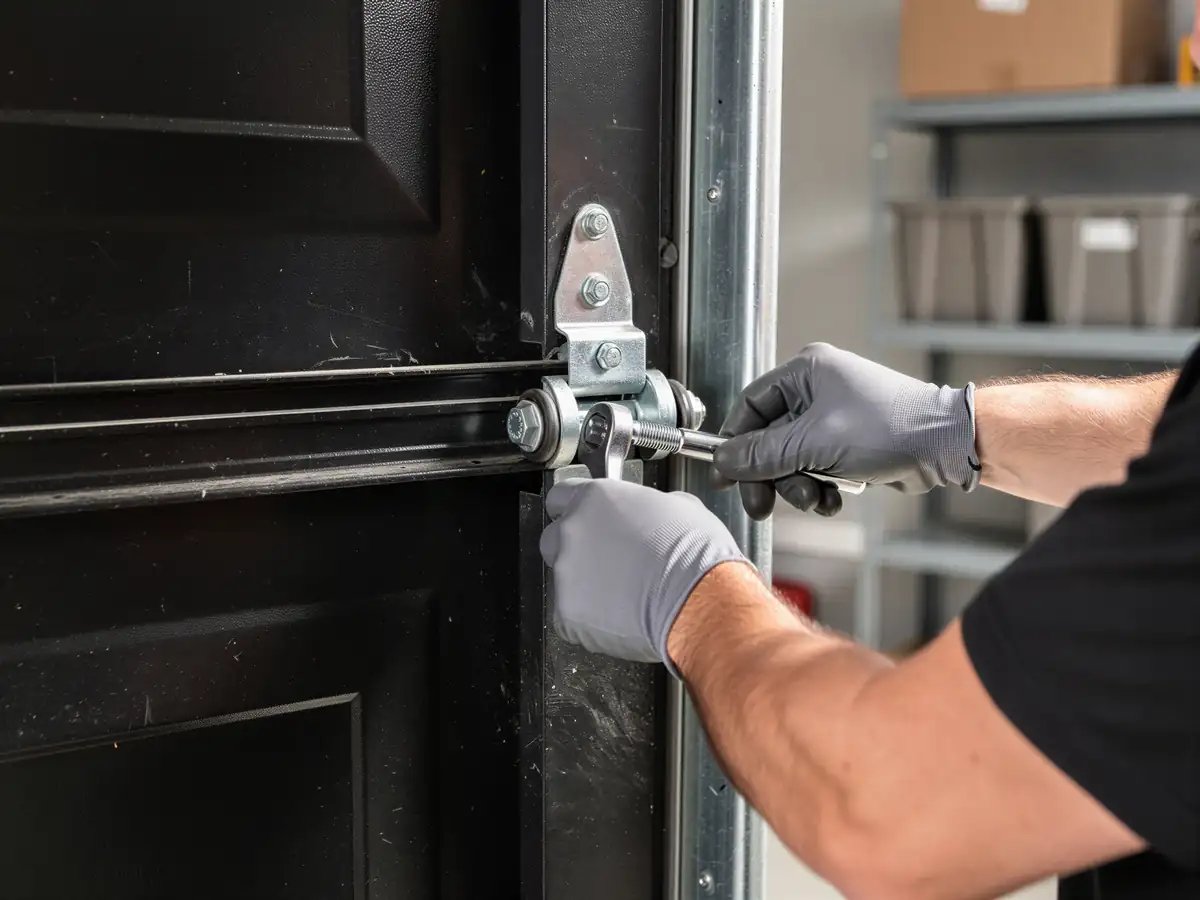
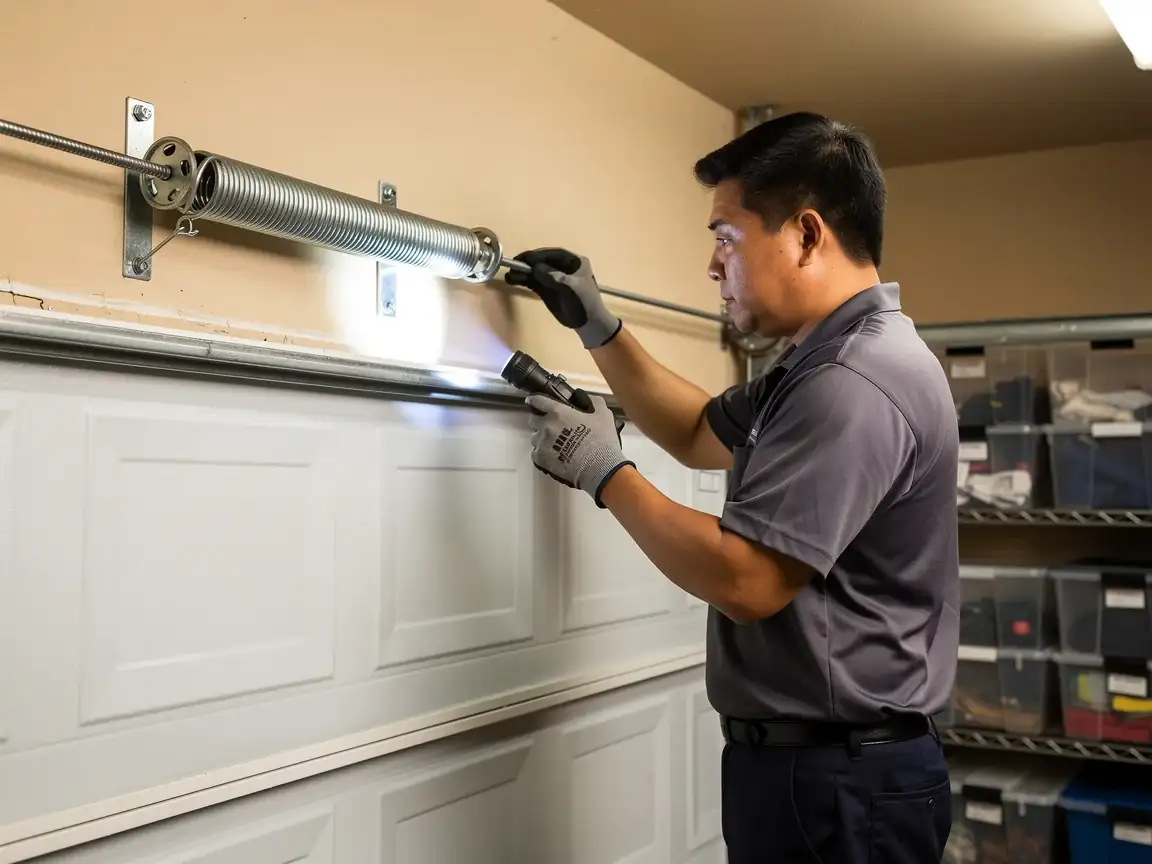
A technician inspects a garage door torsion spring with a flashlight.

On-site diagnosis

A technician tests the door under power and by hand and finds what actually failed.

3
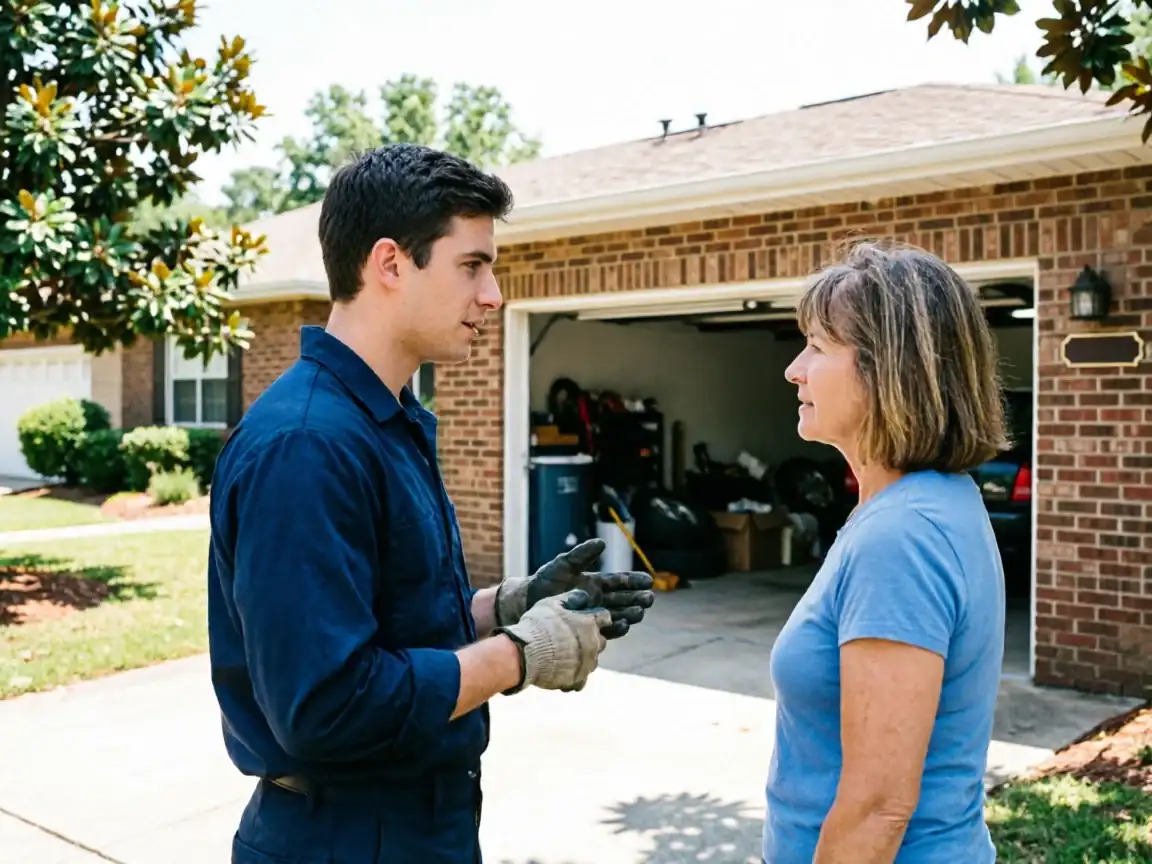
A technician in work gloves talks to a woman in front of an open garage.

Clear, up-front plan

You get the fix that’s needed and what drives the cost - before any work starts.

4
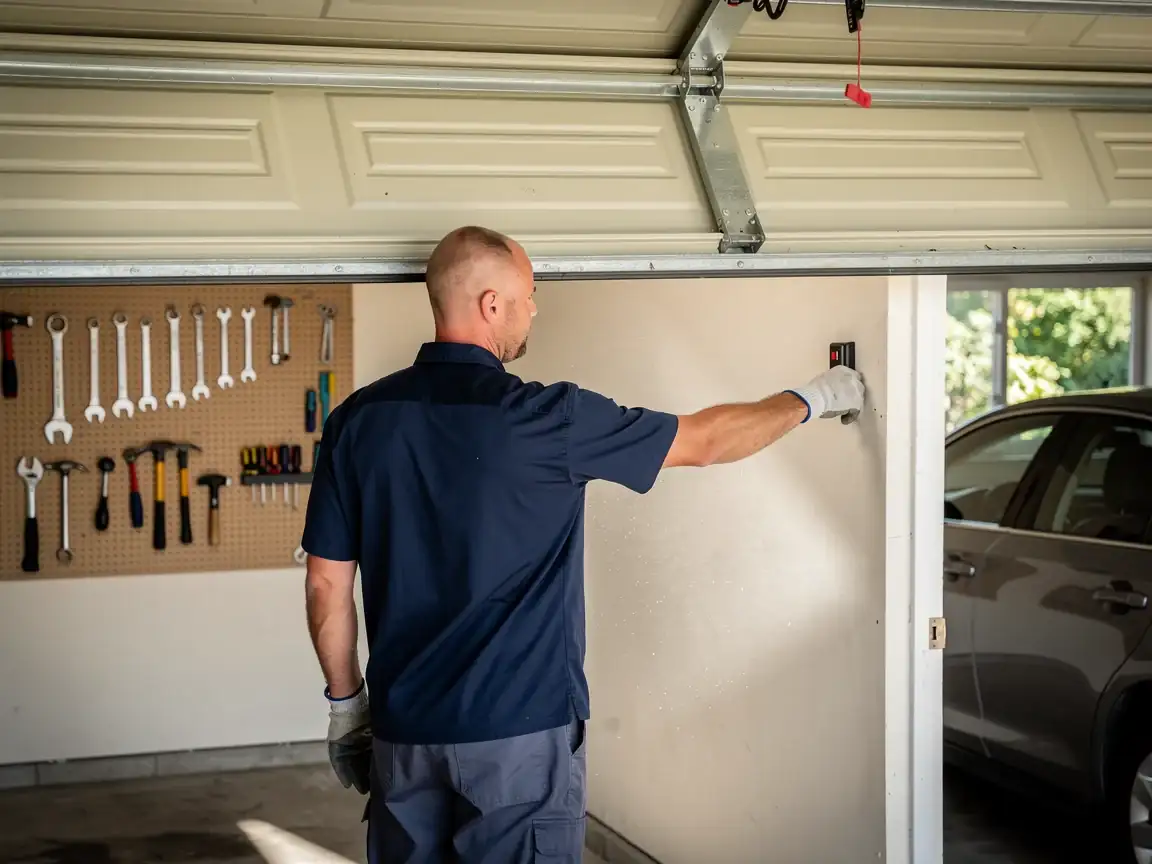
A technician in a blue shirt and gloves presses a button on a wall.

Repaired & tested

The repair is done, the door is set true and tested, and the work area left clean.

Not sure which repair your door needs in Columbus, GA? Describe what it’s doing - every job starts with a diagnosis.

How we work

What to expect

Diagnosis firstEvery visit starts by finding what actually failed - not a pre-written parts list.
The right part for the doorSprings and openers matched to the door’s weight and age, so the fix holds up.
Straight answersWhen a repair makes more sense than a replacement - or the reverse - you hear it plainly.
Clean, careful workTension released safely, hardware set true, the door tested under power before we leave.
What we do

Garage Door Services

Repair and installation work for Columbus homes and businesses.

Questions

Frequently asked

Straight answers about garage door repair in Columbus. Still unsure? Ask us directly.

How do I know if my opener has a battery backup already?

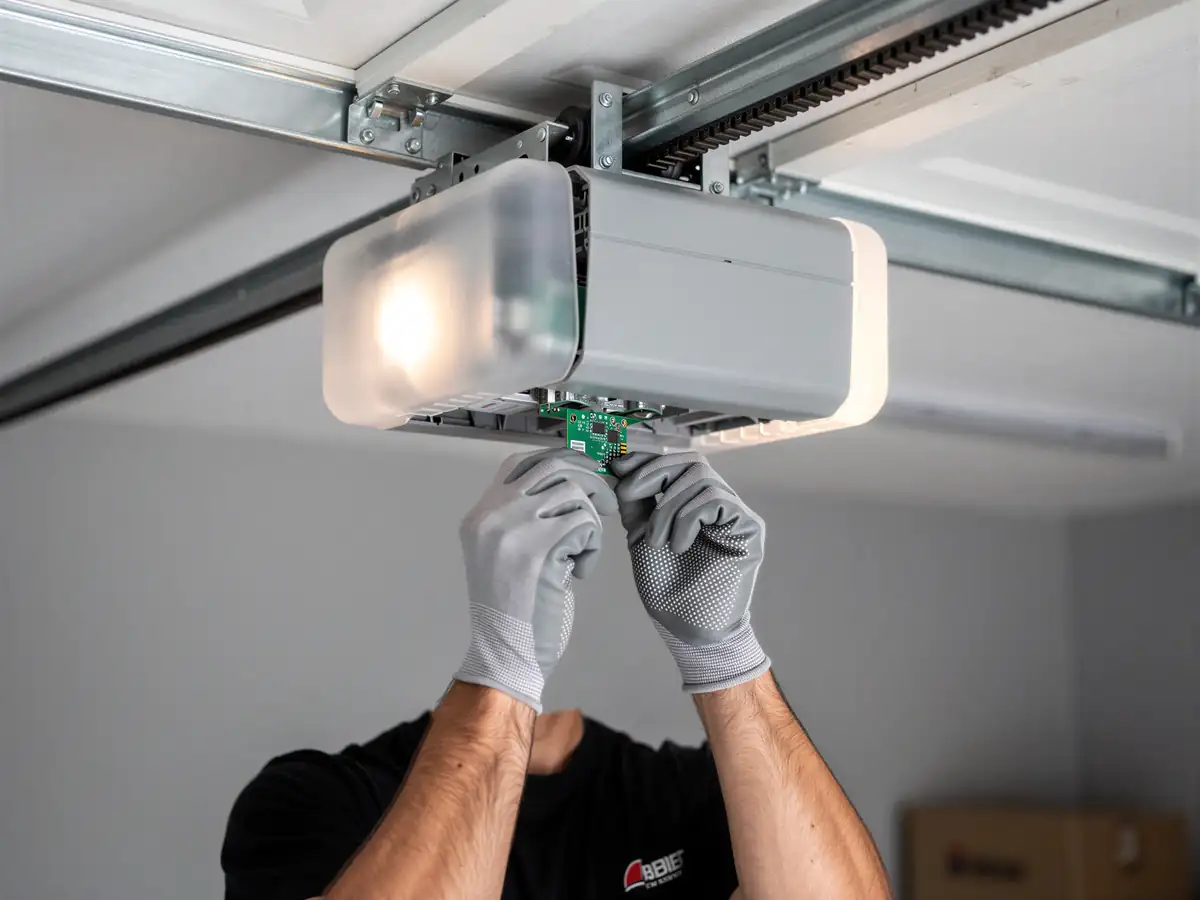
Look at the unit mounted on the ceiling near the motor head - a battery backup model has a visible battery pack built into or attached to the housing, usually at the bottom front. If you don't see one, and the opener predates the last decade or so, you almost certainly don't have it.

Can I add battery backup to my existing opener?

Depends on the model. Many openers from the last 10-15 years accept an add-on battery unit. Older motors, especially ones original to houses from the early part of the 1972-2011 range here, often can't, and replacement ends up being the more sensible move.

Is losing power during a storm here a big deal?

The climate here is mild with occasional freeze days, so hard, prolonged outages are uncommon. Short outages tied to a cold snap do happen, which is exactly when an untested manual release becomes a real problem instead of a theoretical one.

Ready to get your garage door sorted?

Tell us what it’s doing and where you are in Columbus - we’ll take it from there.

Request a QuoteCall