How We Fix It
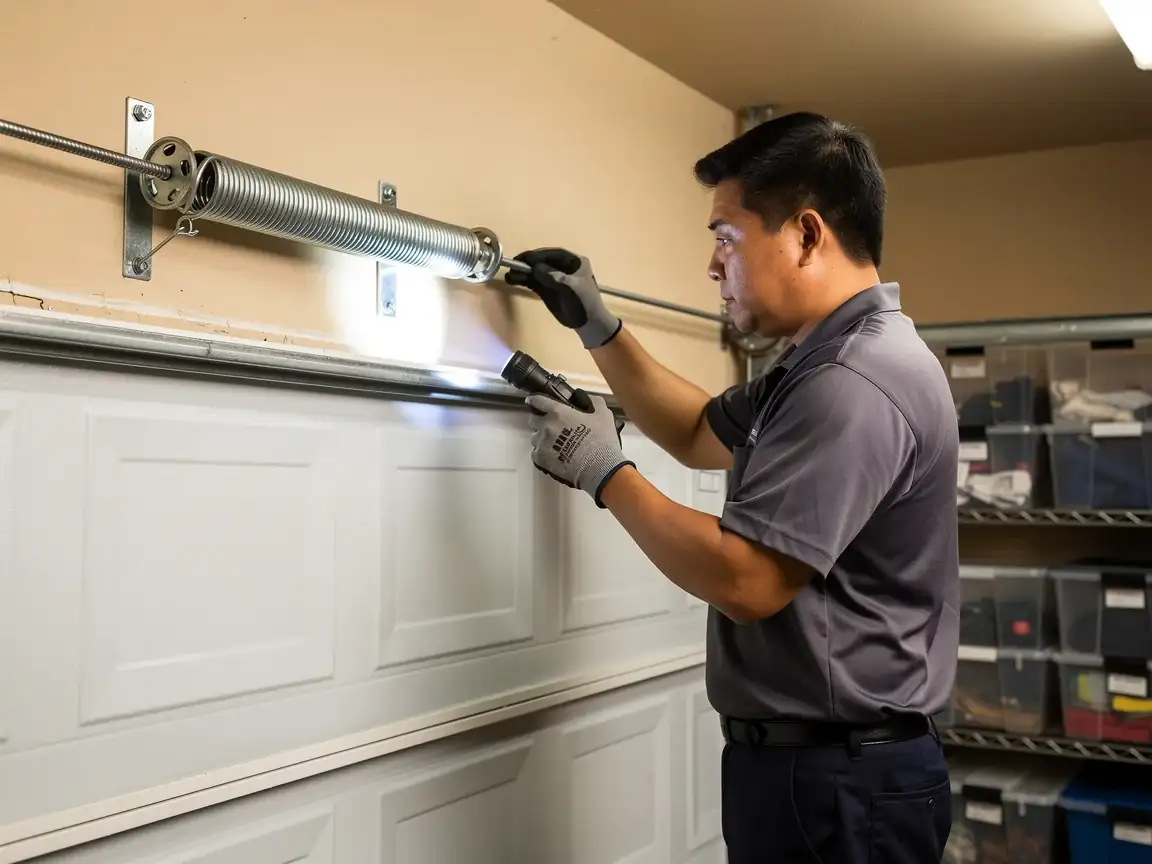
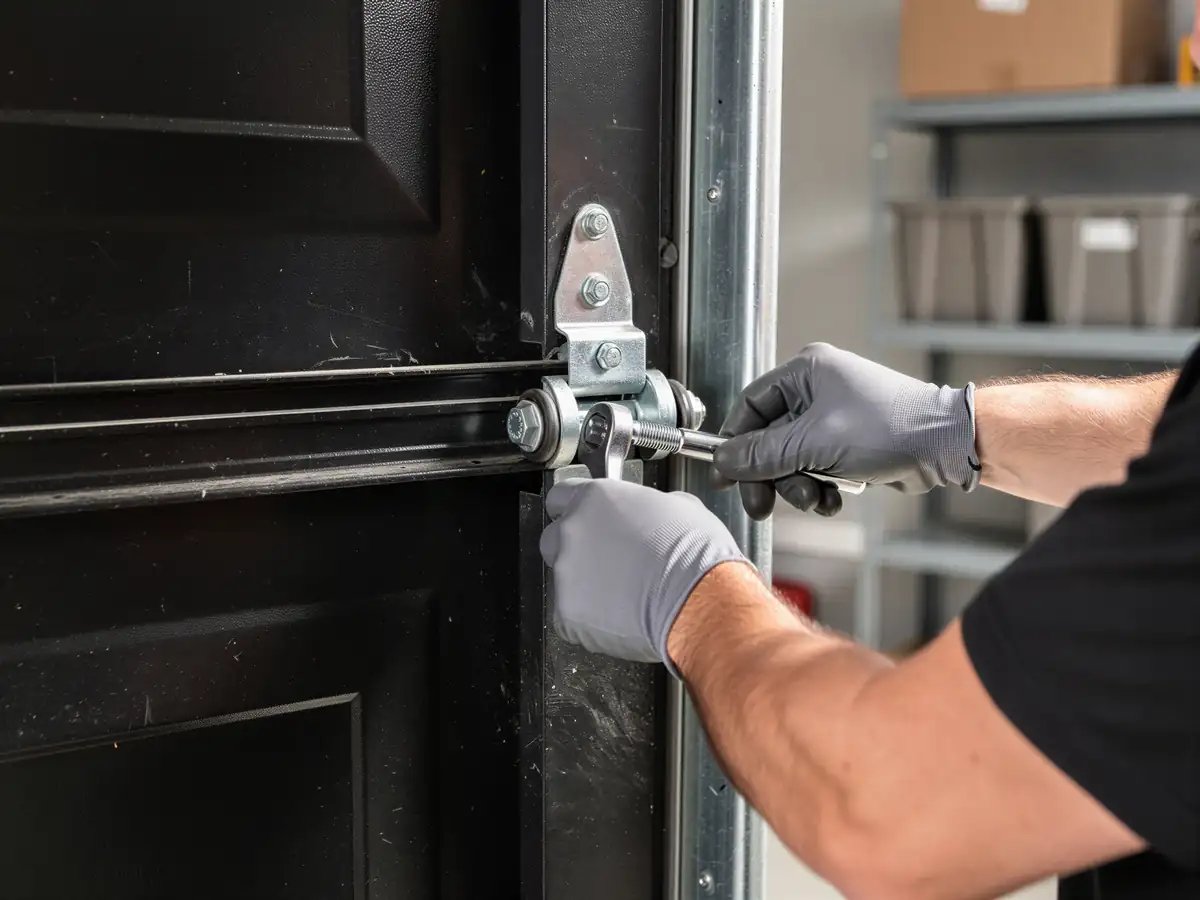
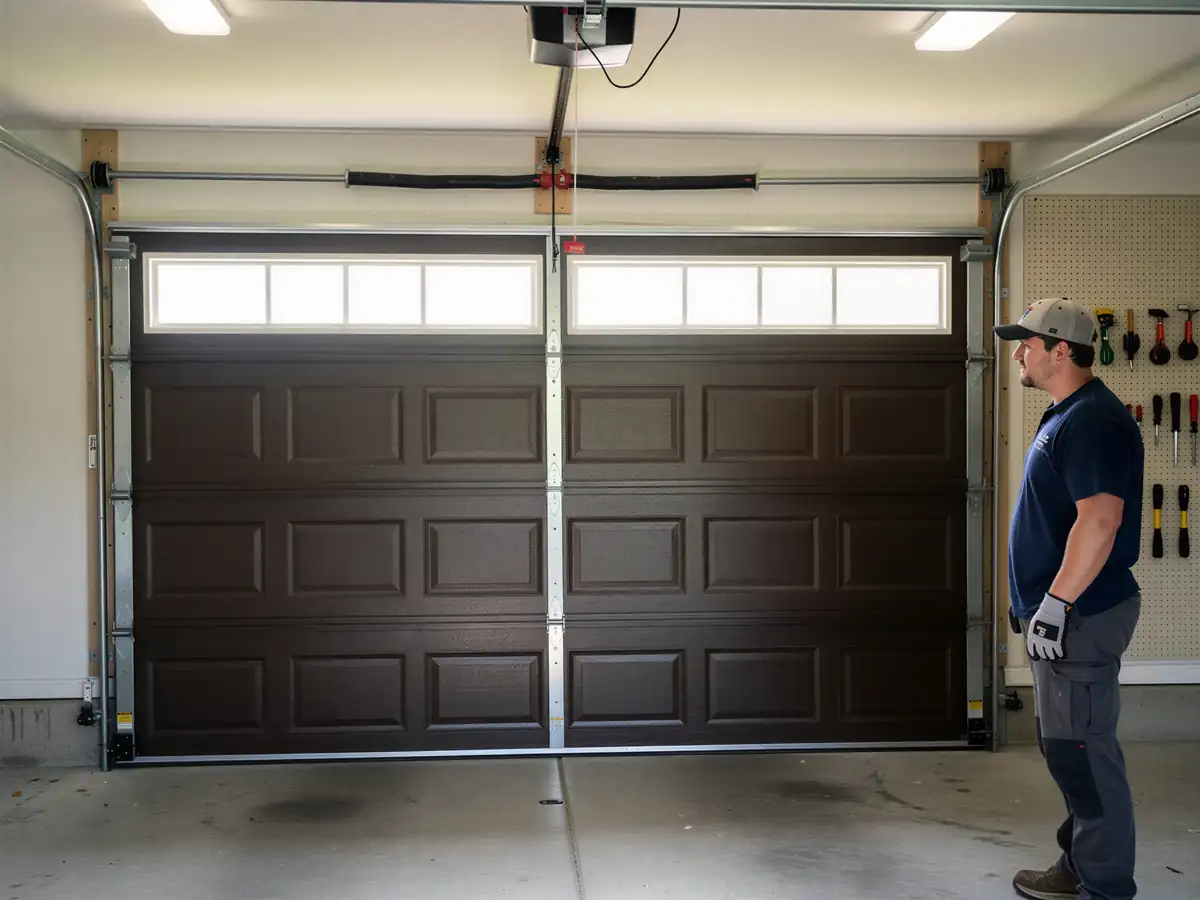
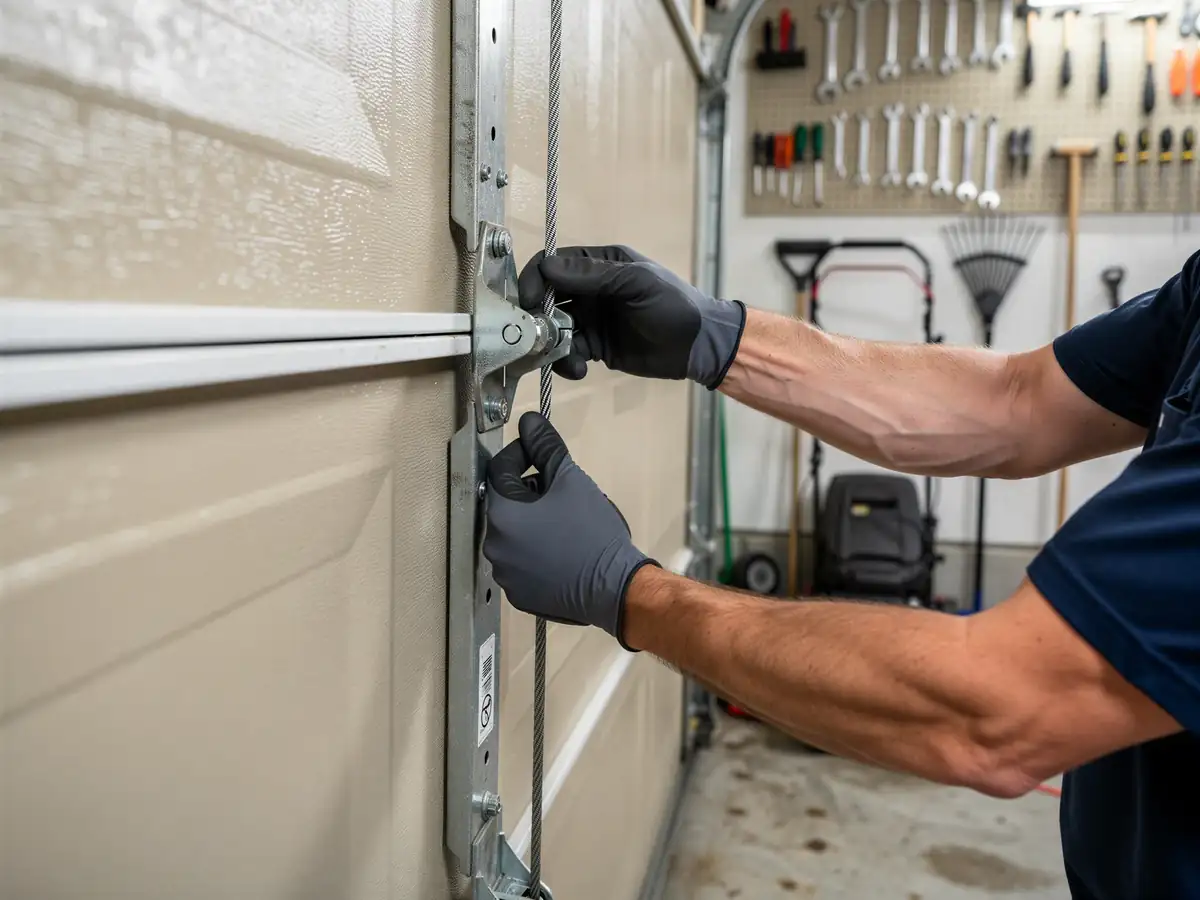
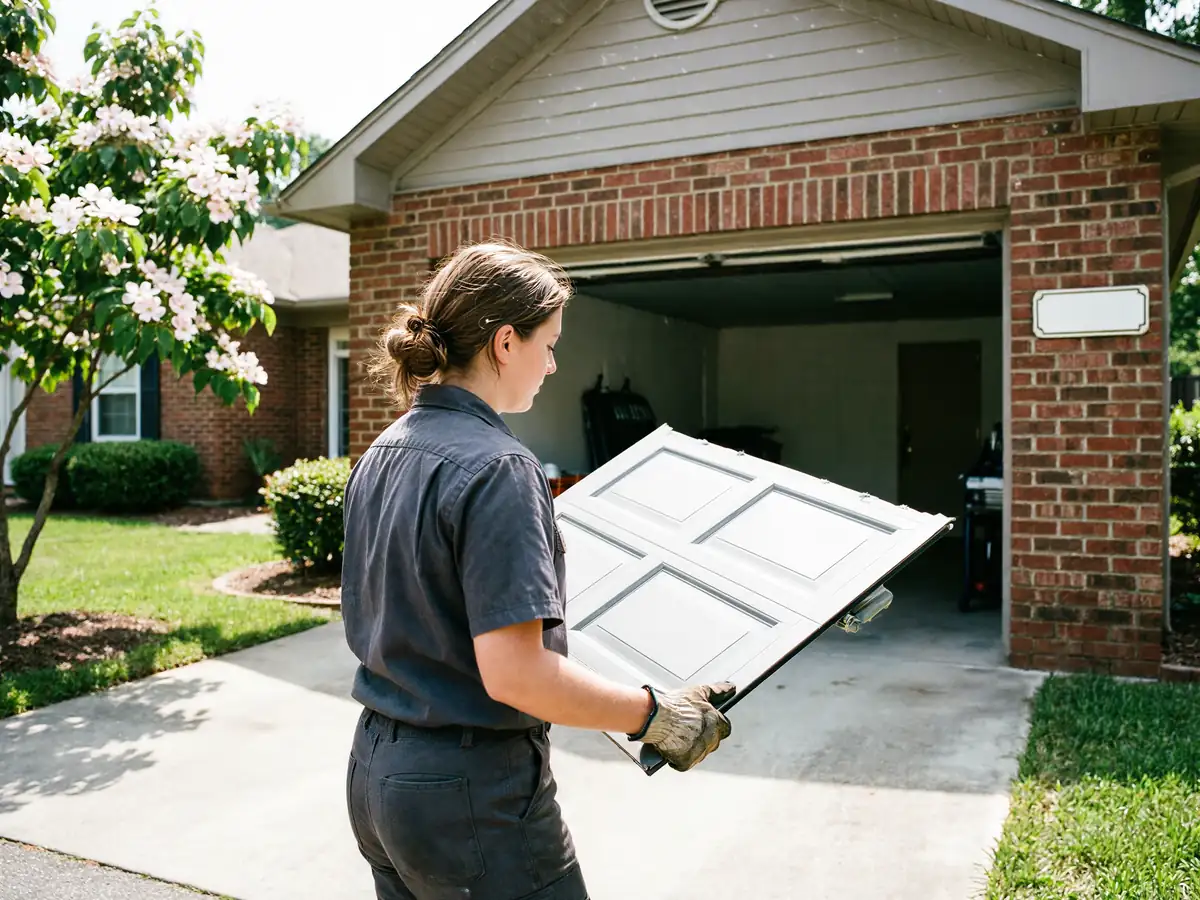
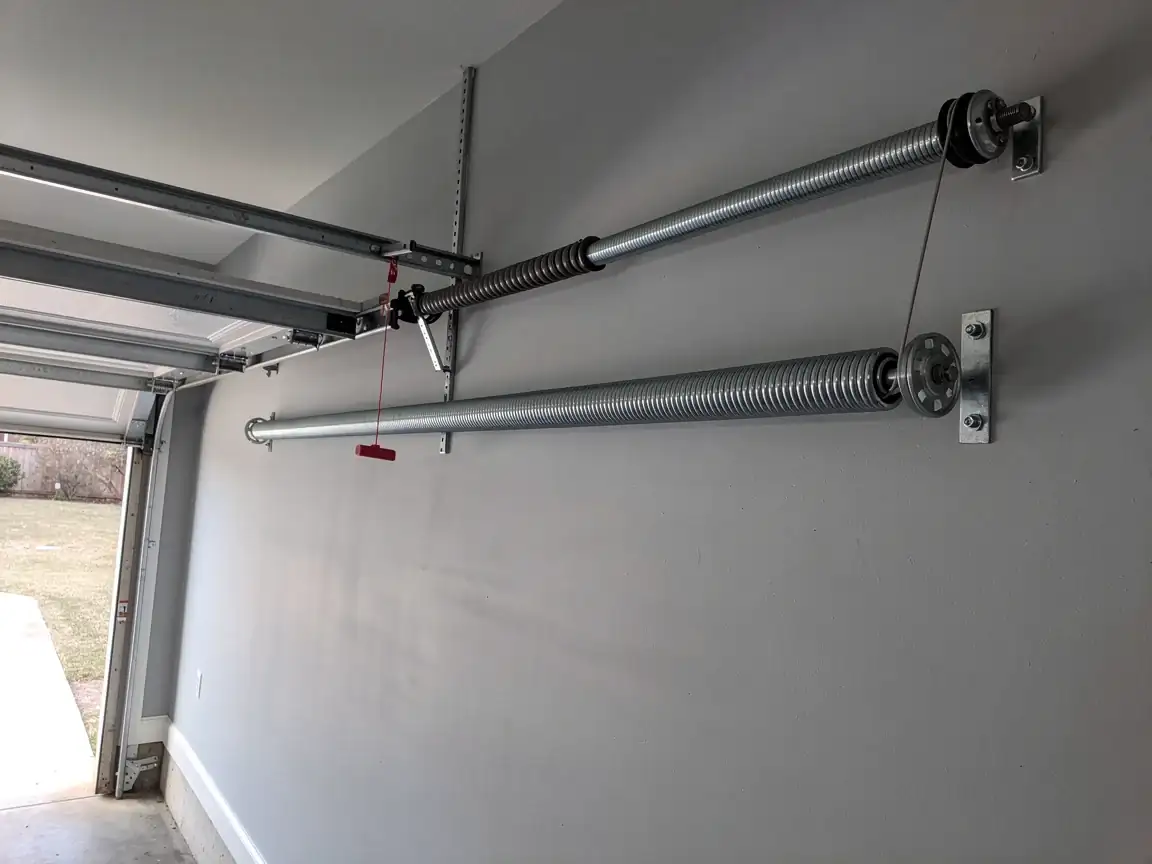
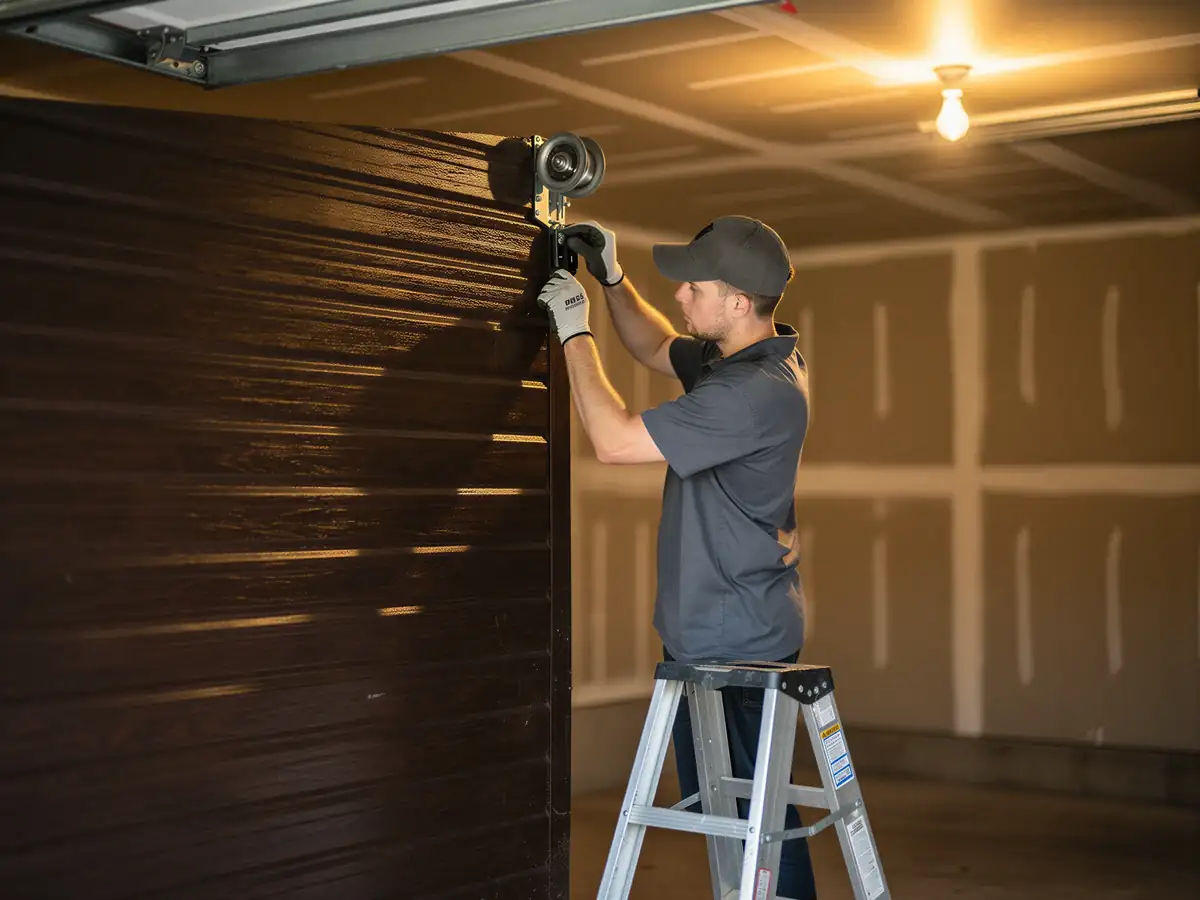
We pull the door down, release the tension on the torsion spring side, and walk the panels off the track one at a time so we can get the old rollers out without putting a dent in anything. Most of what we replace in this area are the stamped-steel rollers that came standard on doors built between 1972 and 2011 - the bulk of the housing stock out here - and we swap those for sealed nylon rollers with a stem bearing instead of the open steel bearing the factory used. Nylon runs quieter and doesn't need the track lubricated every few months to stay smooth.
If the track itself is bent where the roller rode, we straighten or replace that section before the new roller goes in; putting a new roller into a bent track just wears the new part out fast. We check the hinges at the same time, since a roller rarely fails without the hinge pin next to it being worn too. A full set runs us 30-45 minutes on a standard double door, longer if we're also pulling a bent track or a cracked hinge. We don't recommend replacing just one roller on an older door - if one's gone, the rest are close behind, and the labor to come back out for the next one costs more than doing the set now.
What You Are Seeing
The usual sign is a grinding or rattling noise right as the door passes a certain point in the track, which is the spot where the worn roller is dragging instead of turning. You might also see the door shudder or jerk at one panel while the rest moves smooth - that's a seized roller bearing fighting the track. On older steel rollers, you'll sometimes find a groove worn into the track itself from years of a dry, dragging wheel; that groove is why the door starts walking sideways instead of sliding straight.
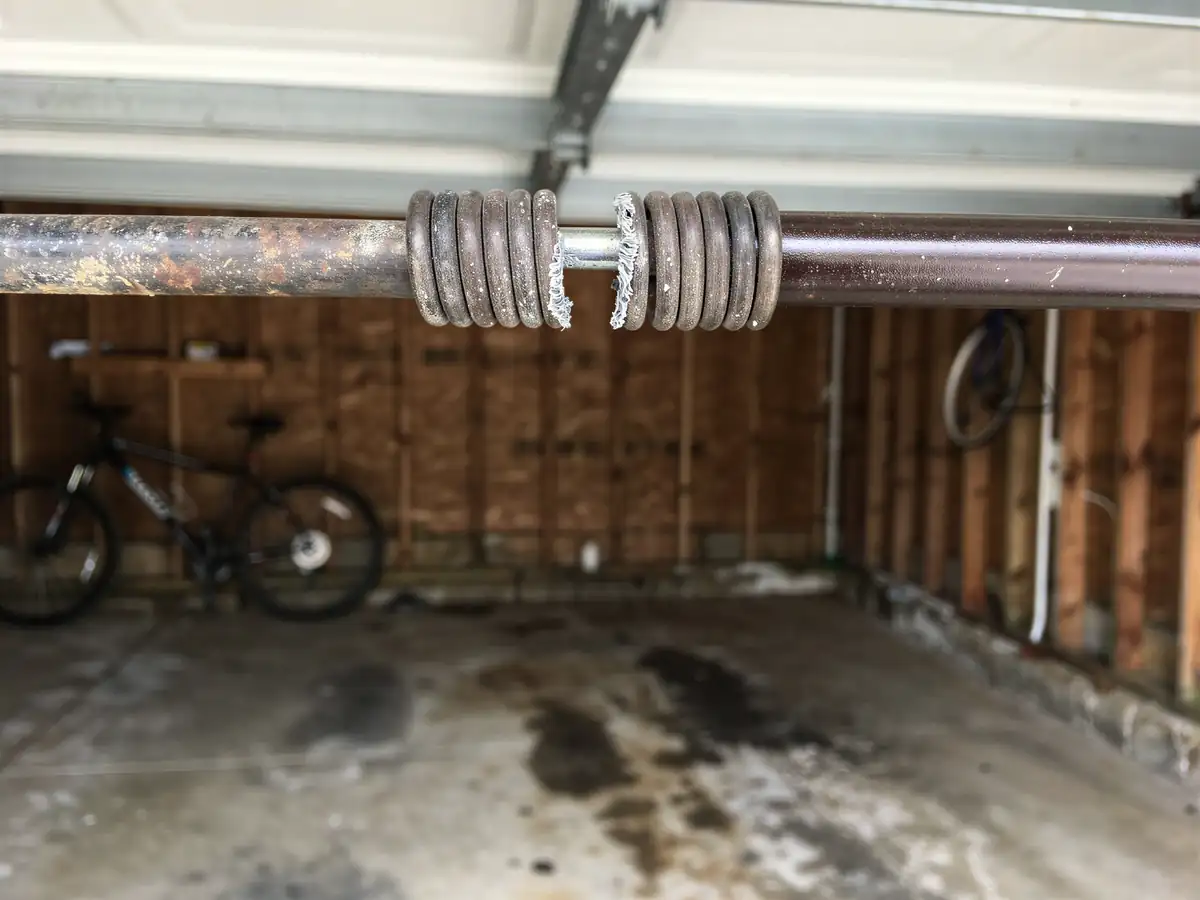
A door that's noisy on opening but quiet all the way down (or the reverse) usually points to one bad roller rather than a track or spring problem, which is a cheaper and faster fix than people expect when they call. If every roller is making noise and the door feels heavy to lift by hand, that's more likely a spring losing tension than the rollers - worth mentioning on the phone so we bring the right parts the first trip.
Why It Happens Here
A lot of the service area's housing went up between 1972 and 2011
With the bulk of it dating to the 1980s and 90s across the two main pockets of development we work in. Doors from that era almost all shipped with open steel rollers running in a steel bearing - cheap to build, fine for the first decade, and then they start drying out and grinding once the factory grease is gone. Thirty-plus years on, a large share of the doors we're called to in this area are original to the house, rollers included, and they're simply at the end of their service life.
Climate plays a part too
We're in a mild zone with occasional freezes, not the deep-freeze cycling that cracks nylon or the desert dust that chews through open bearings fast, so rollers out here tend to wear slow and steady rather than fail suddenly - which is good news, because it usually means you get a warning rattle for weeks before a roller actually jumps the track. It also means when a roller does let go, it's almost always wear, not weather damage, which keeps the fix straightforward.
How to Book
Call and tell us what you're hearing and which panel it's coming from if you can tell - that's enough for us to bring the right roller type and track hardware on the first visit. We work across the service area, which covers roughly 862 households and about 592 owner-occupied houses, so a lot of what we see repeats from street to street: same era of house, same original rollers, same fix.
We don't stock every specialty roller size on the truck, so if your door takes an odd stem length or an uncommon bracket, that part may need to be ordered, which can push the job out a few days. We'll tell you on-site if that's the case rather than let you wait and wonder. For most standard doors, though, we carry what we need and get it done same visit.