How We Fix It
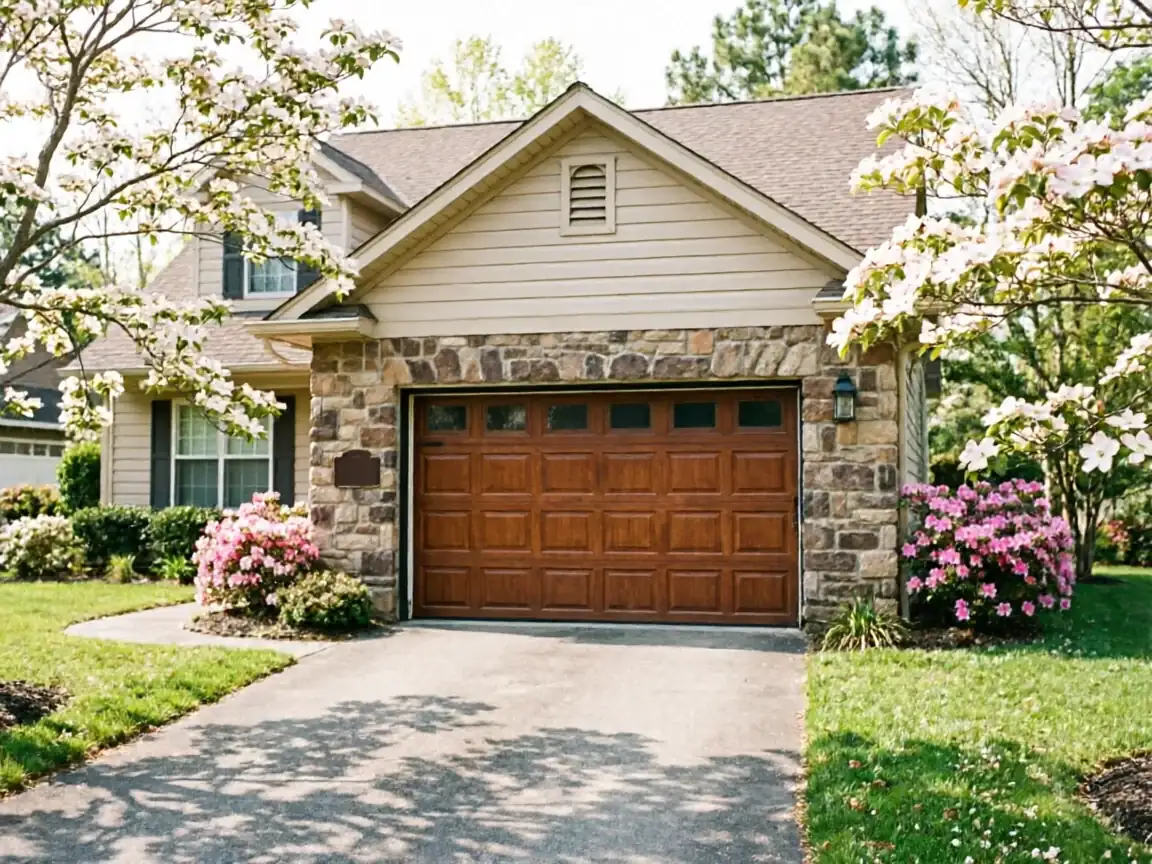
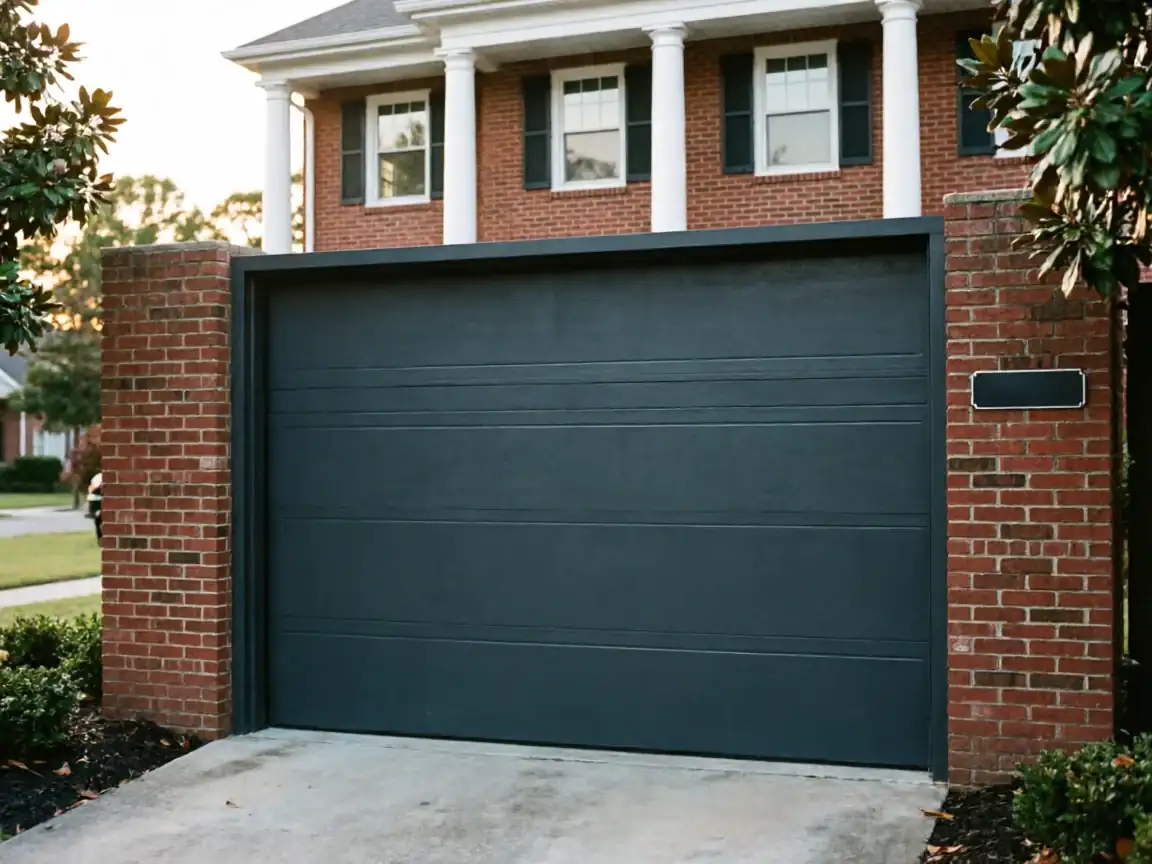
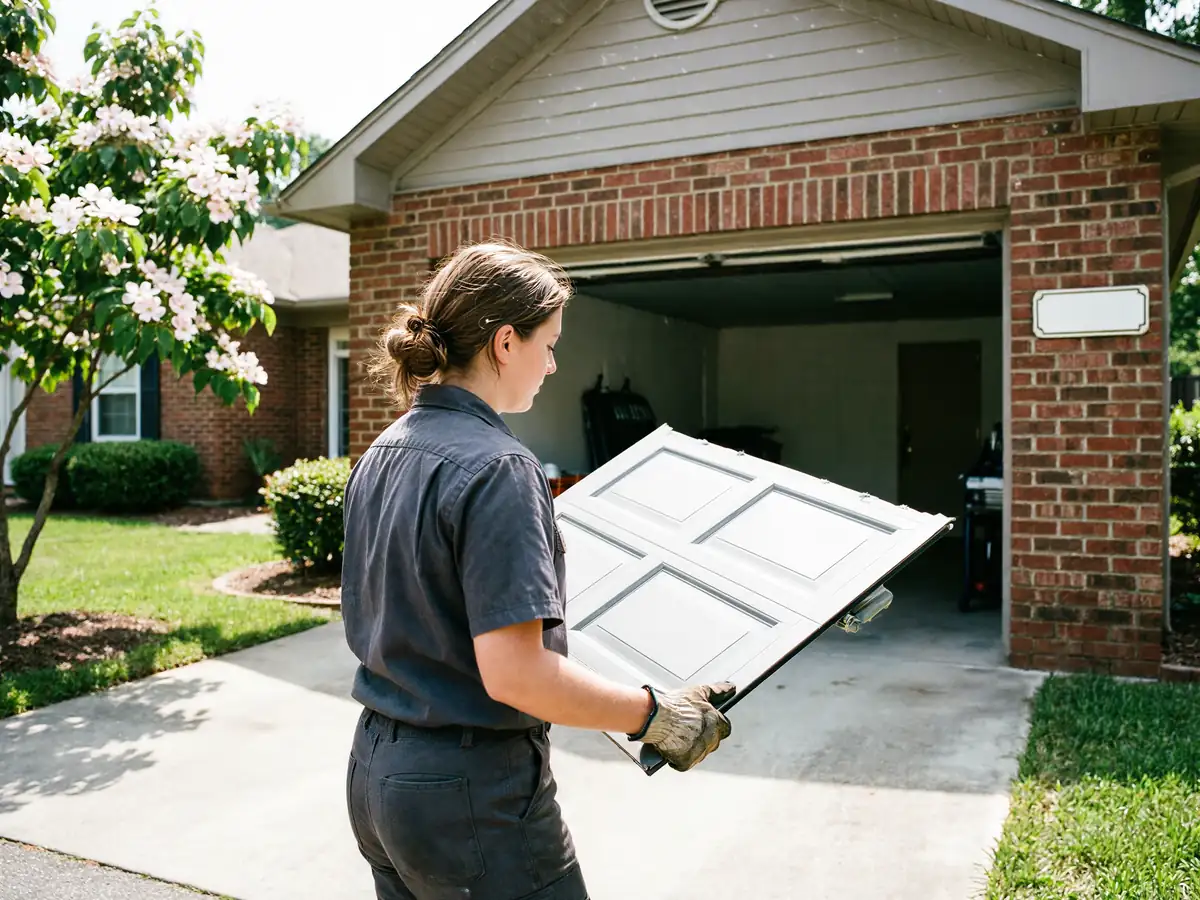
We measure the opening, check the track and header clearance, and pull the door that's there before we order anything. A lot of the installs we run in Columbus aren't storm damage or accidents - they're doors that have simply aged out. If your house was built anywhere in the 1972 to 2011 run that covers most of this area, there's a decent chance the original door is a single-layer steel panel with no insulation and hardware that's been replaced piecemeal for twenty years.
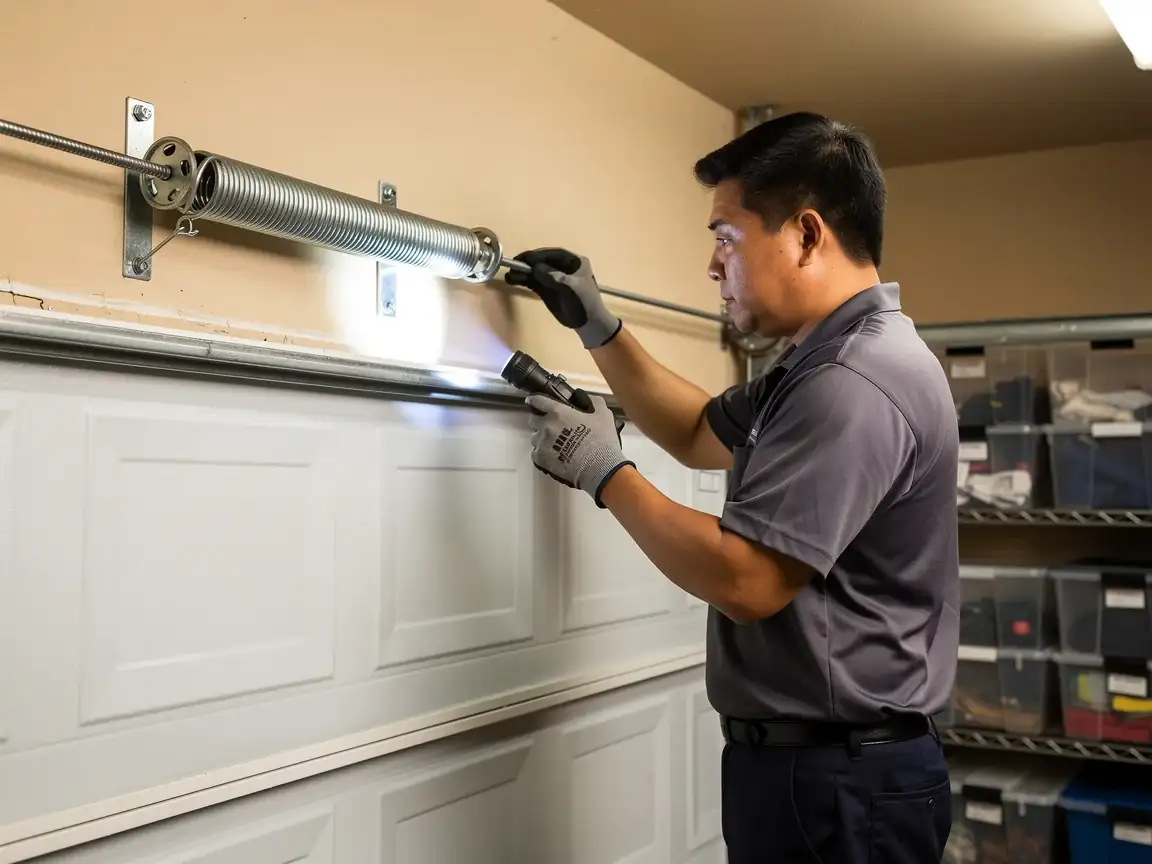
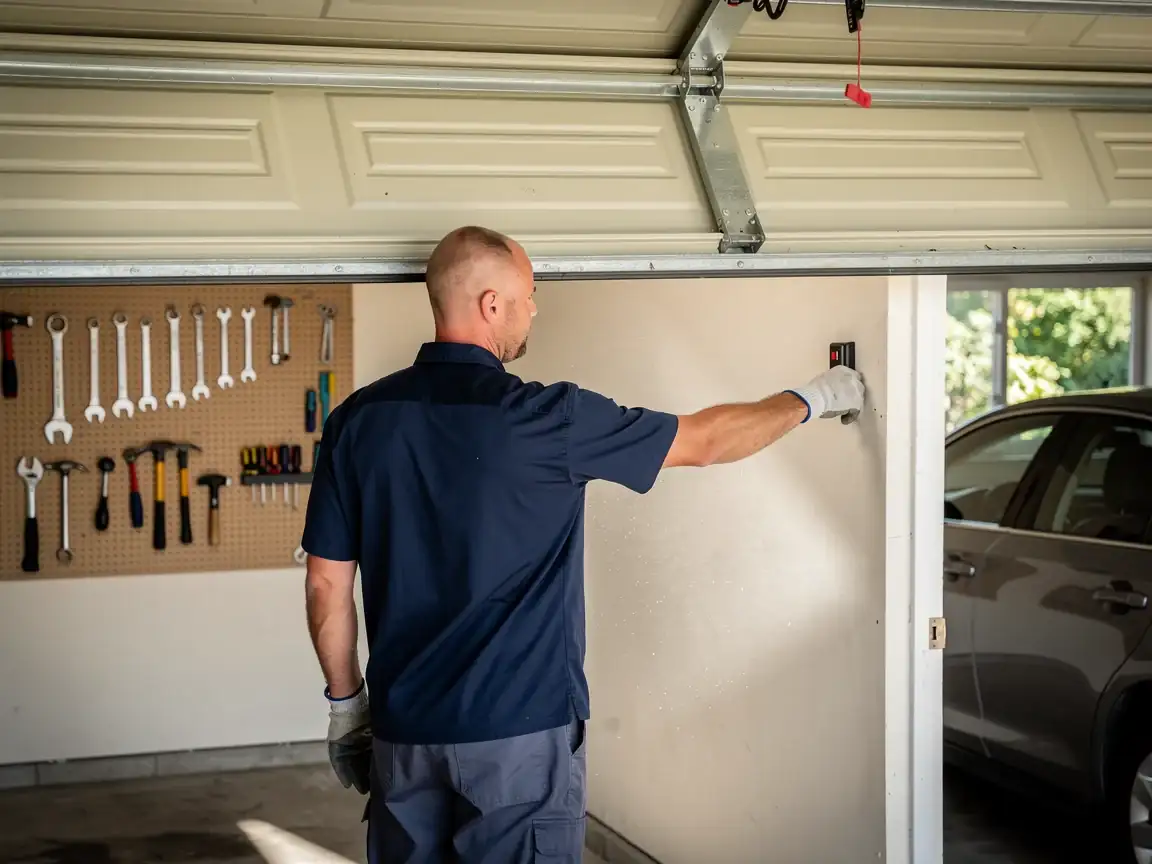
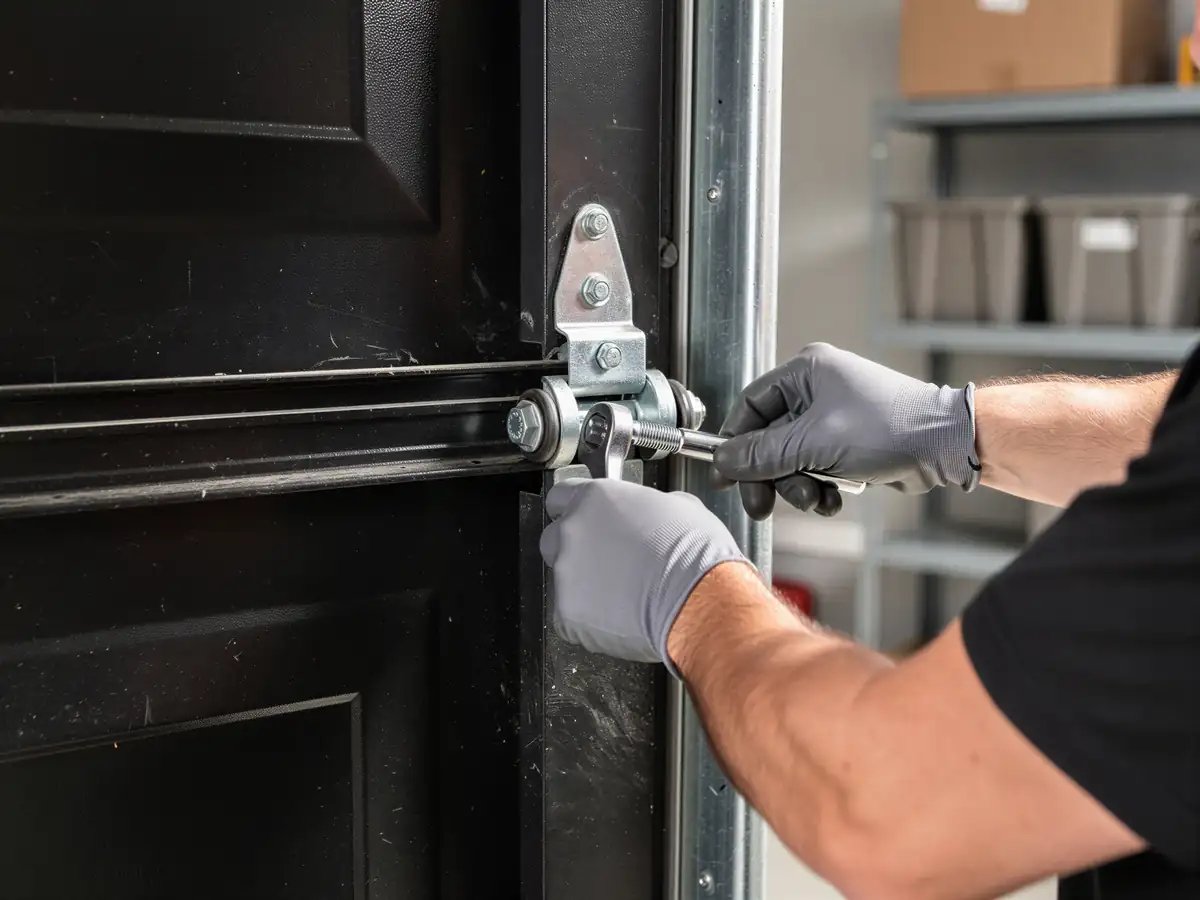
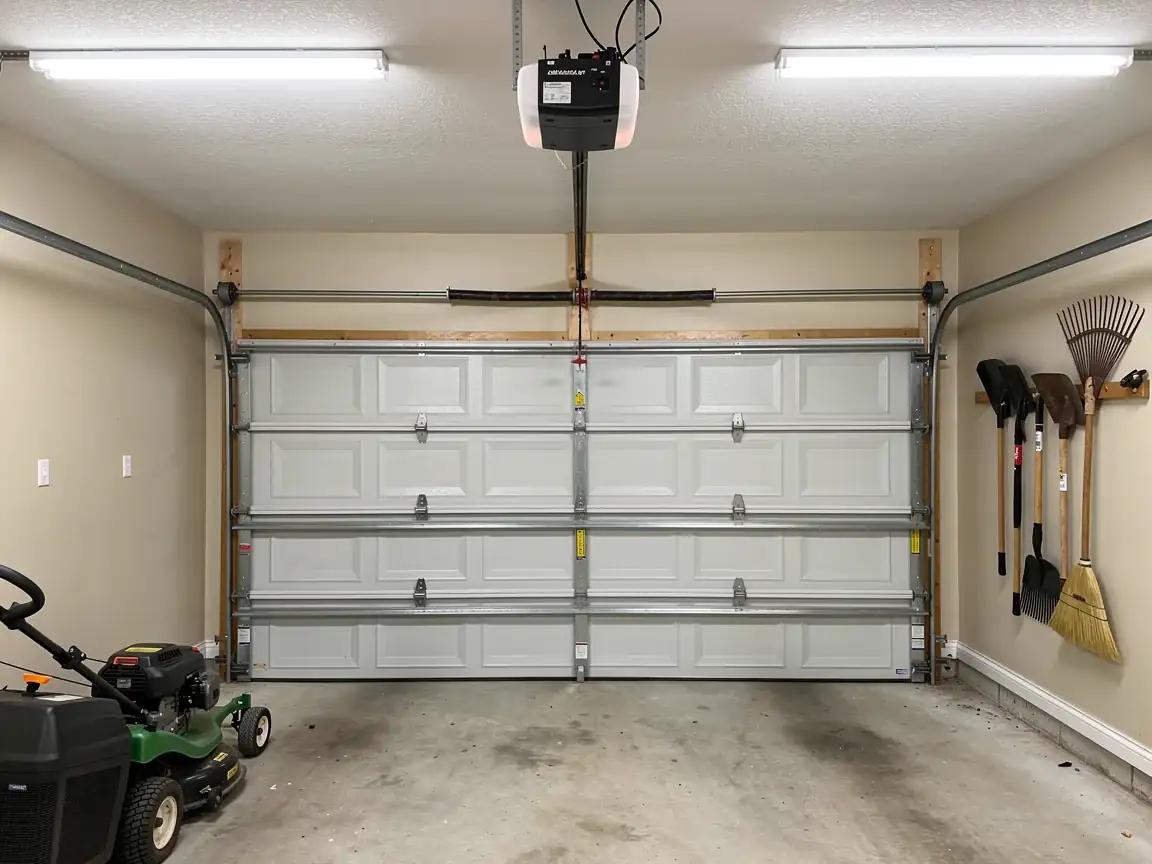
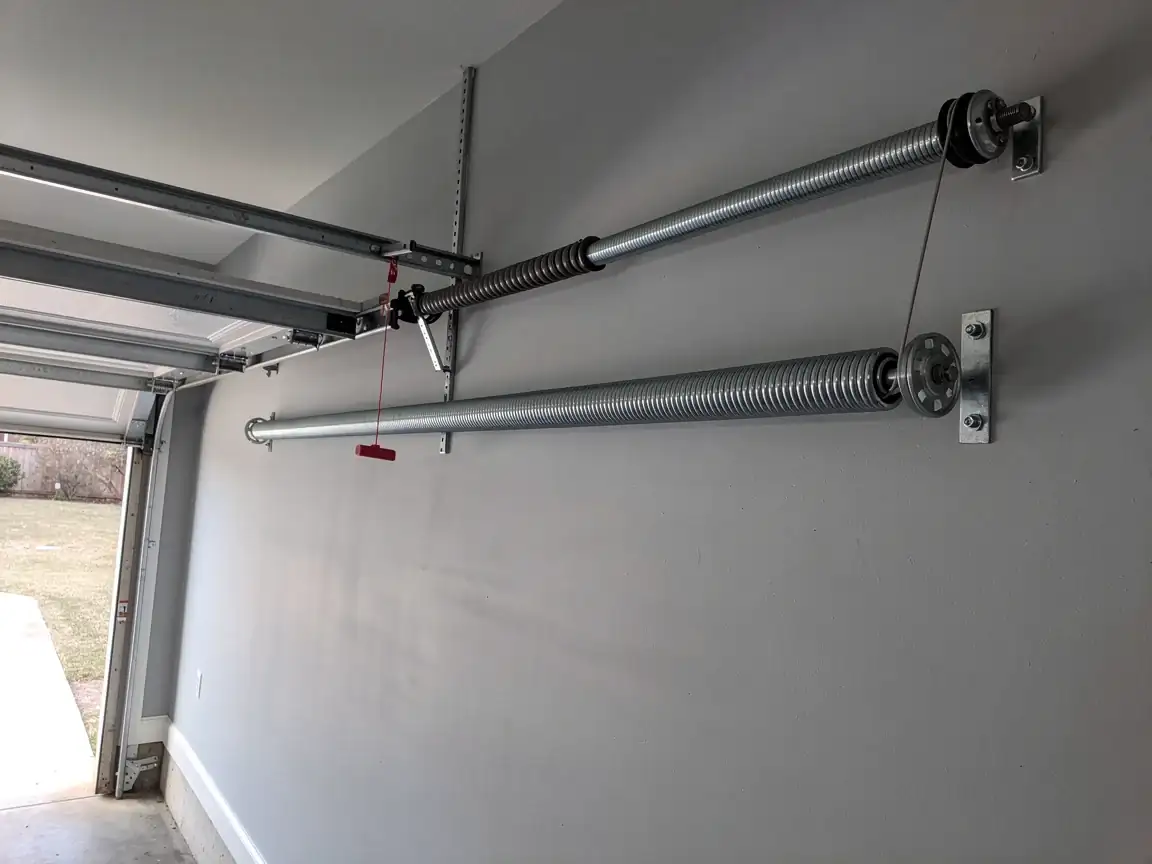
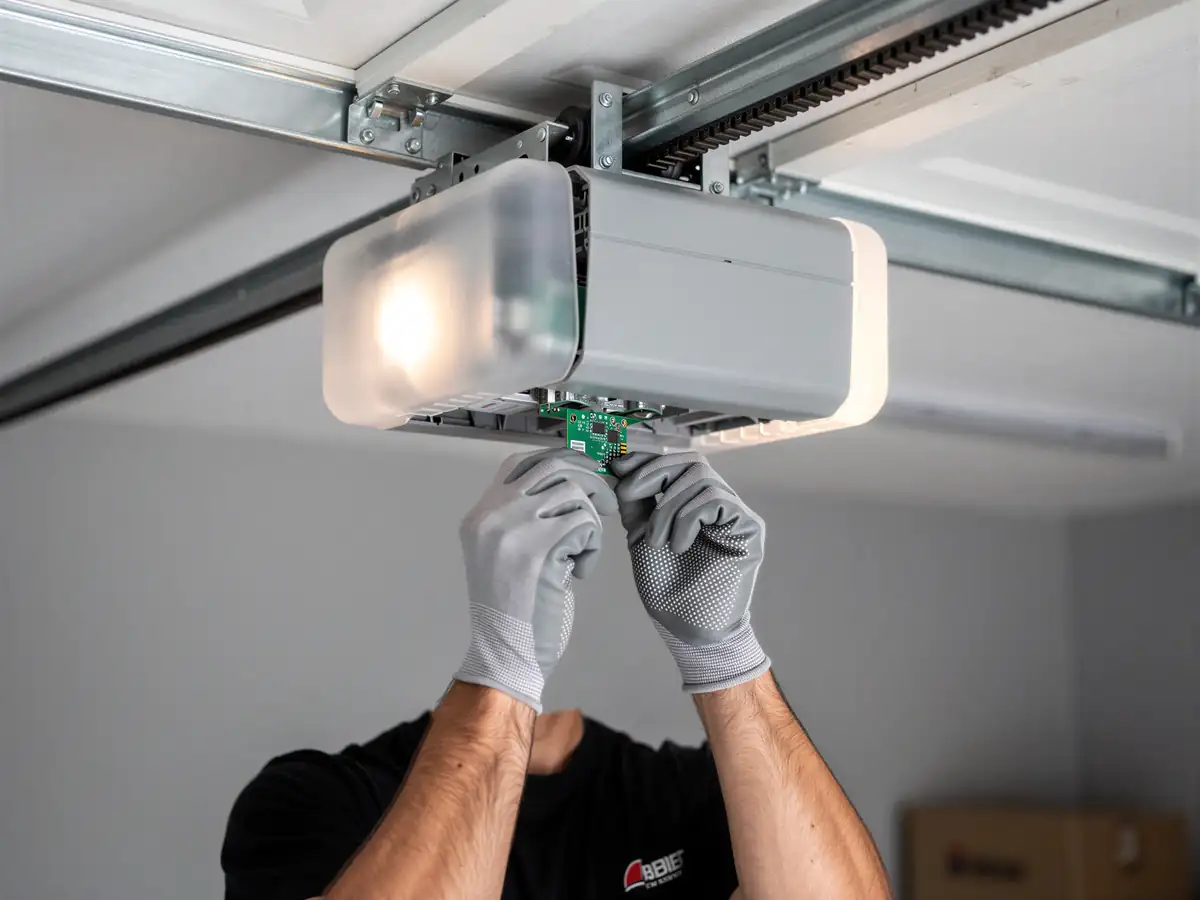
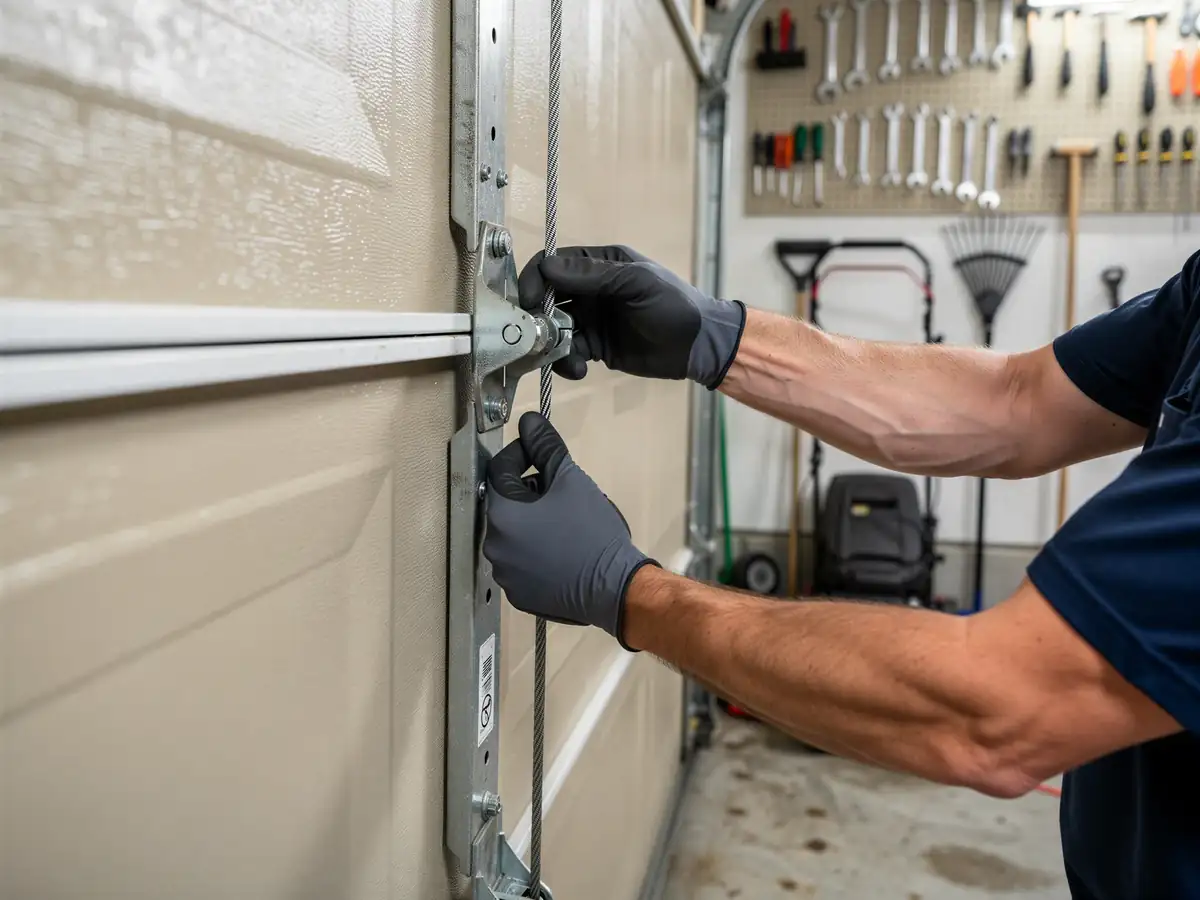
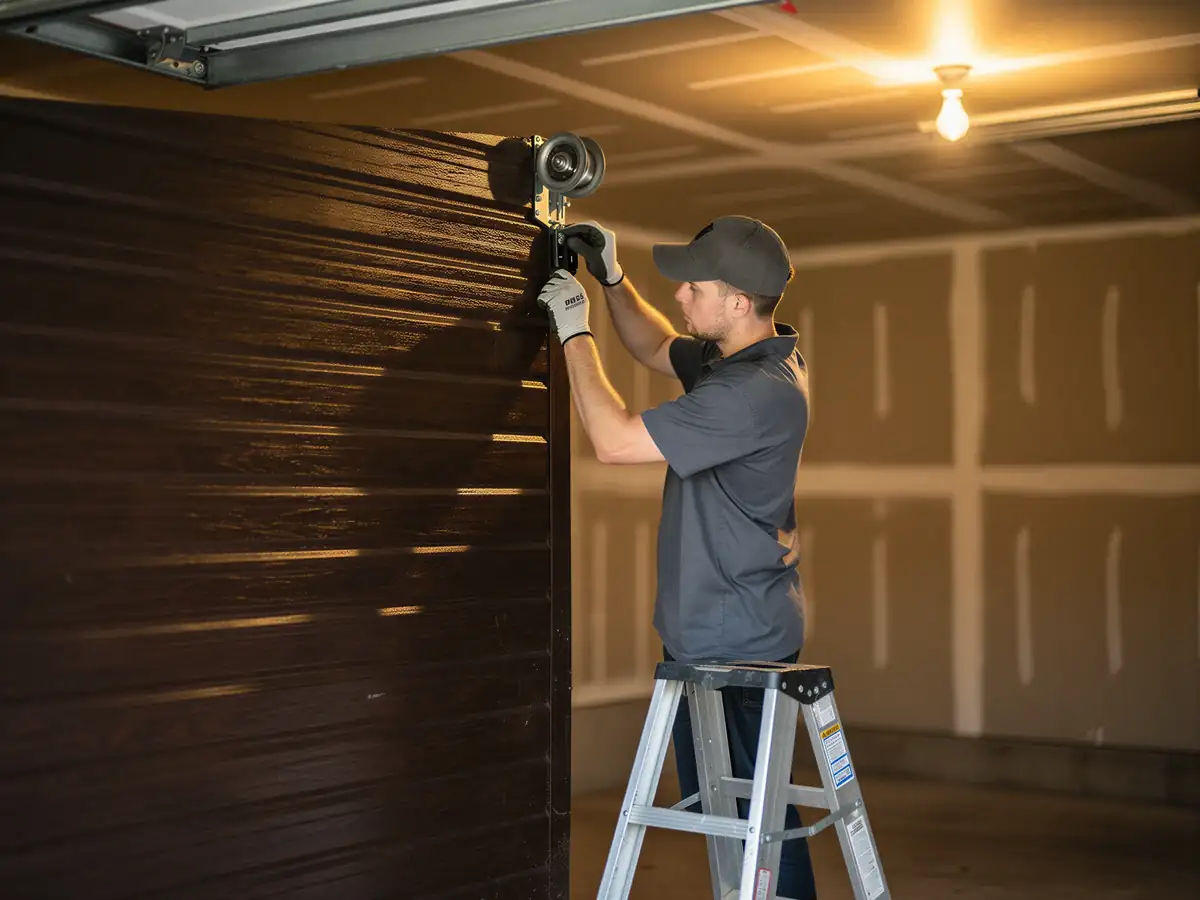
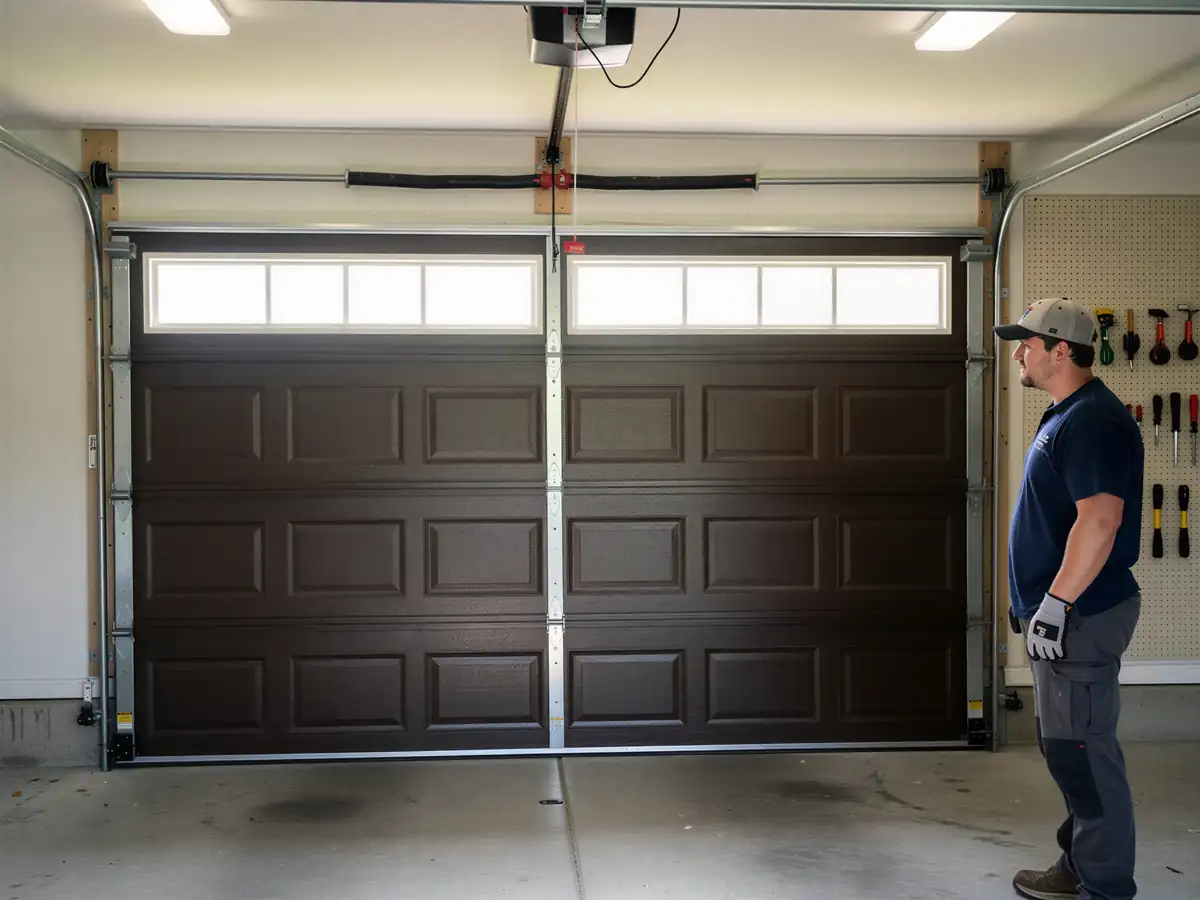
For a new install we pull the old door and track off the header, check the jambs for square, and set new vertical track and a torsion spring rated to the door's actual weight - not a stock spring that happens to fit the opening. We size the opener to the door, not the other way around, and we test the auto-reverse and force settings before we leave, every time.
One honest limit here: if your opening is out of square by more than a small margin, or the header framing has shifted, that's carpentry work before it's a door job, and we'll say so rather than force a door into a bad frame. We don't do structural framing repair ourselves.
What You Are Seeing
The calls we get that turn into installs, not repairs, usually sound the same: the door is heavy to lift by hand, it sags visibly at the bottom corners, or the panels have started to bow in the middle. Sometimes it's simpler - the owner just wants an insulated door because the garage runs noticeably hotter or colder than the rest of the house.
On a lot of the 1980s and 90s-built homes in this area, the original door was never insulated and was sized to building standards from that decade, not current ones. After enough years of opening and closing, the steel skin thins at the stress points near the rollers, and the whole panel starts to flex when it travels. That flex is what you're feeling when the door seems to "catch" partway up.
Why It Happens Here
Columbus sits in a mild climate with occasional freeze days
Which doesn't sound like much stress on a garage door compared to a true hard-freeze region - but it's enough. A door skin that heats up in the afternoon sun and then sits through a freeze overnight expands and contracts repeatedly through the season. Over a few decades that cycle works on seams and panel joints that were fine when the door was new.
Across the service area we work, housing dates from 1972 to 2011
With a median build year around 1991, and two distinct pockets of neighborhood stock that went up mostly in the 1980s and 90s. That means a large share of the doors we see on install calls are thirty-plus years old, built before double-layer steel and foam-core insulation were standard options. With roughly 592 owner-occupied houses out of 862 households in the area, and median household income near $73,654, most of what we install is a straightforward upgrade swap - not a custom or high-end build.
- 592 owner-occupied
- 862 households
- $73,654 median household income
How to Book
Call or use the contact form and tell us the door's rough age if you know it, or just the house's build decade - that alone tells us a lot about what's likely on the other side of the wall. We'll ask about the opening width, whether it's a single or double door, and whether you want insulation given the mild-freeze swings we get here.
We run installs out to the nearby communities too: is about 3 miles to the west-southwest sits roughly 5 miles north-northeast is about 8 miles east-northeast, and we'll travel as far as Waverly Hall (15 miles) or Hamilton (18 miles) for the right job. Book a time that works, and we'll bring the sizing numbers with us rather than guessing from the driveway.