The Cost of This Job
What a panel job runs depends on how much of the door got hit and how old the door is. A single dented panel on a door that's still in decent shape is a different job than matching color and ribbing on a door that's been sitting since the early 1990s, when most homes out here were built. If the section is cracked clean through, or the dent has bent the stile underneath it, you're replacing more than the skin - you're into hardware too.
We don't quote a number sight unseen, and we won't pretend there's a flat rate that covers every door in the county. What we can tell you up front: if your door is original to a house built in that early-90s wave, finding an exact panel match gets harder every year, because the manufacturers that made that embossed wood-grain steel have mostly discontinued the run. That sometimes pushes a one-panel repair toward a full door swap instead - not because we're upselling, but because mismatched panels on an otherwise good door look worse than the dent did.
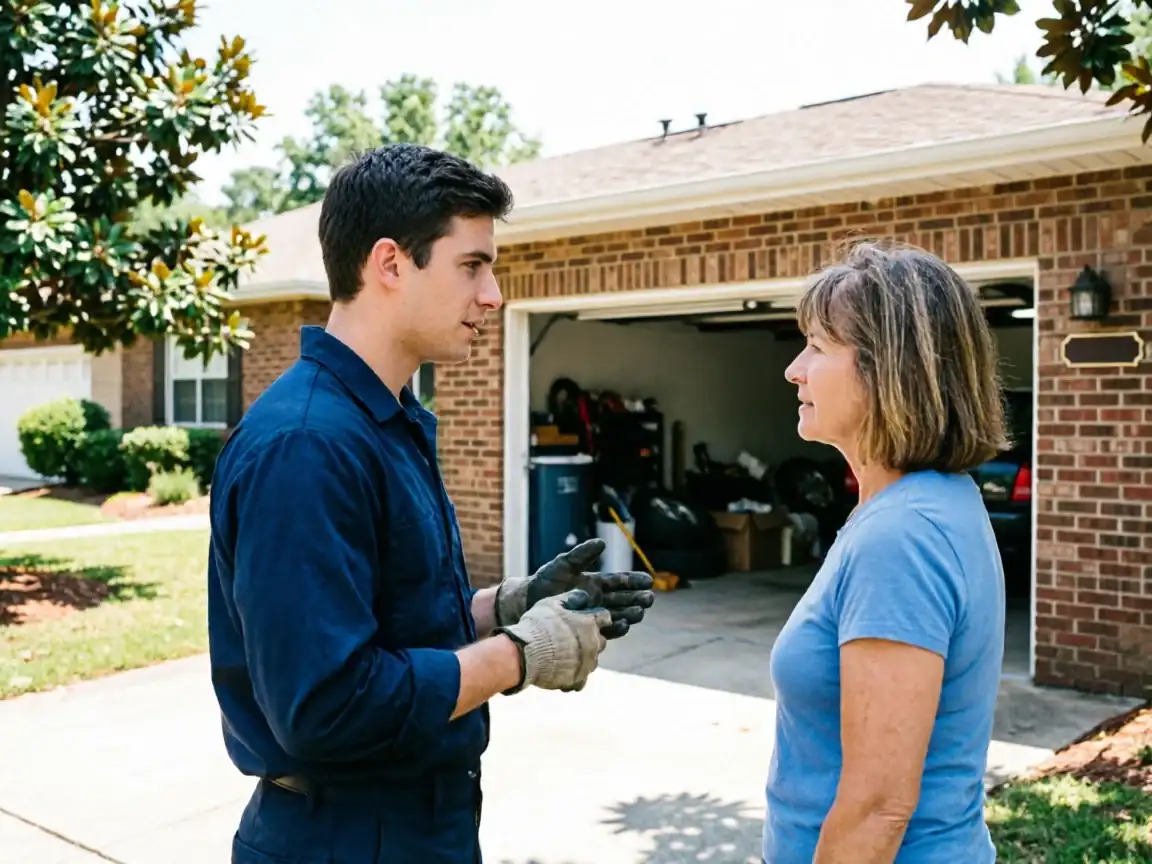
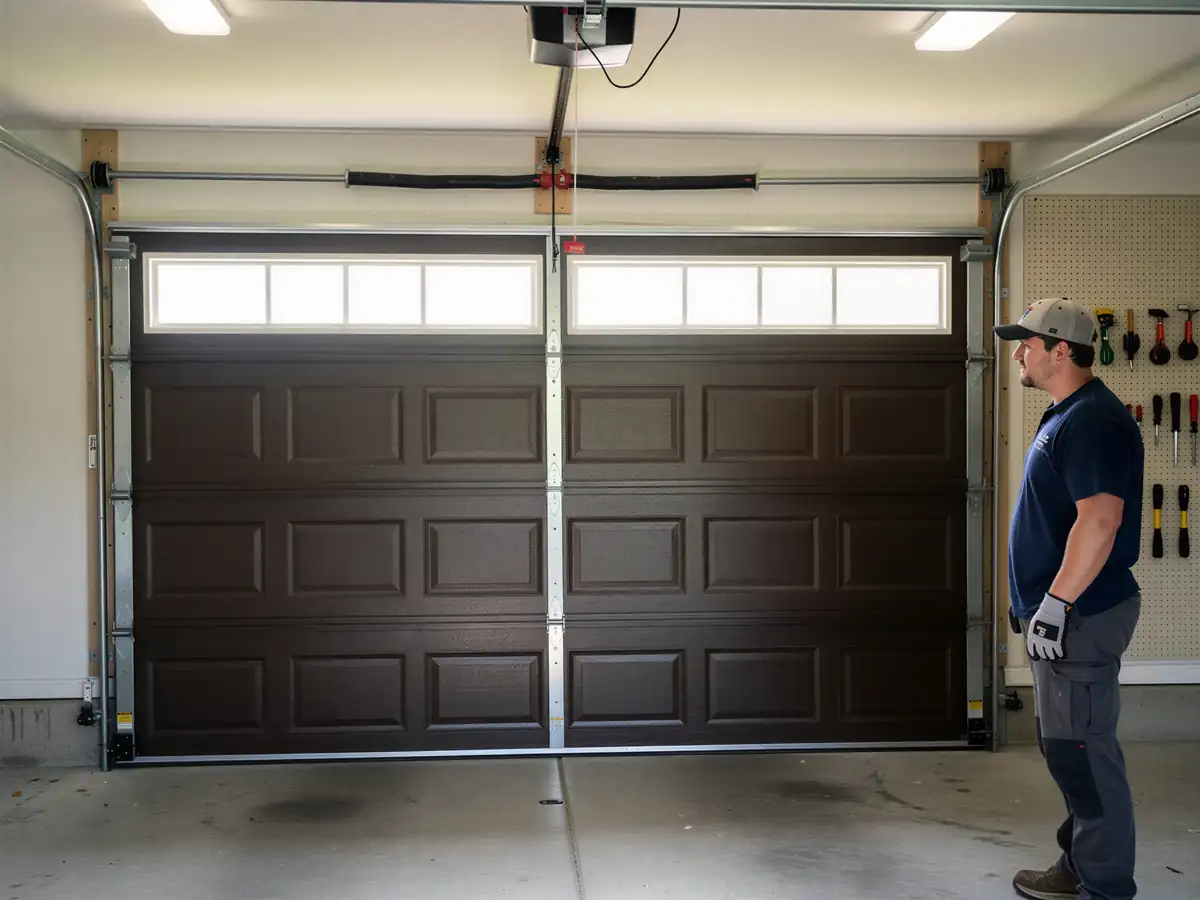
We'll walk the door with you, tell you straight whether a panel swap makes sense or whether you're better off putting that money toward a full replacement.
Why It Happens Here
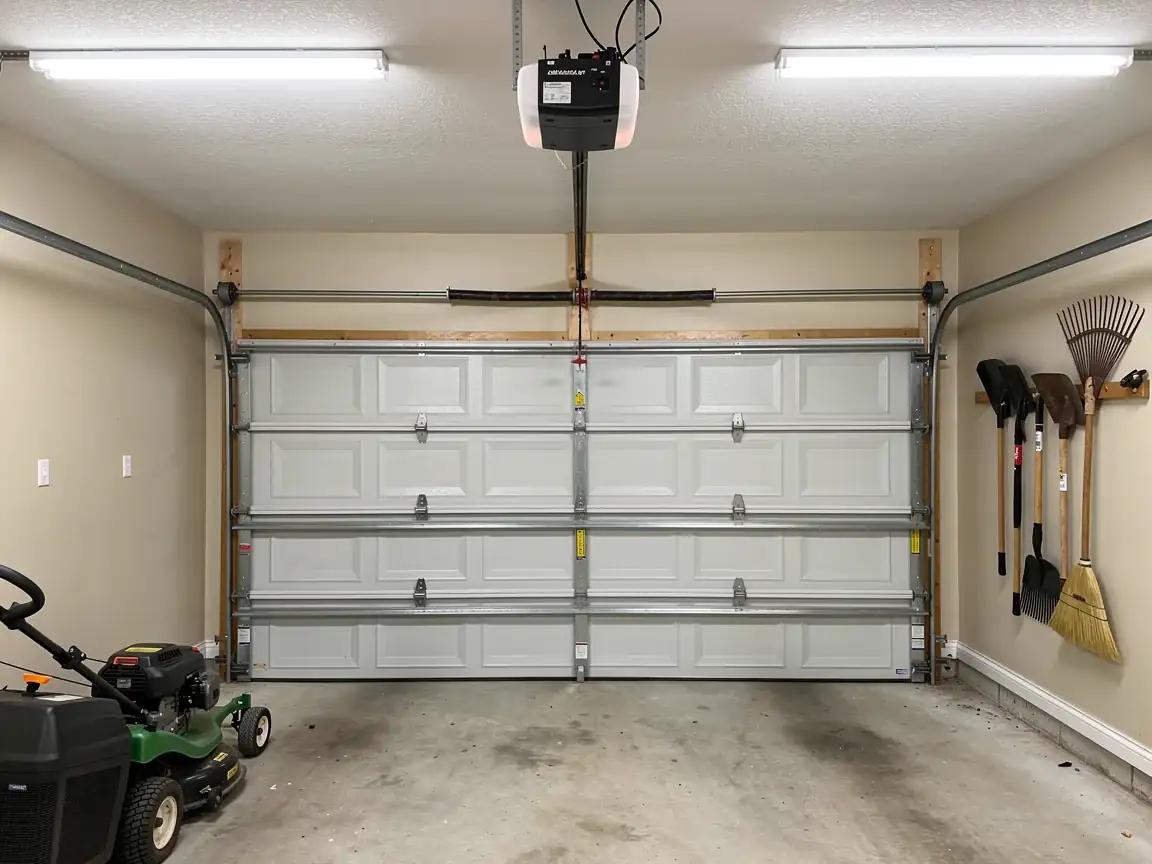
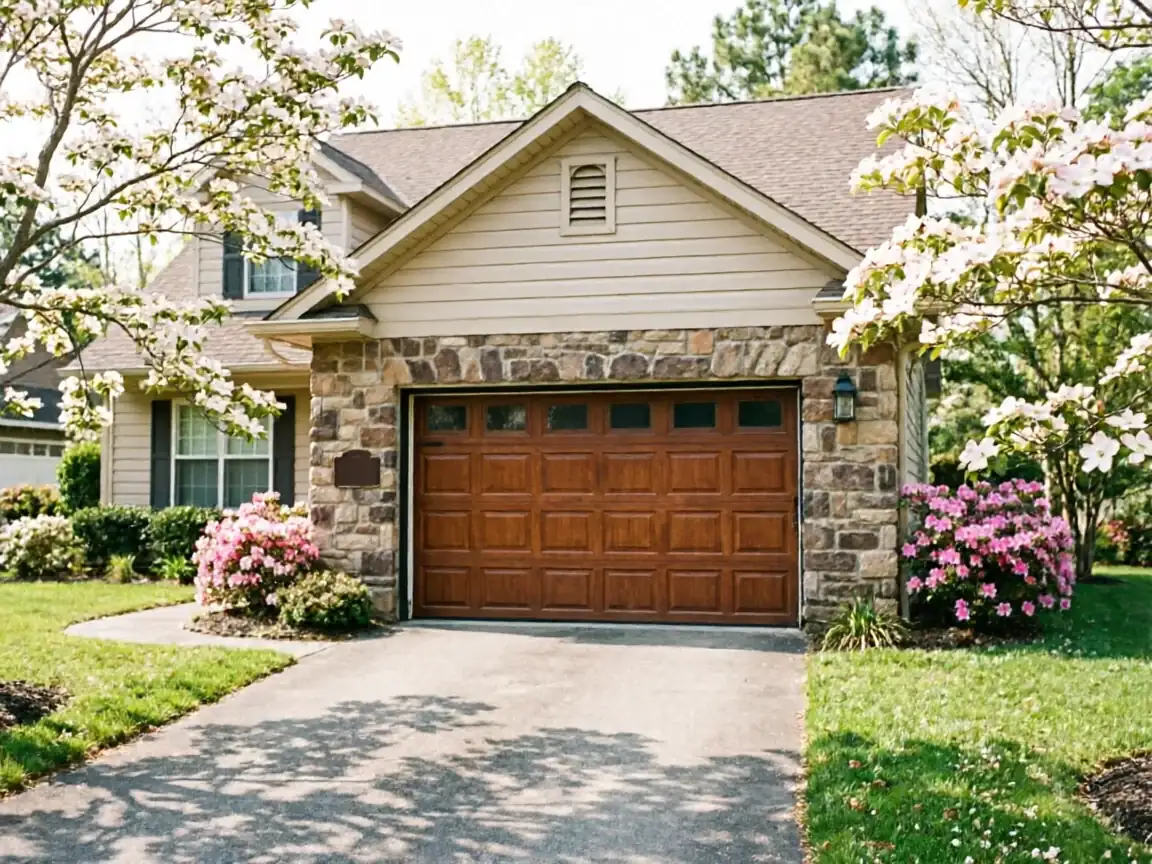
Most of the housing around Smiths Station went up in the early 1990s. Doors from that era are almost always steel sectional, often with embossed wood-grain panels and no foam core behind them - just a single skin of lighter-gauge steel. That construction holds up fine for twenty, thirty years, but it dents easier than the insulated doors built since, and once the bottom panel starts to go, there's nothing behind it to slow the rust.
The climate here is mild with occasional freezes, not the hard freeze-thaw cycles you'd get further north, but that occasional freeze matters more on a door with no insulation. Moisture sits at the bottom panel seam, freezes overnight a handful of times a winter, and that's enough to start lifting paint and pitting steel over a few seasons. Add a lawn mower bump or a trailer hitch tap - common on these older single-skin panels - and you've got a dent on top of rust that's already working from inside.
We see this pattern on doors from that build era more than on newer ones, where the insulated skin and thicker gauge steel shrug off the same hits.
Doing It Yourself
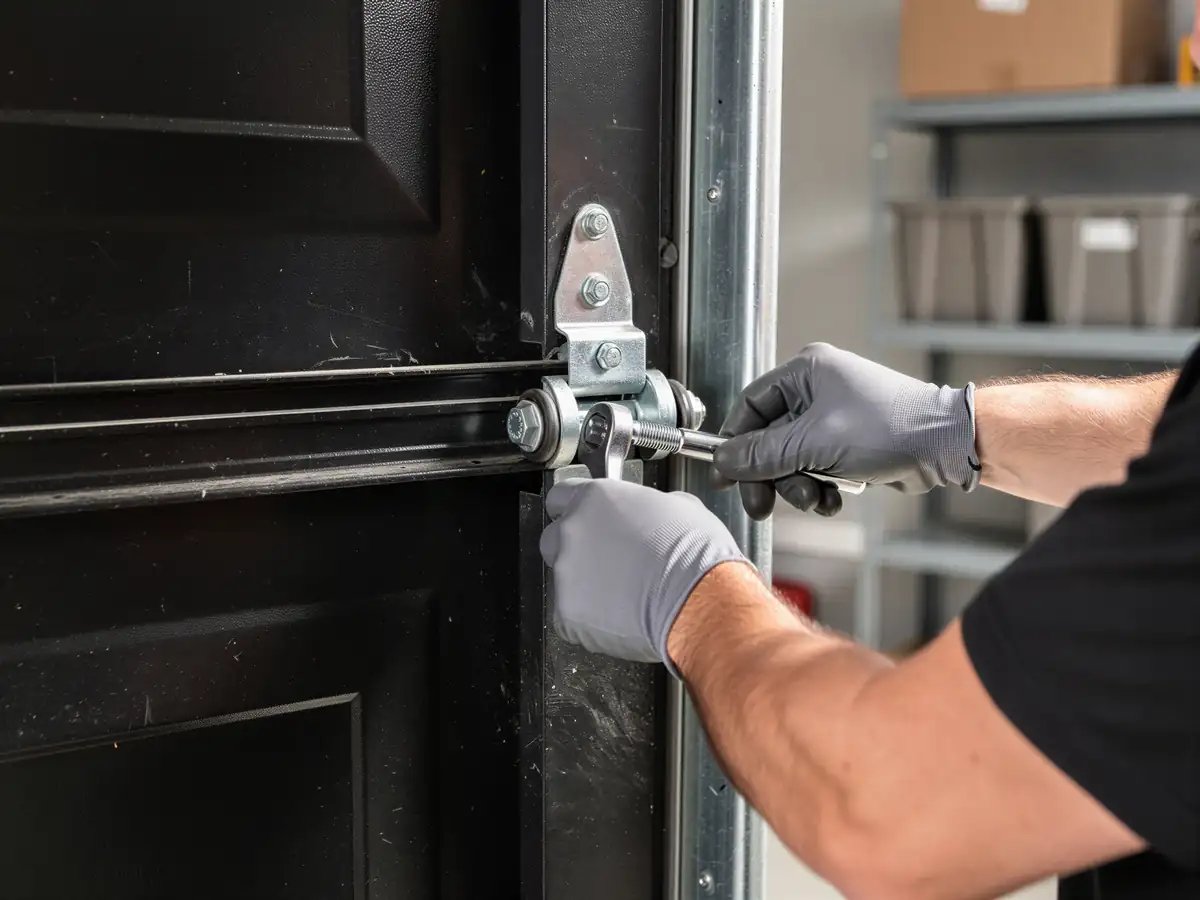
You can buy a replacement panel and bolt it in yourself if you're handy and the door is a common size
The part itself isn't the hard part - it's finding the right one. A lot of doors from the early-90s wave out here were made by manufacturers that have since changed their panel profiles, so the replacement you order online may not match the ribbing or the embossing on the rest of the door, even if the dimensions are close.
We'll be straight with you
We don't carry every discontinued profile on the truck, and sometimes nobody does anymore. If your door is one of those, a perfect match might not exist at any price, and the honest move is to tell you that before you spend money chasing it.
What we'd actually check before you order anything
The hinge spacing, whether the panel is insulated or single-skin, and whether the track still lines up square once the old panel's out. Get any of those wrong and you're fighting the door, not fixing it. If you want a second opinion before you buy a panel, send us a photo of the door and the model tag if it's still readable.
How to Book
There's no local branch here - we run out of our Columbus shop and drive the roughly 8 miles out to Smiths Station for every job, panel replacement included. That means we're not doing drop-in same-day visits off a local lot, but it also means the truck that shows up has the same stock and the same person doing the estimate as every other job we run that week.
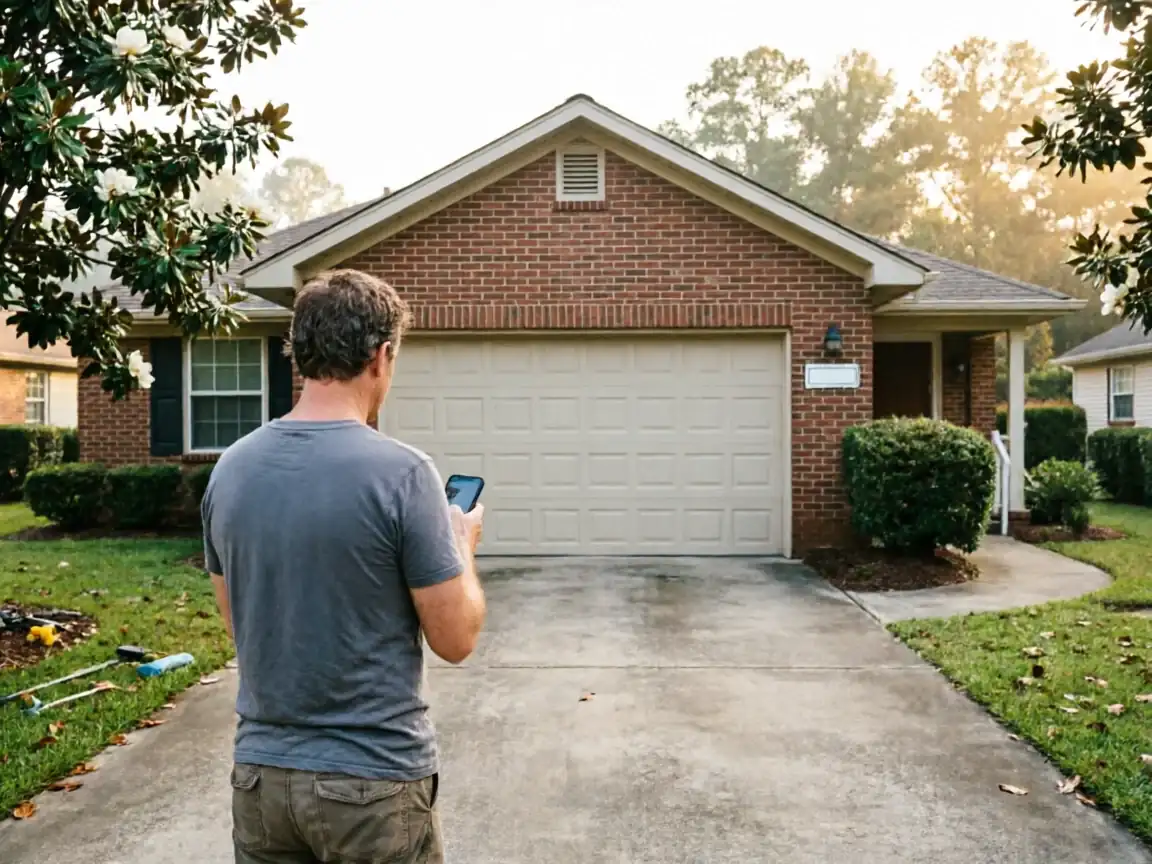
Tell us the door's age if you know it, roughly when the house was built, and whether it's one panel or more that's damaged. A photo helps more than a description - panel ribbing and color are easier to match from a picture than from someone's memory of what the door used to look like.
You can see the rest of what we cover in the area on the service area page, or read about the full panel replacement service as we run it out of Columbus on the Columbus panel replacement page.
What Is on the Truck
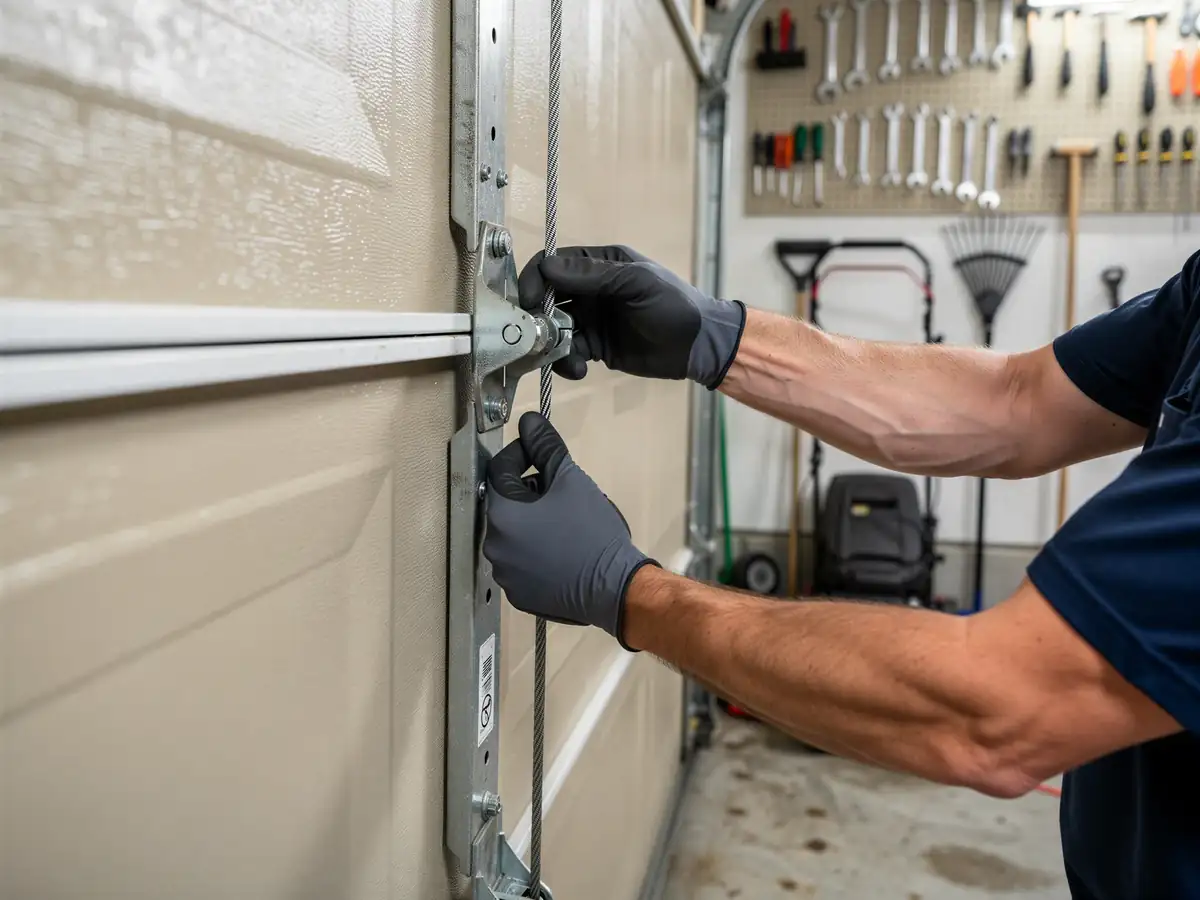
For doors from the early-90s building wave that's common out here, we carry steel sections in the sizes that era used most, along with the hinges, rollers, and end stiles that typically need replacing alongside a panel - the fasteners on a thirty-year-old door are rarely in shape to reuse. What we don't carry is every discontinued embossed profile; if your door needs an exact match to a pattern a manufacturer stopped making years ago, we'll tell you that on site rather than make you wait on a part that might not exist.
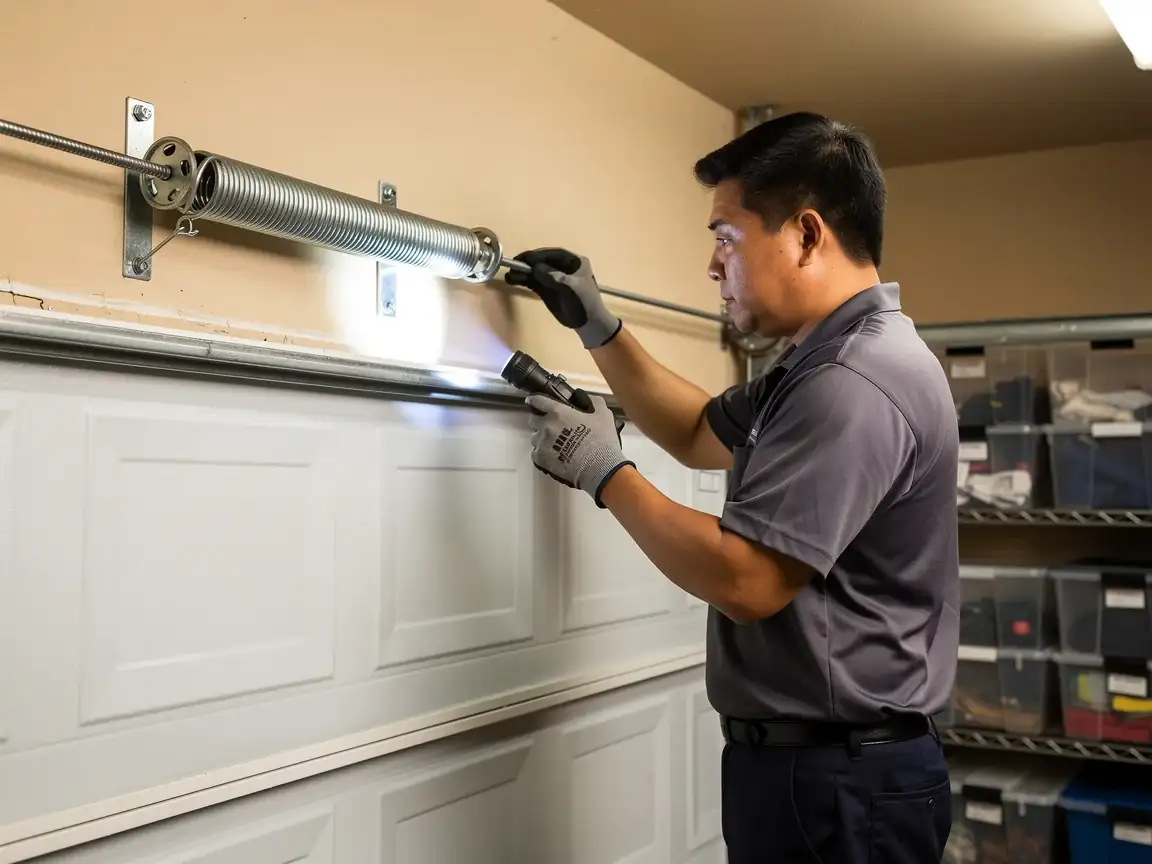
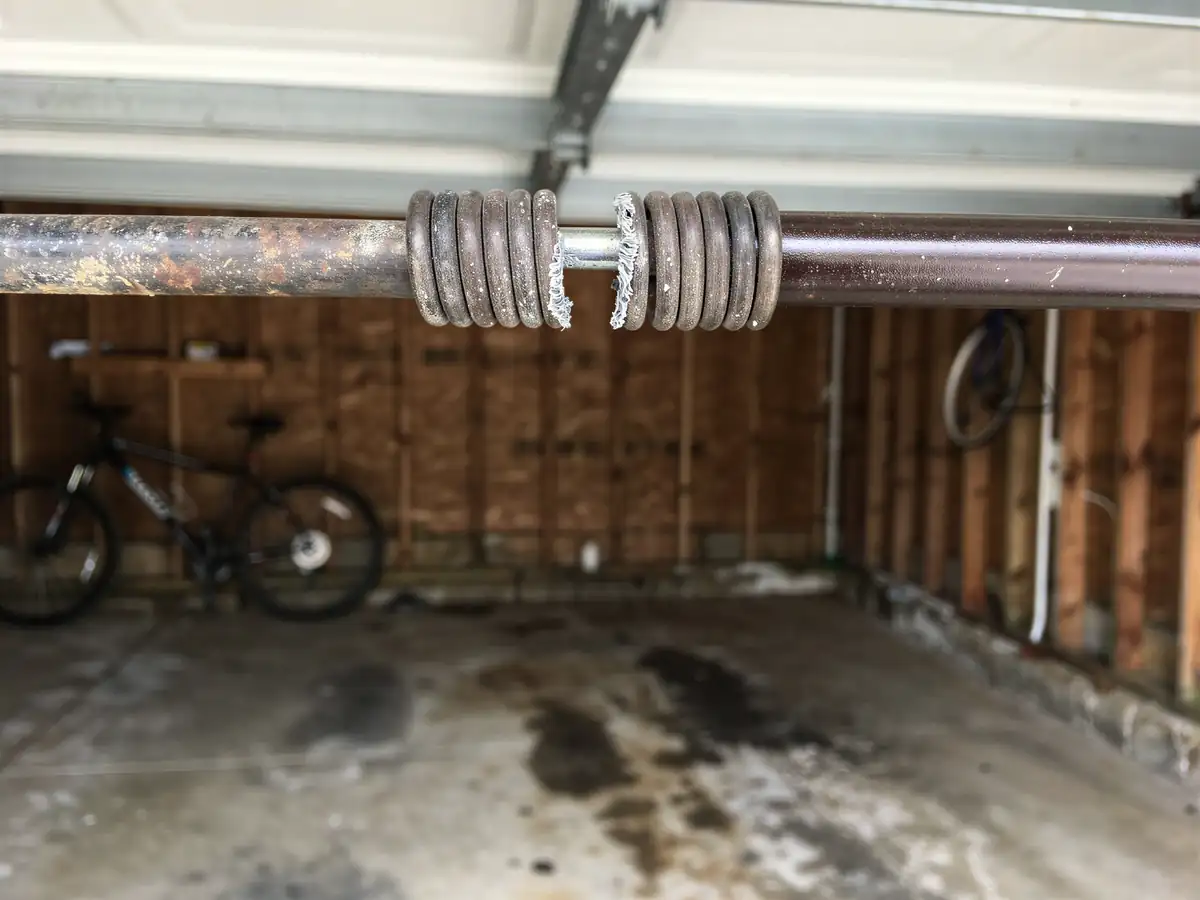
We also carry basic insulation kits, since a fair number of single-panel swaps on older doors turn into an insulation upgrade once the owner sees what the new panel costs next to retrofitting the whole door. Cable, torsion spring stock, and the usual track hardware ride along too, because panel damage on a door this age often means something else got bent or pulled loose in the same hit. We'd rather show up with more than the panel needs and not use it than make a second trip out from Columbus for something we should've had the first time.