What You Are Seeing
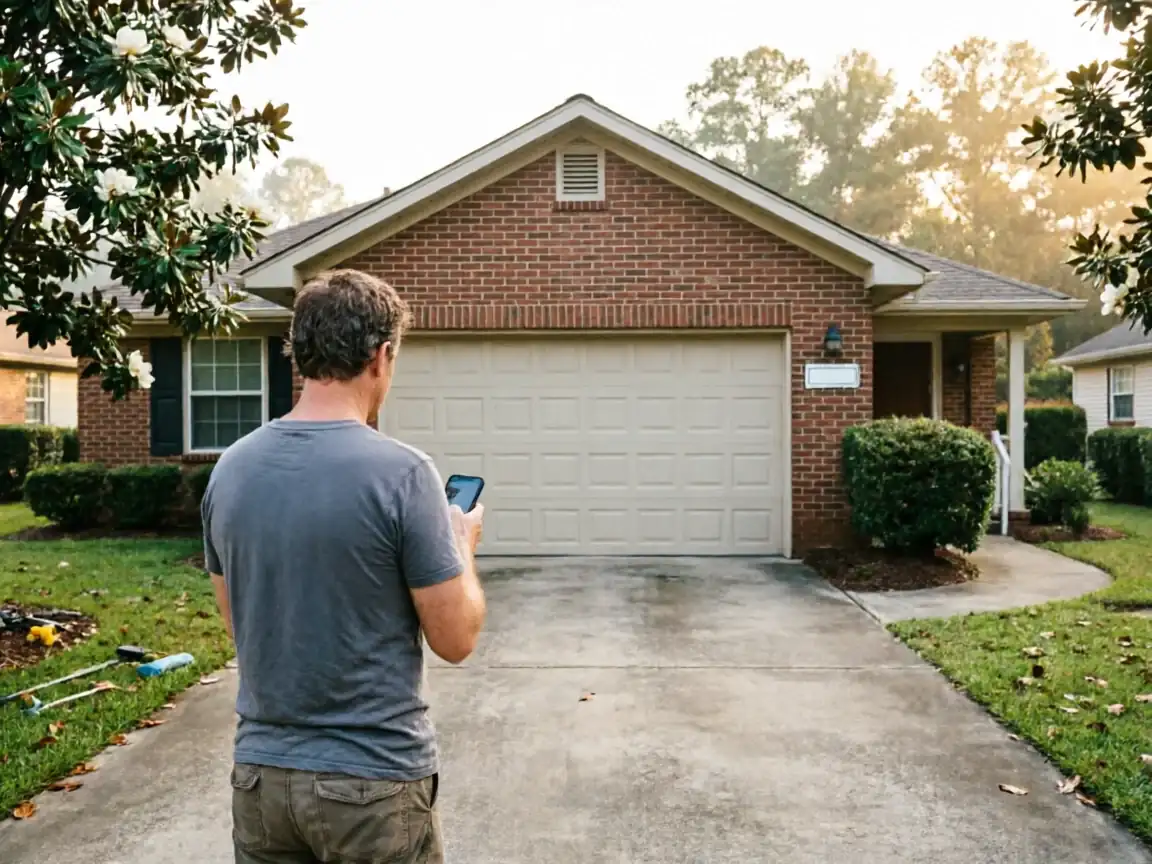
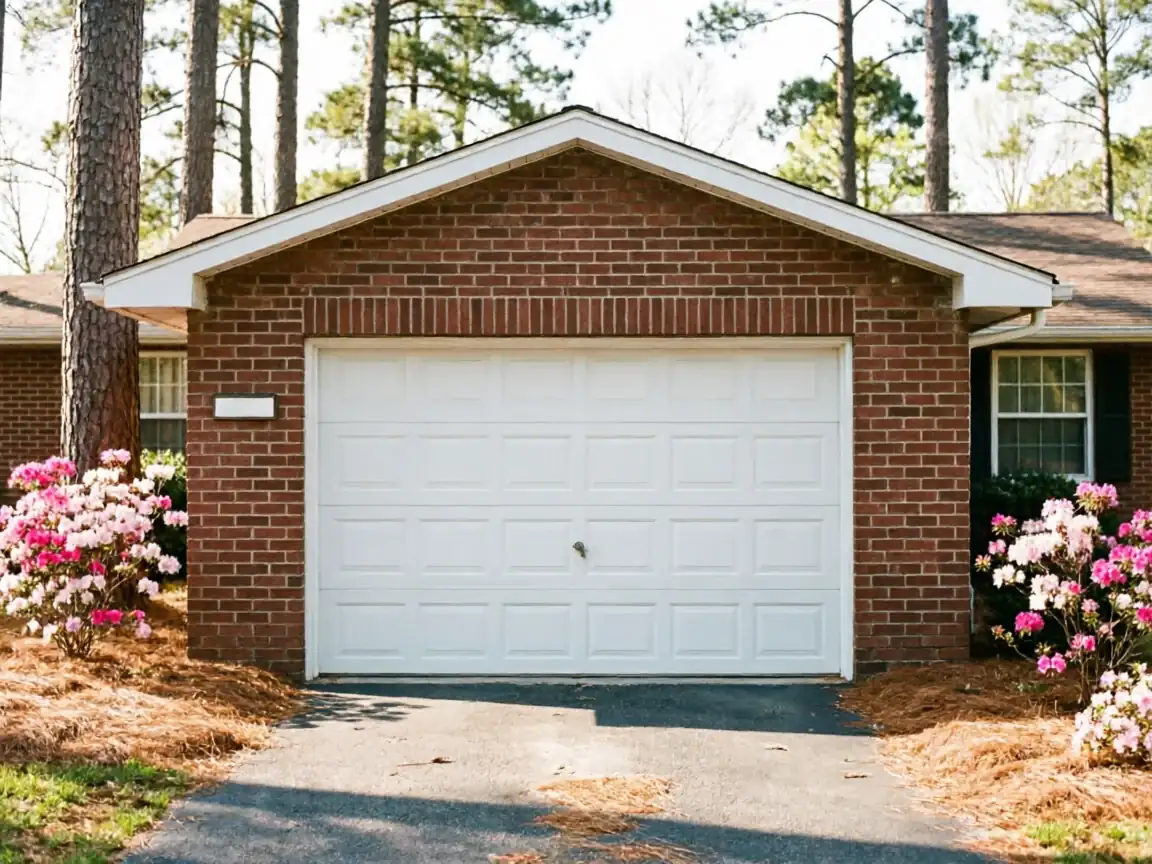
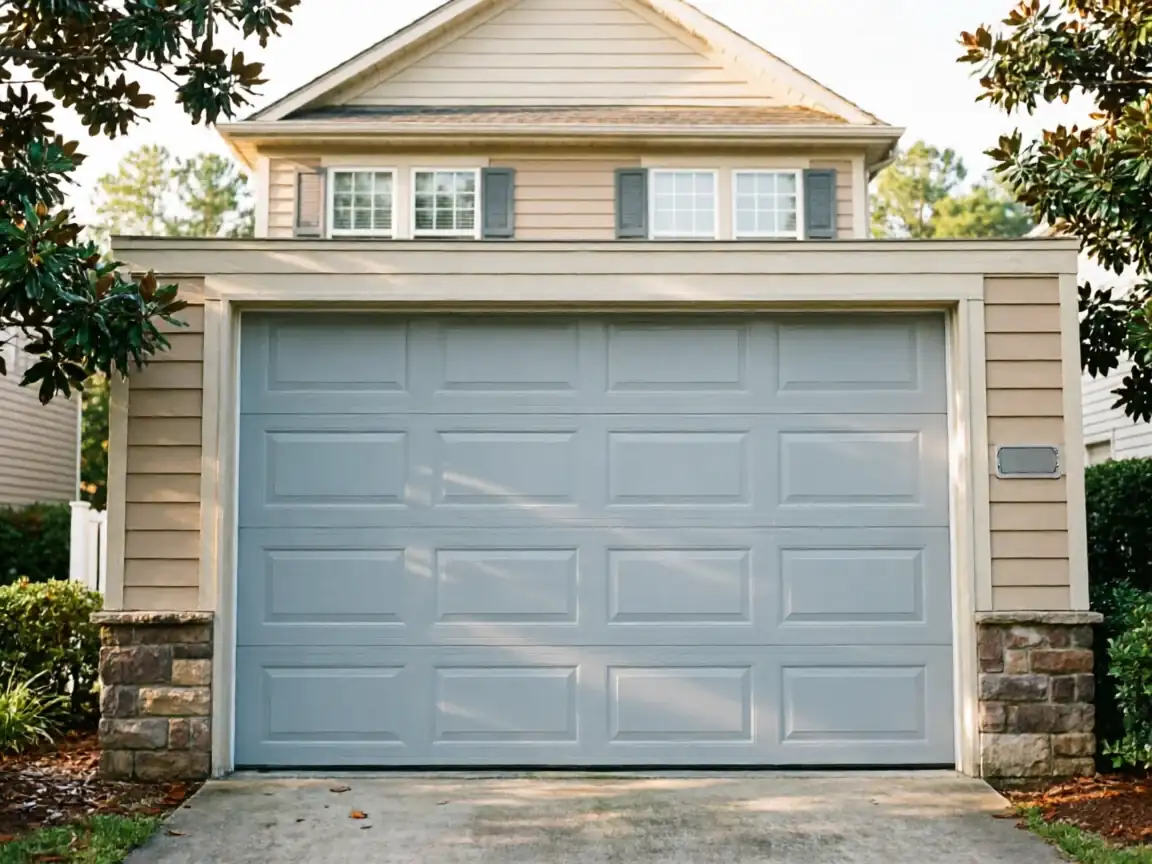
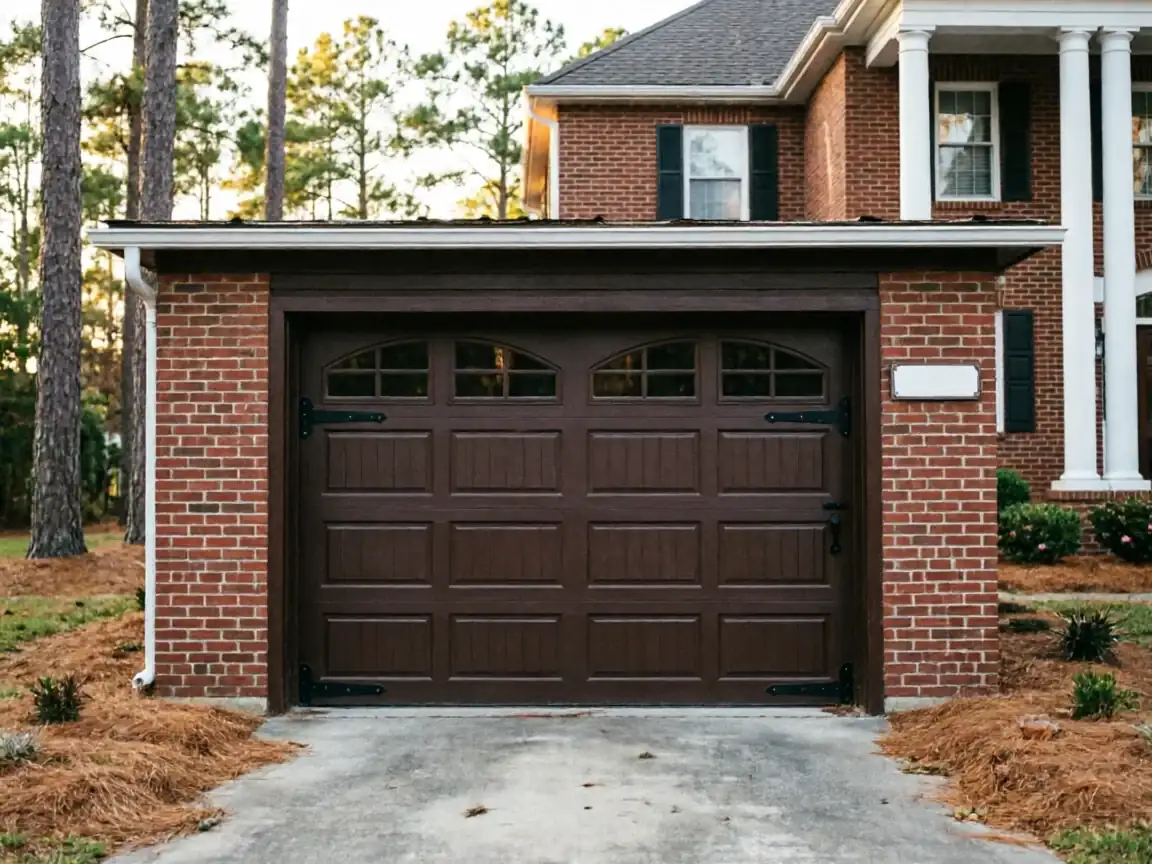
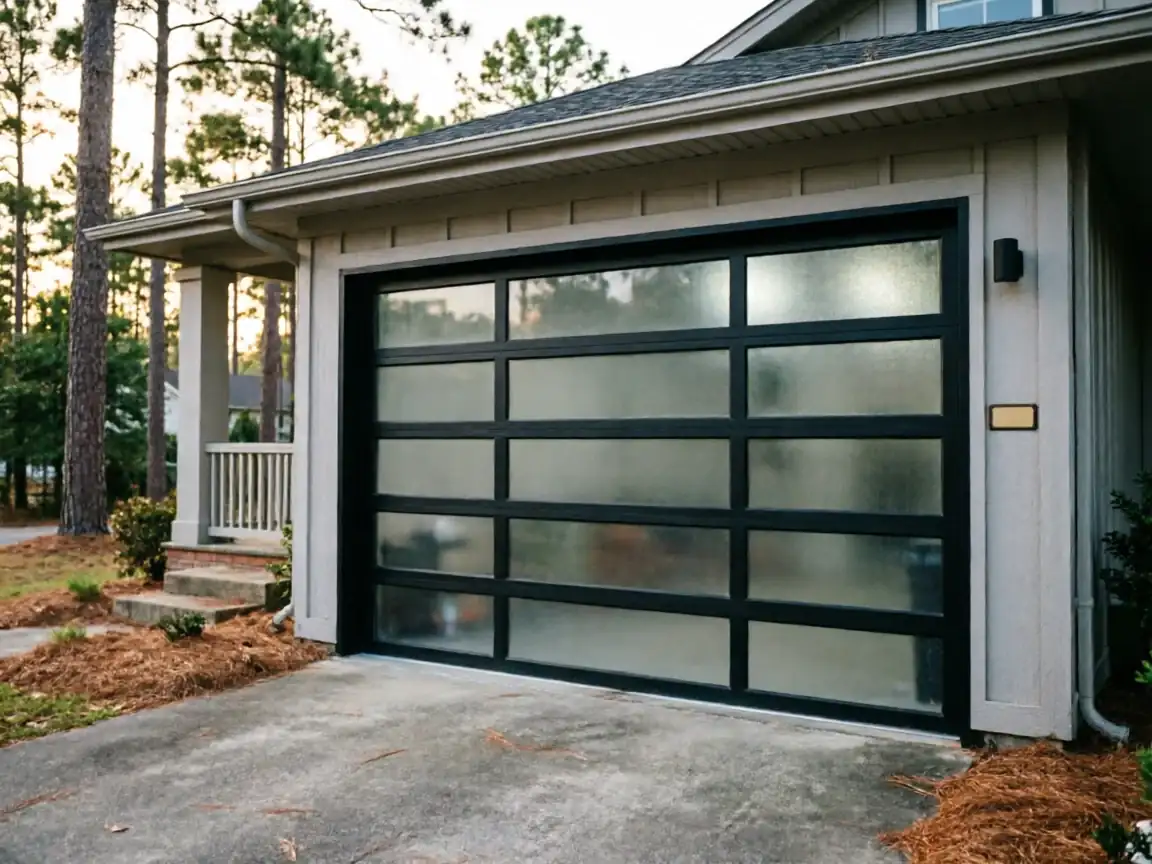
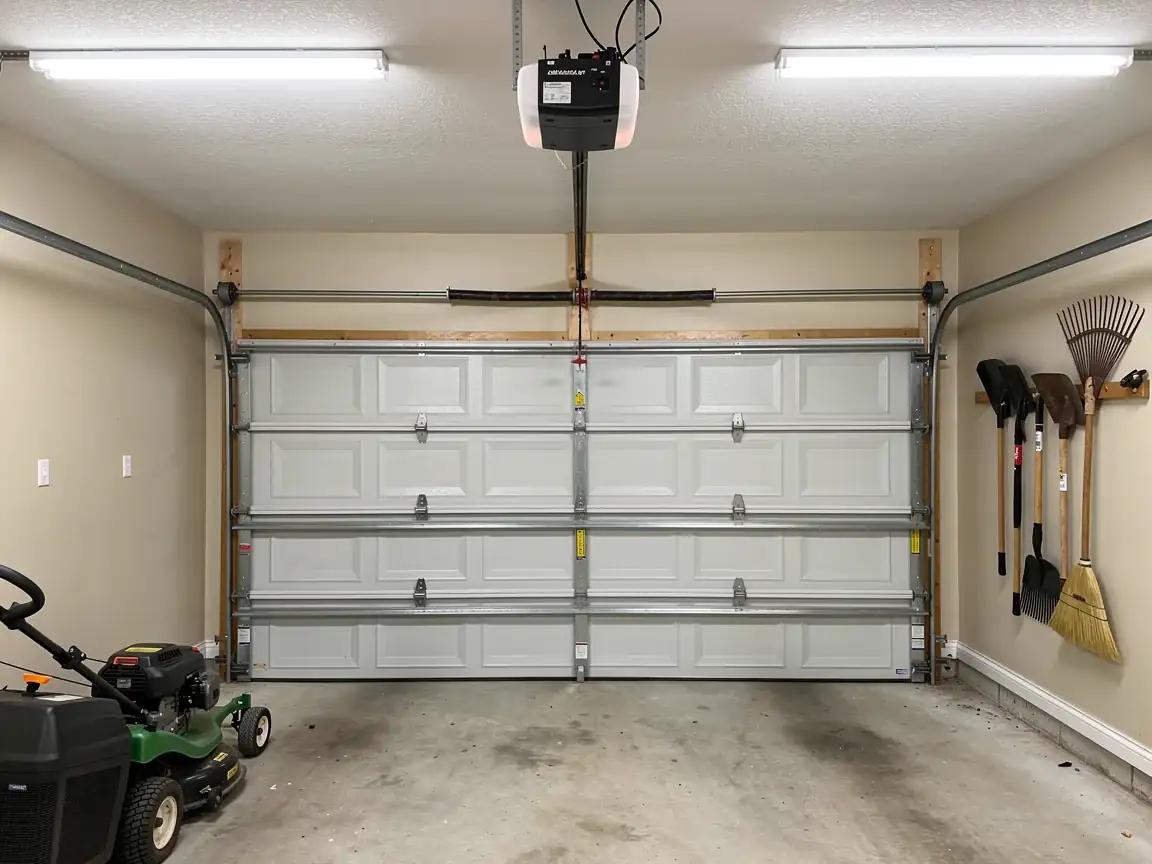
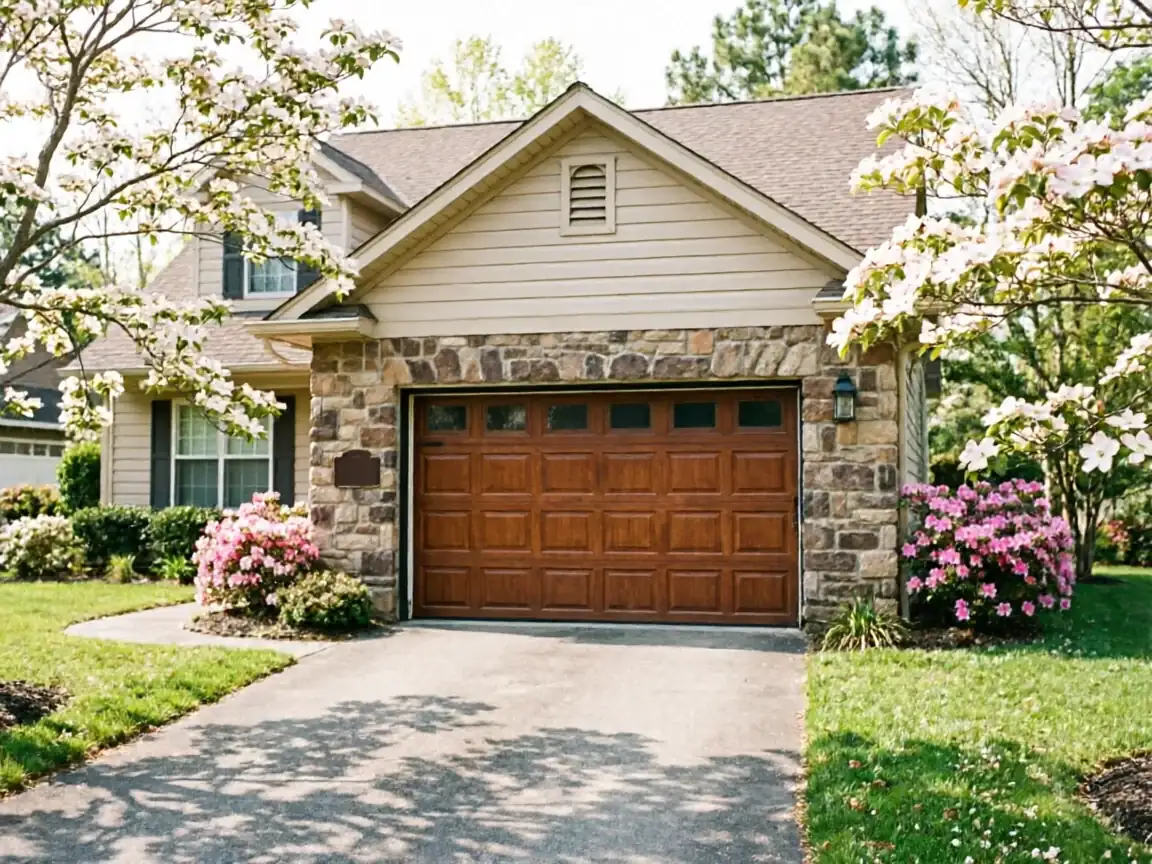
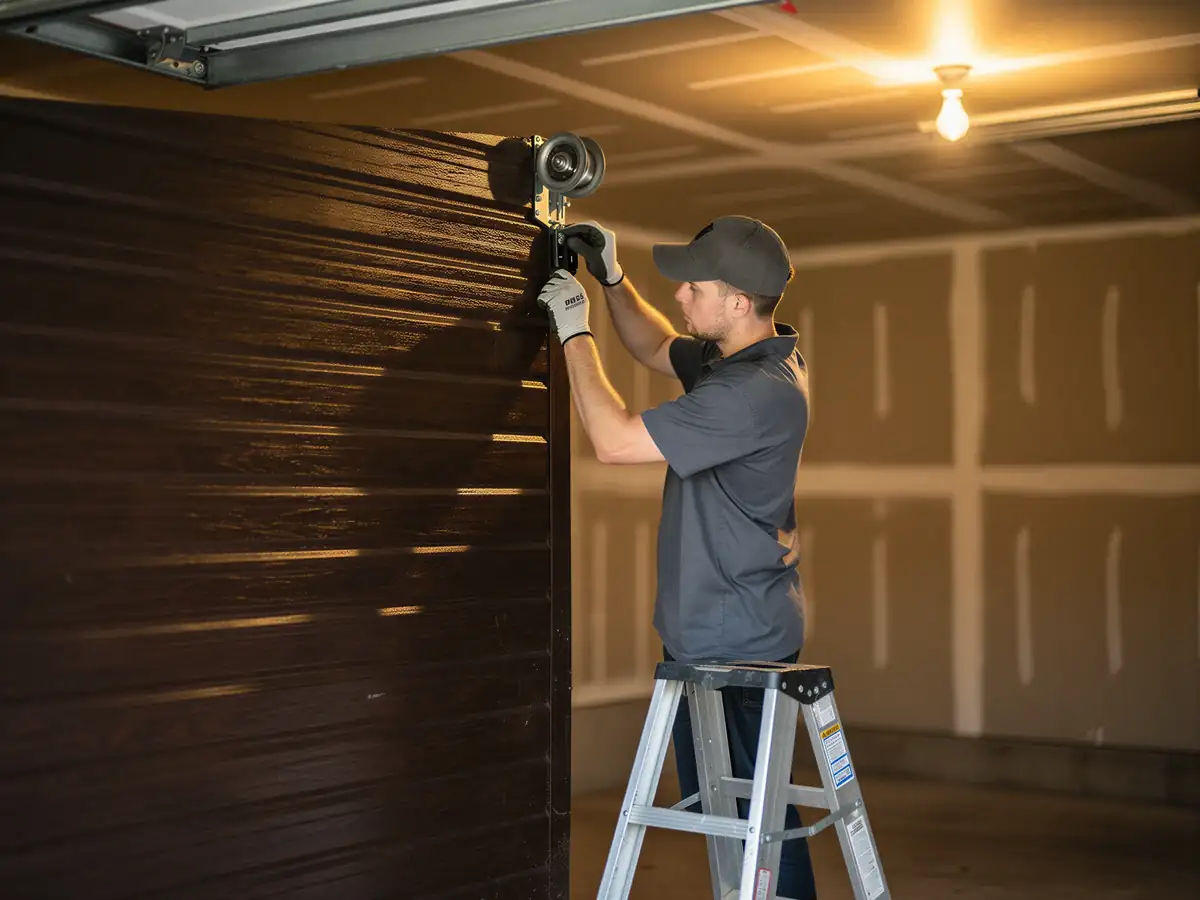
Most houses on this side of the river went up around 1983, and across our whole service area the build years run from 1972 to 2011 with a median closer to 1991 - Phenix City sits on the older edge of that range. That matters here because a lot of these doors have never had a panel replaced. The original steel is still hanging on the original hinges, with the original end stiles bolted to track that's four decades old. When one section finally gives out - usually from a car bump, a storm-bent bottom panel, or rust working through a seam - you're not dealing with a door that's been touched. You're dealing with hardware that's original top to bottom, which means a panel swap often turns into a hinge and roller job too, because the parts around the break are as tired as the break itself. If you see daylight at a seam, a section that bows when the door's down, or a panel that's visibly dented but the door still runs, that's a sign the metal has given up before the opener has."
Doing It Yourself
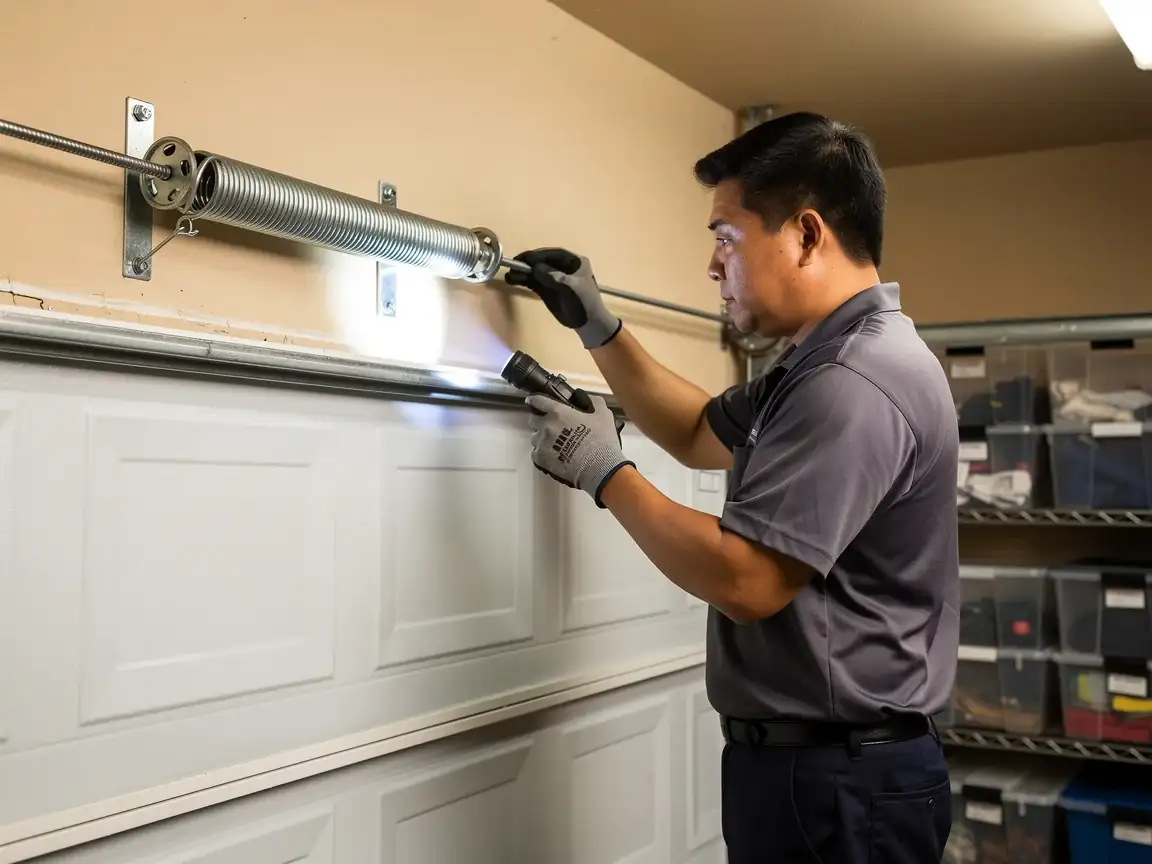
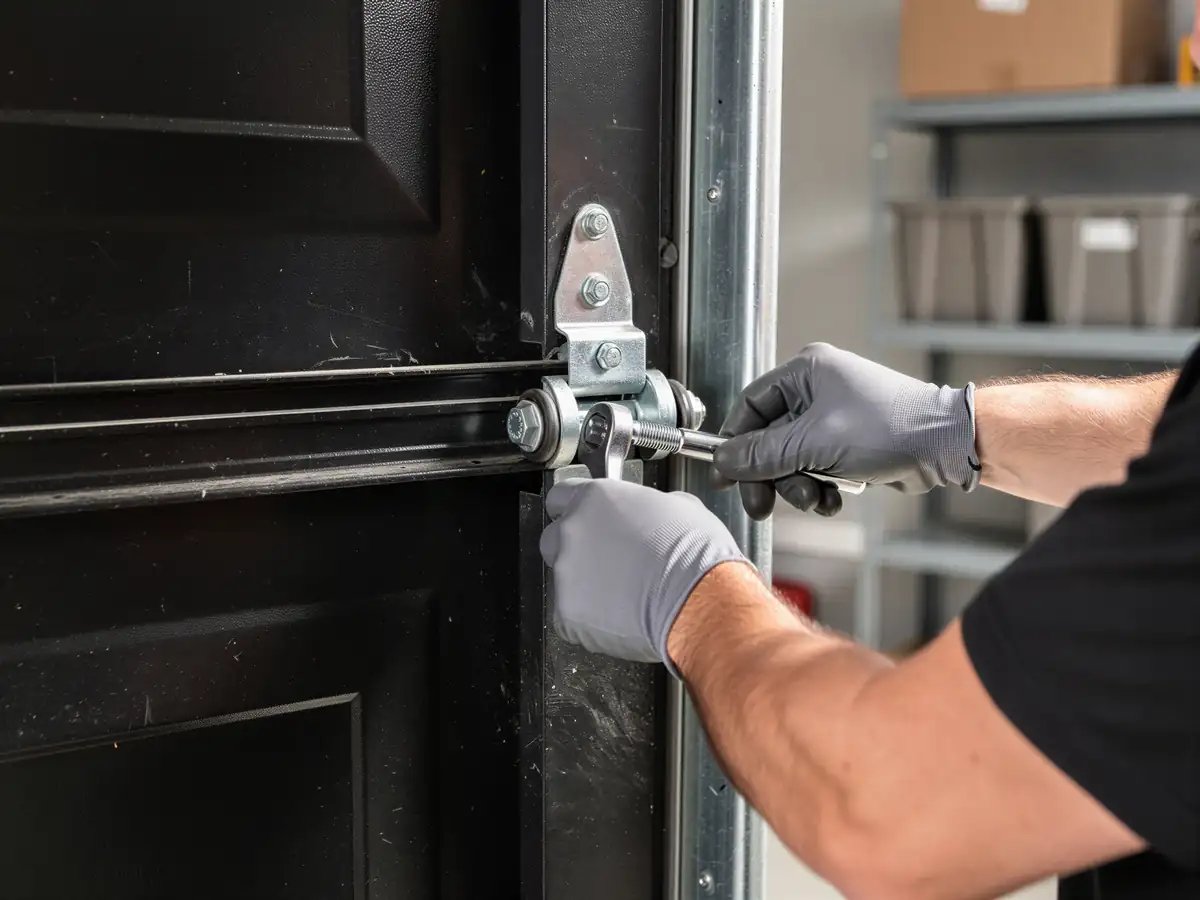
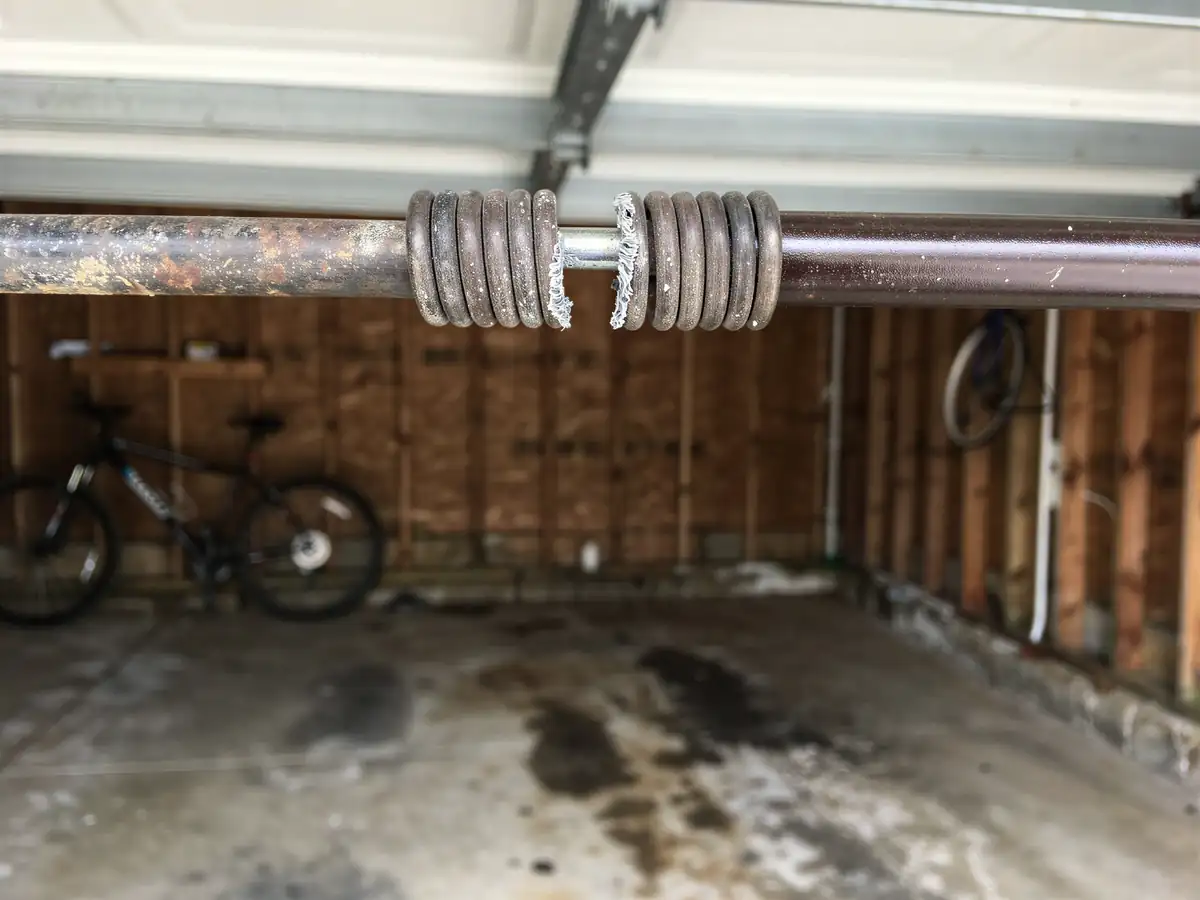
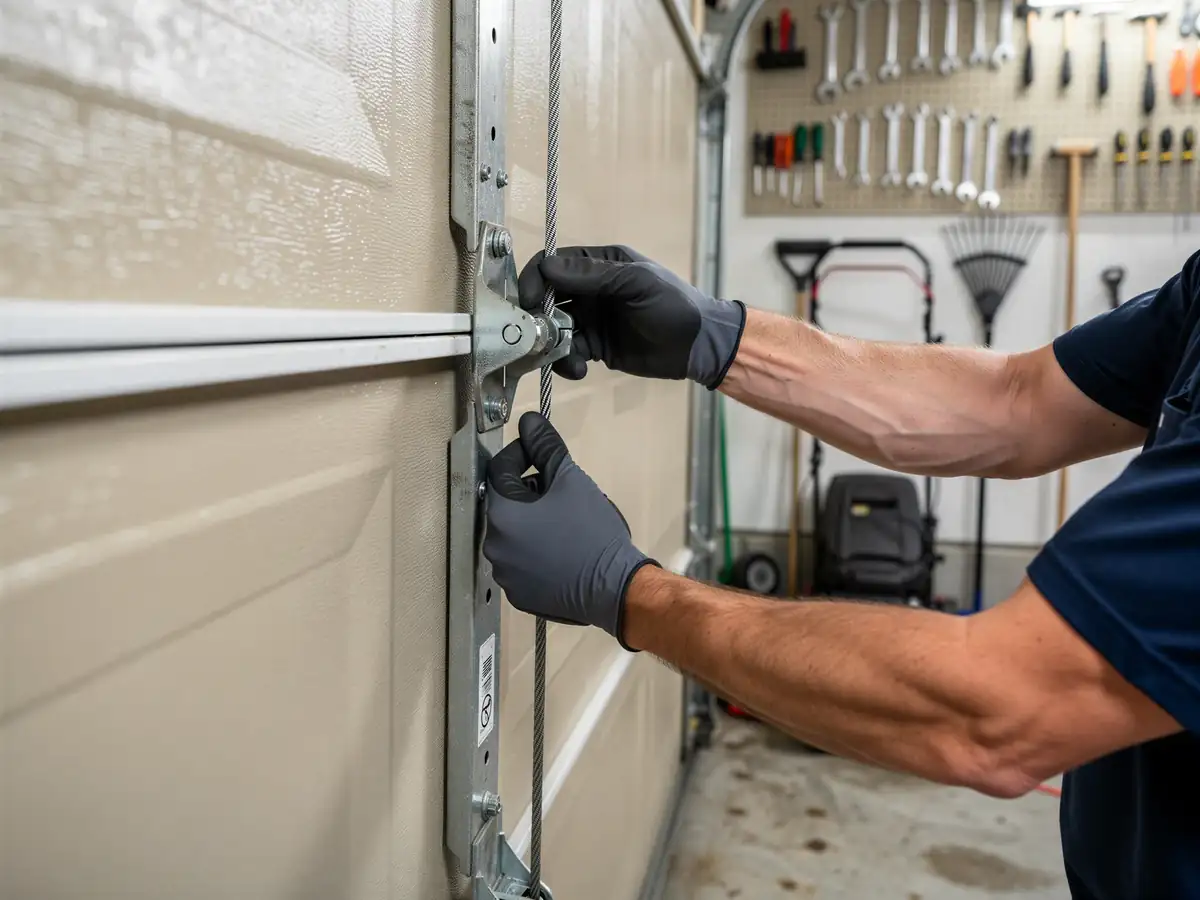
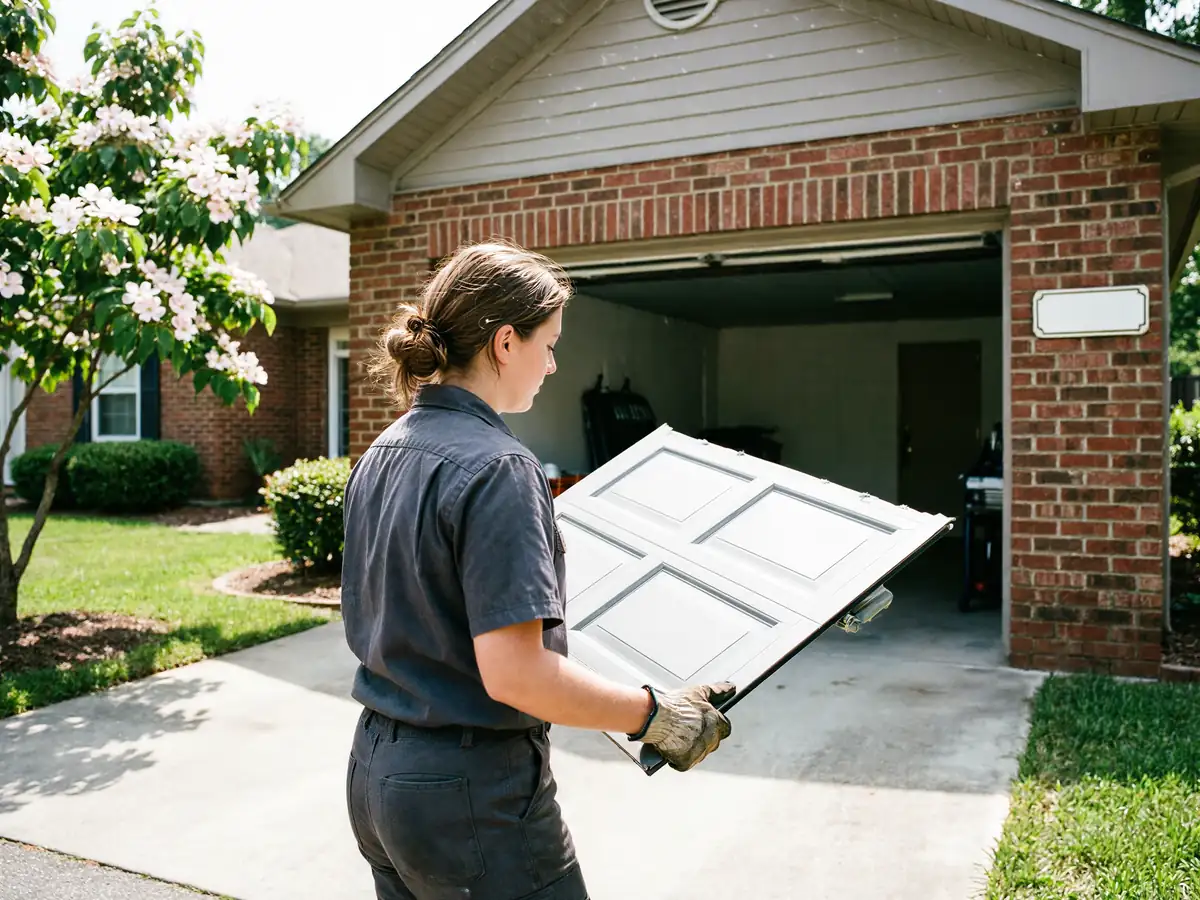
A single cracked or dented panel on a sectional door can, in theory, be swapped without touching the rest of the system - you unbolt the hinges, slide the old section out, bolt in the new one. In practice, on a door this old, the stiles are often rusted to the hinge bolts, and panel profiles made in the early 1980s don't always match what's sold today, so you're hunting for a compatible replacement section rather than a drop-in part. We don't recommend doing this yourself if the door is a double-wide, because the panel carries real weight once the spring tension shifts while a section is out, and a double door under uneven tension can jump the track. If it's a single panel on a single door and you've done bodywork before, it's not an unreasonable DIY job. Anything involving the bottom panel, the one with the cables routed through it, is not - that panel is tied directly into the spring system, and getting it wrong can put a cable under load with nowhere to go.
How Long It Takes
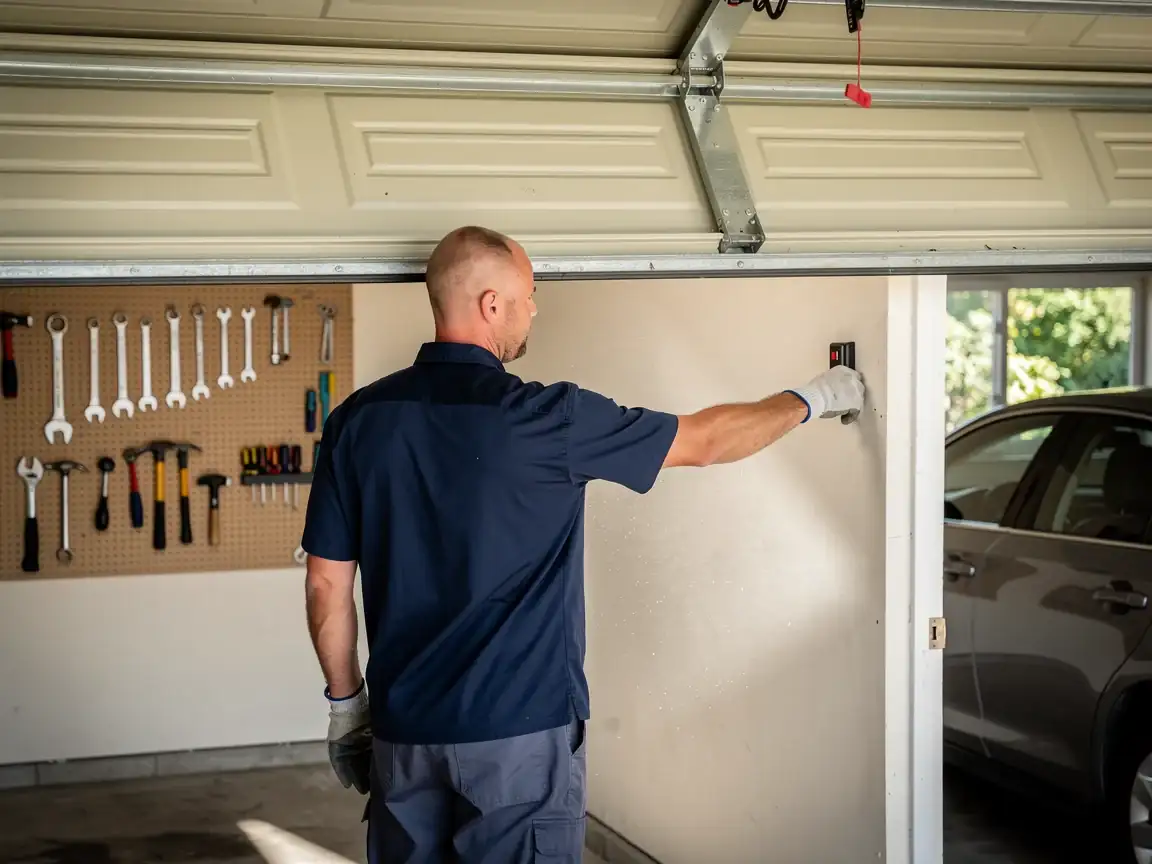
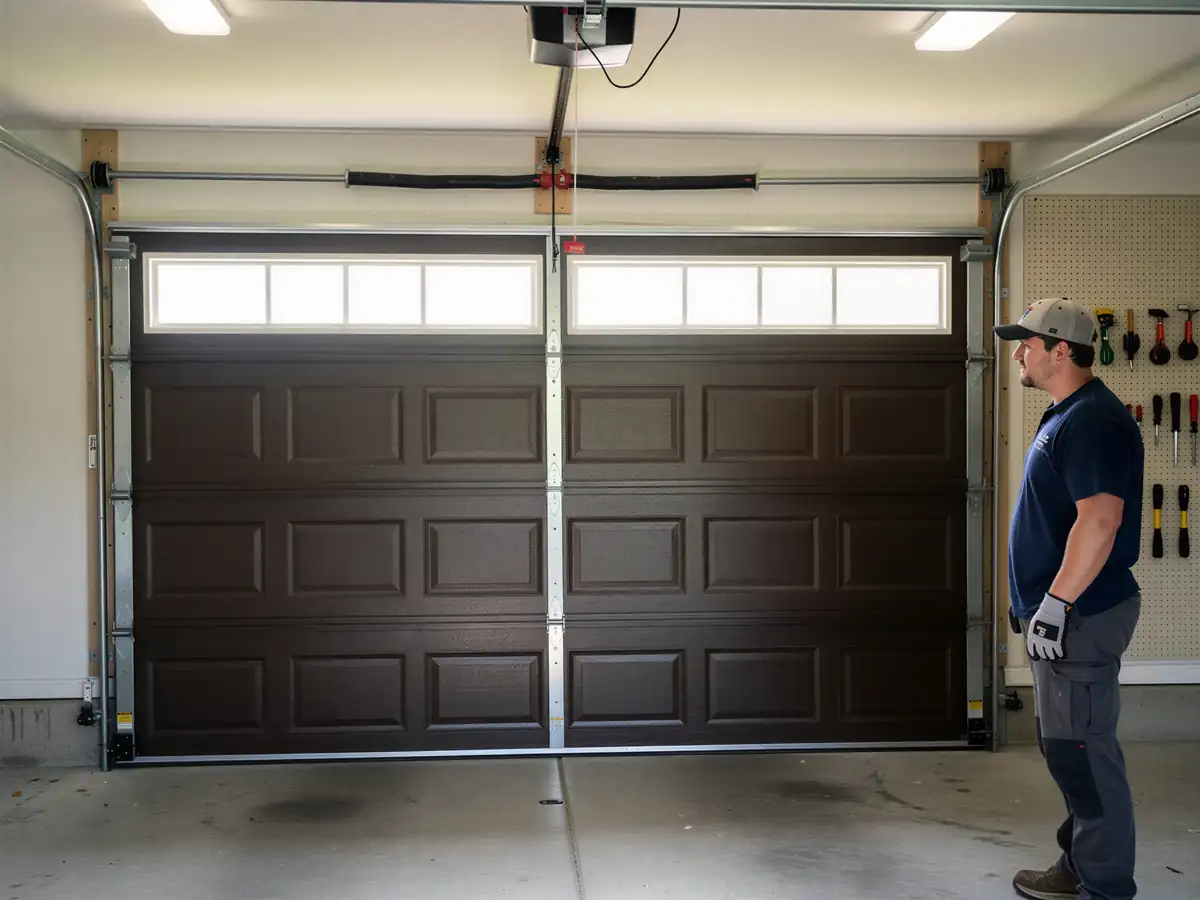
A straightforward single-panel swap on a standard-width door, once we've got the right section in hand, is usually a same-visit job - an hour or two of work once we're on site, not counting the drive from Columbus, which is about three miles. The holdup is almost never labor, it's sourcing. Panel profiles from the 1983-ish building era aren't stocked on every truck, and matching color and rib pattern on an older door sometimes means ordering the section rather than pulling one off the shelf. If your door is from that build era and only one section is damaged, we'll tell you upfront whether it's a same-day part or a special order - we're not going to quote you a timeline we can't back up. Double doors with cable-routed bottom panels generally take longer because the spring has to come off tension first.
The Cost of This Job
We don't have a posted price list for this page, and we're not going to invent one - what a panel costs here depends on whether it's a standard steel section we can match off the shelf or a custom-ordered profile for an older door, and whether the hinges and rollers around it need replacing with it. What we can tell you is the trade-off that actually drives the decision for most Phenix City households: on a door built around 1983, if more than one panel is going, or the track and hinges are original and worn alongside it, you're often better off pricing a full door replacement against the repair, because you'll likely be back for the next panel in a year or two. We'll give you both numbers before we start, not after.