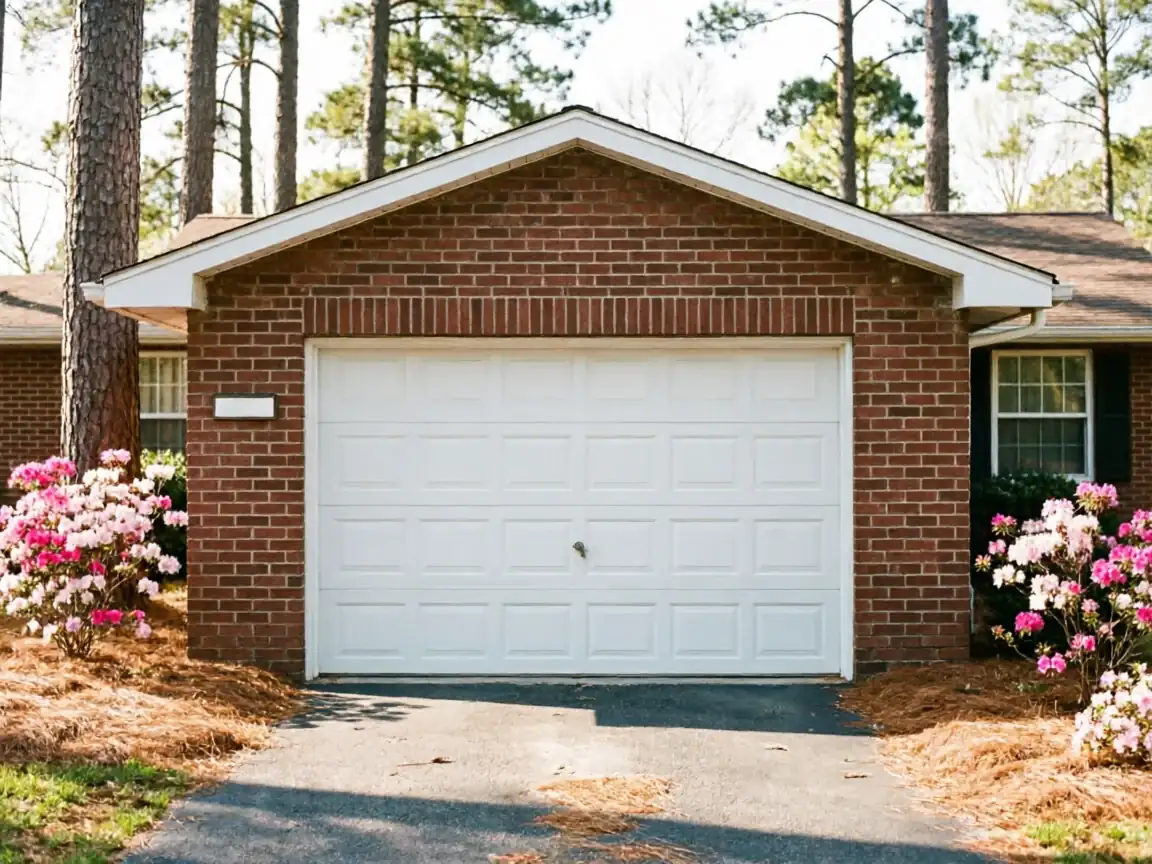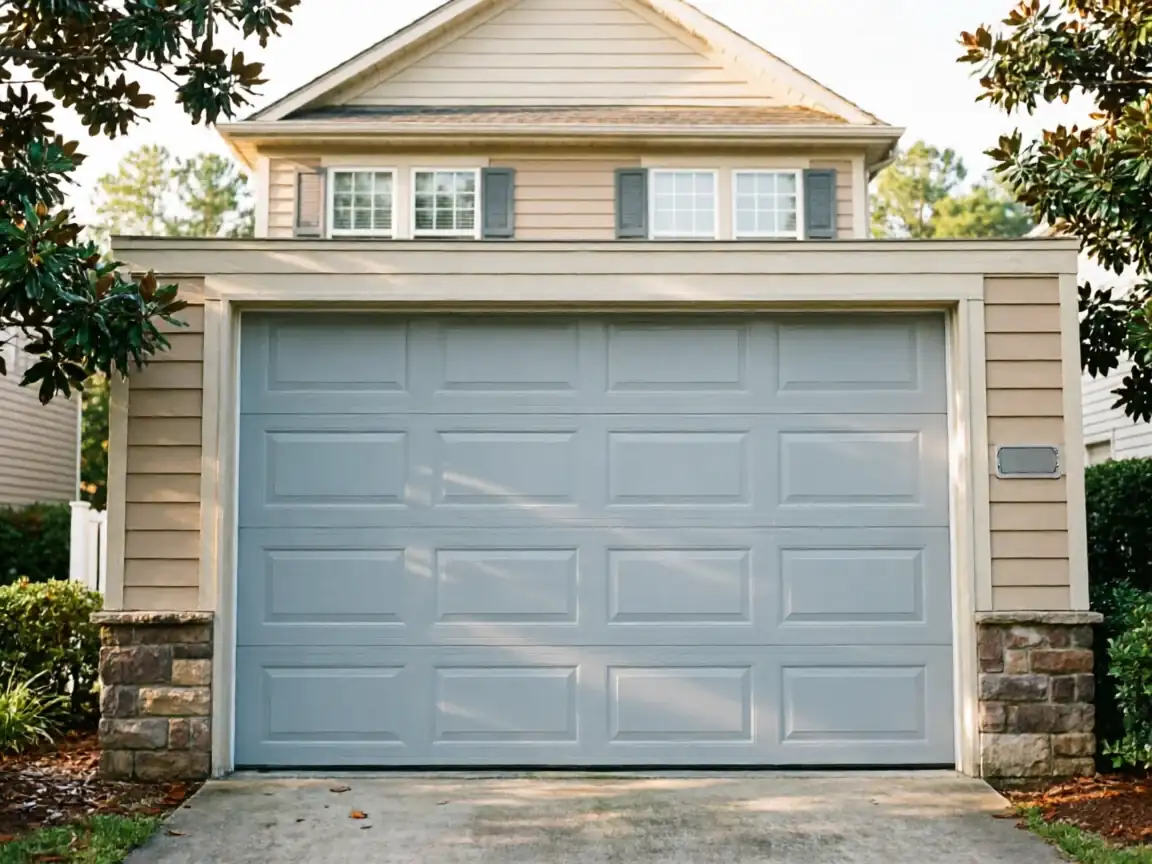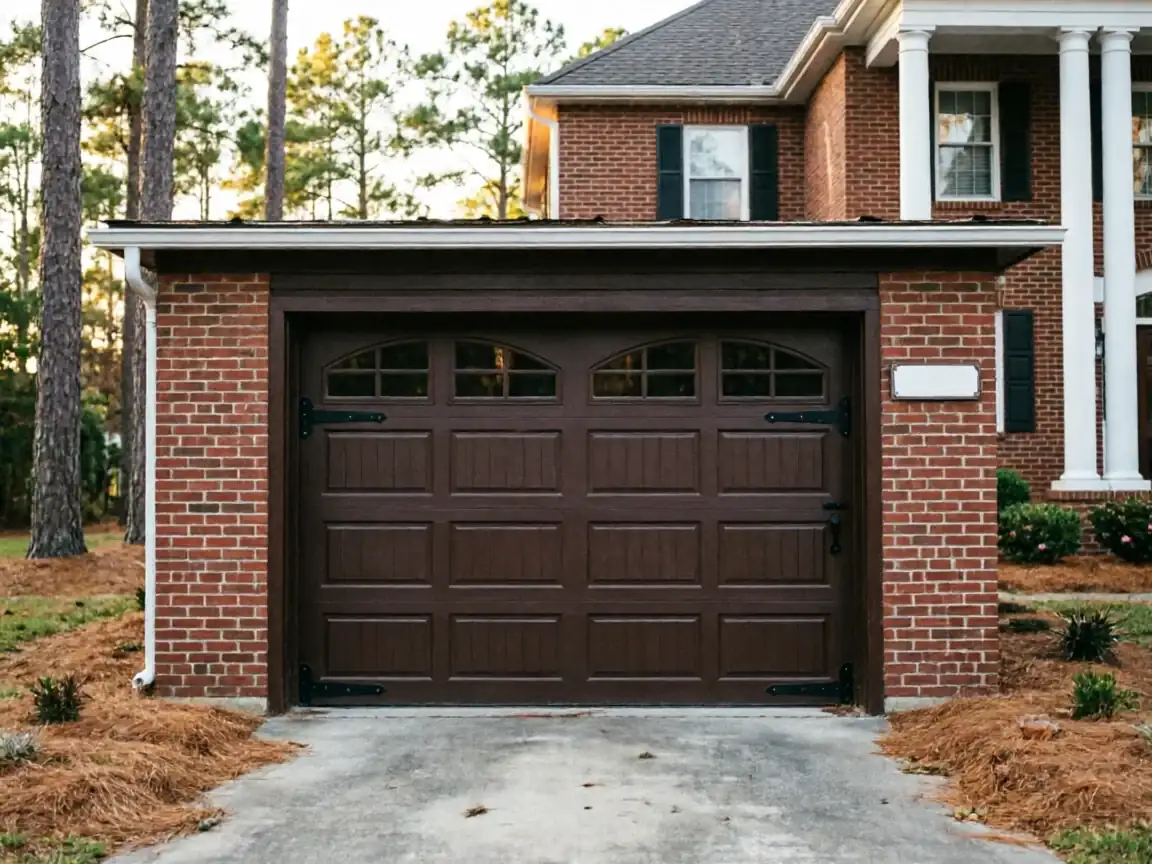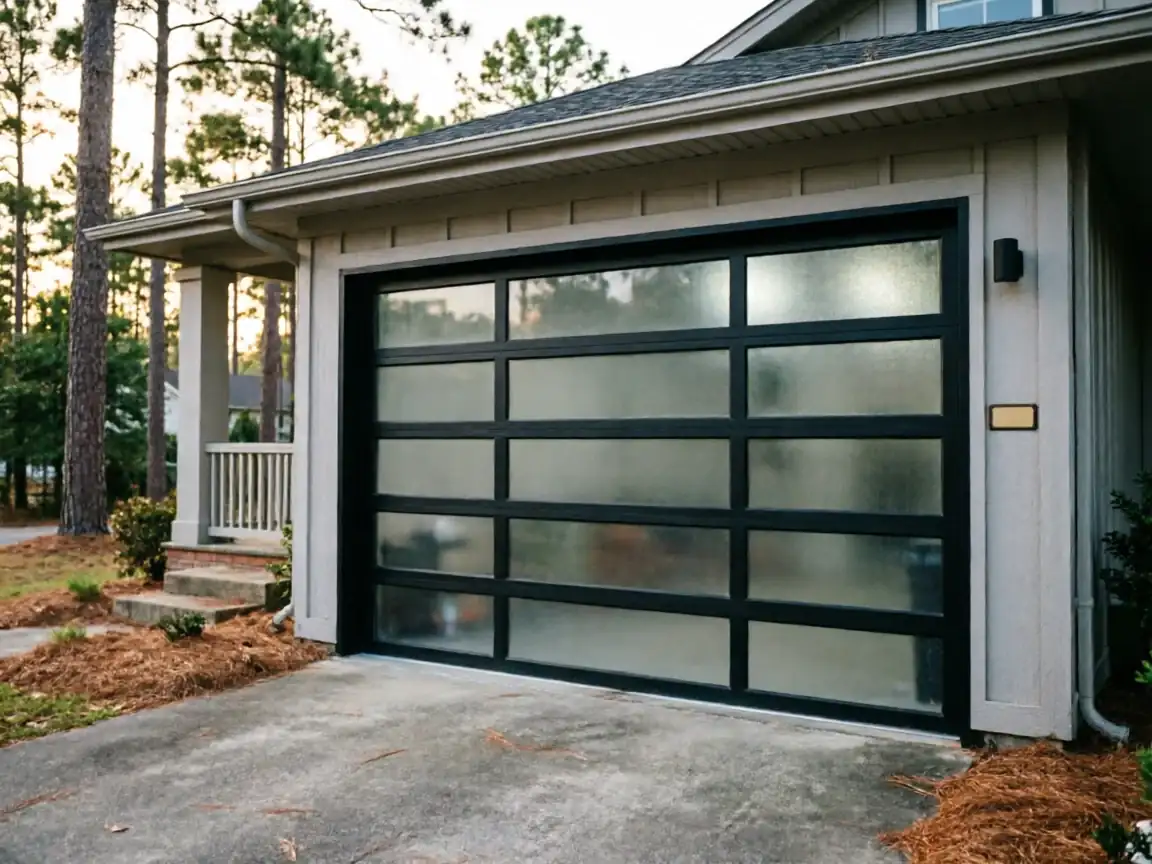
What You Are Seeing
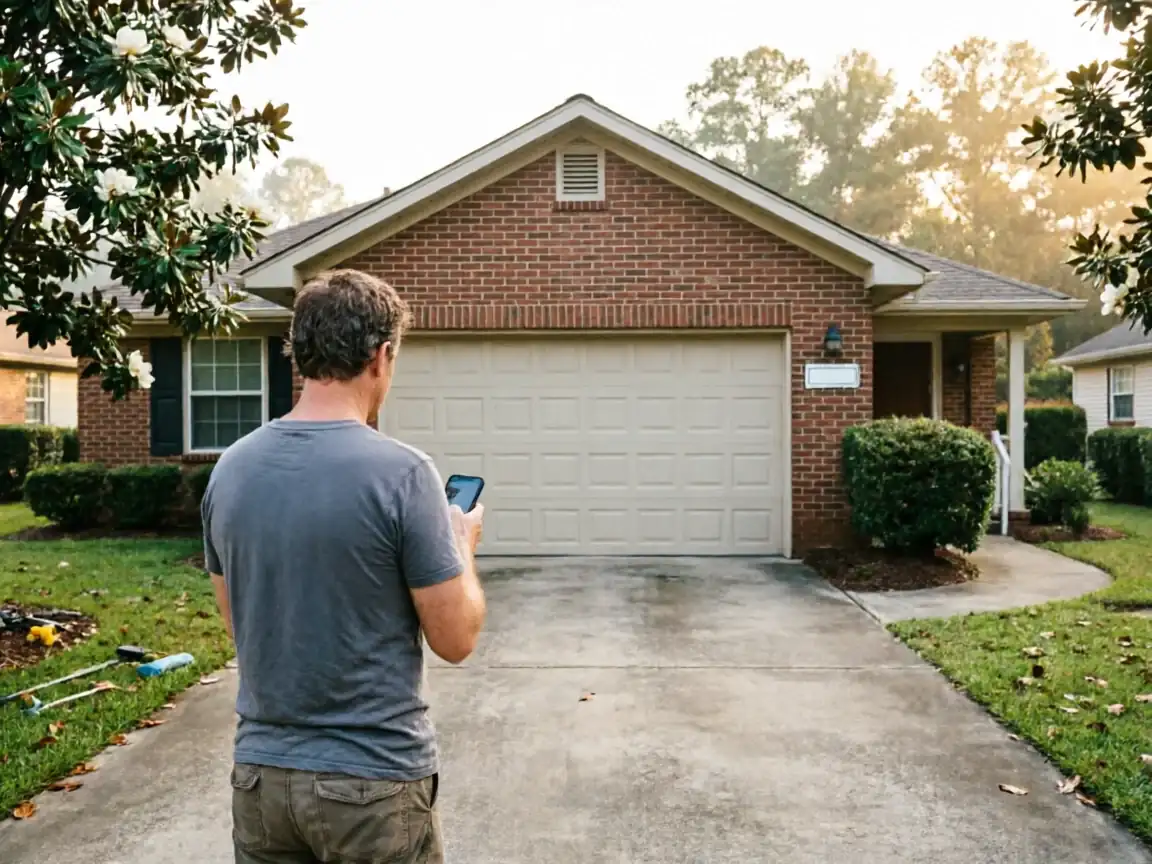
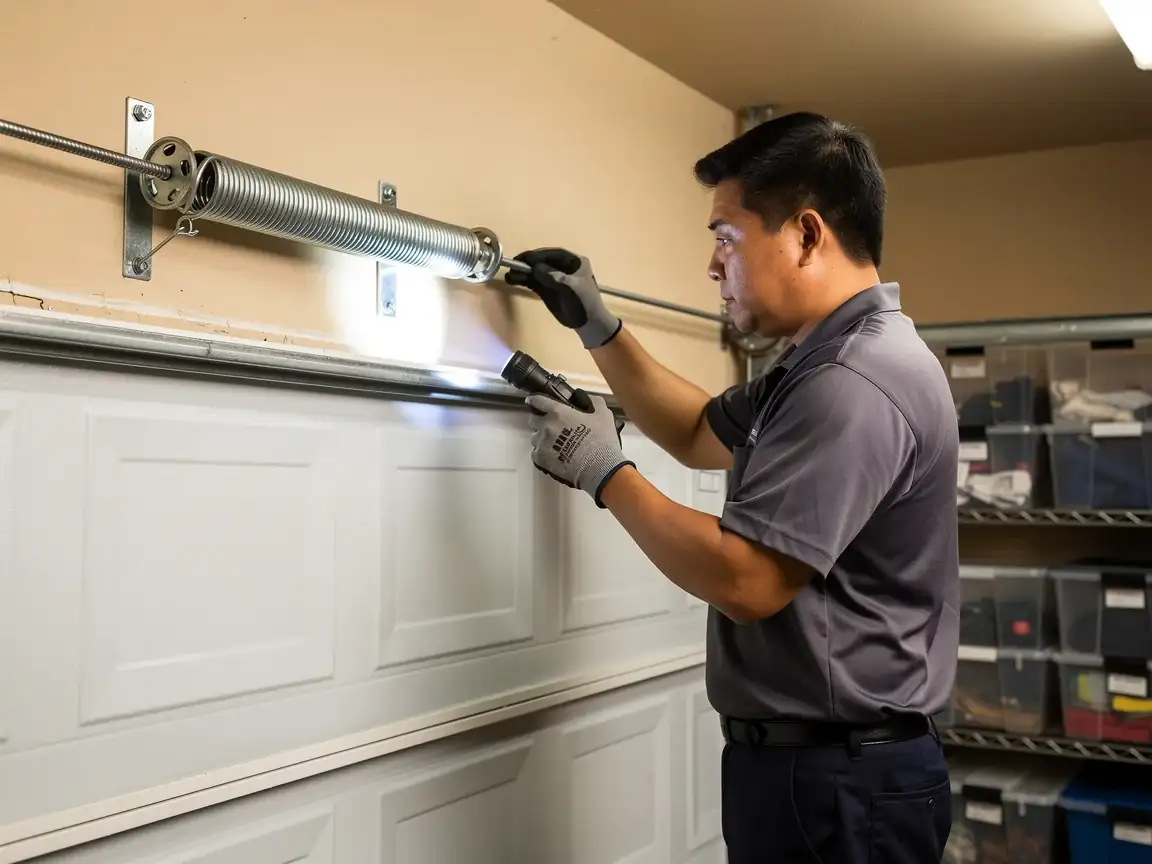
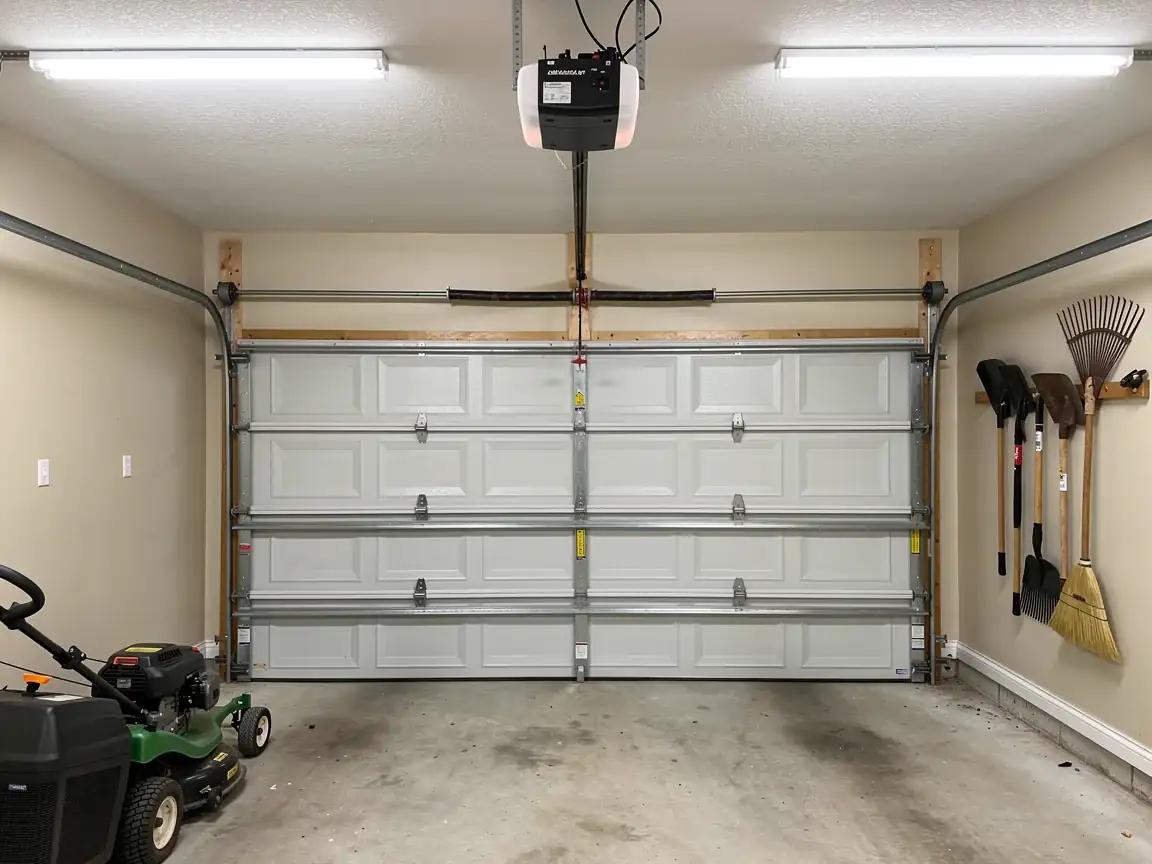
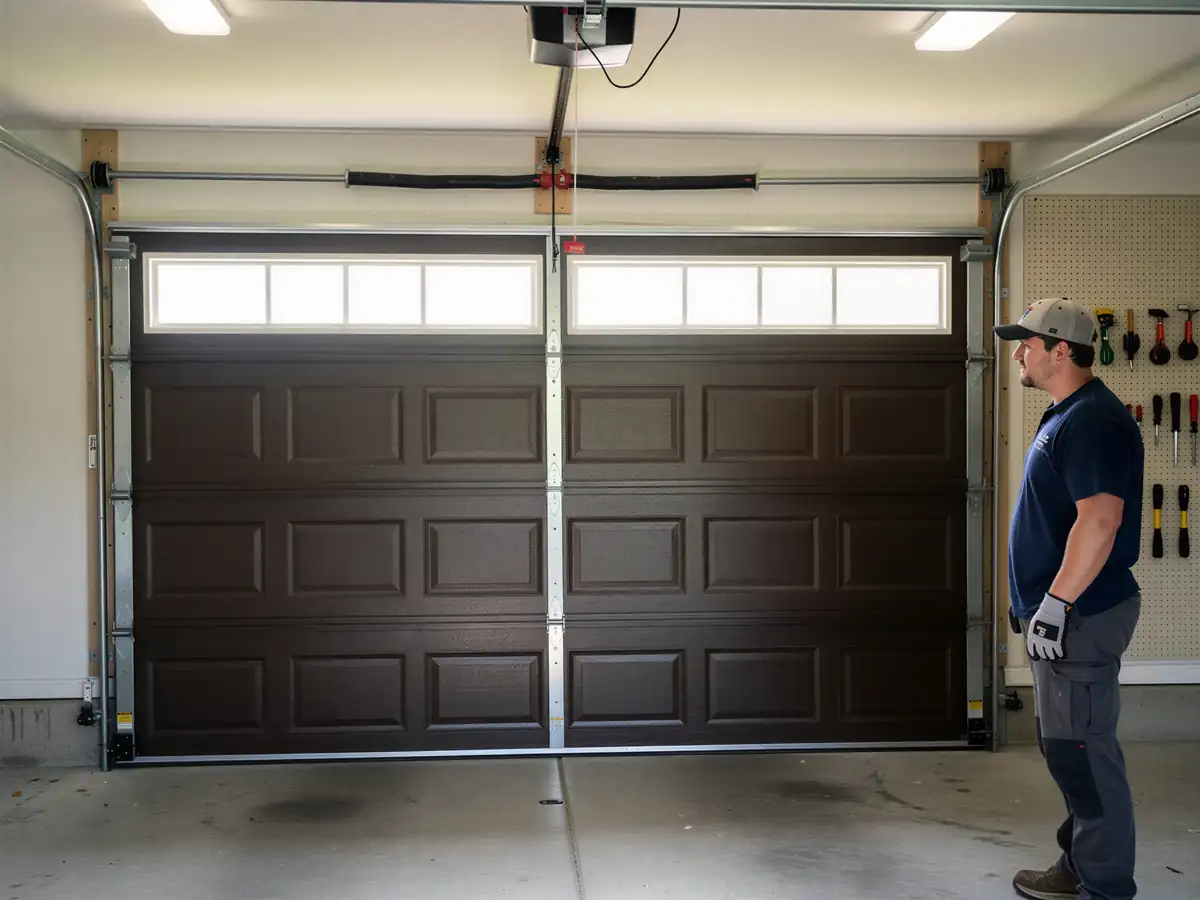
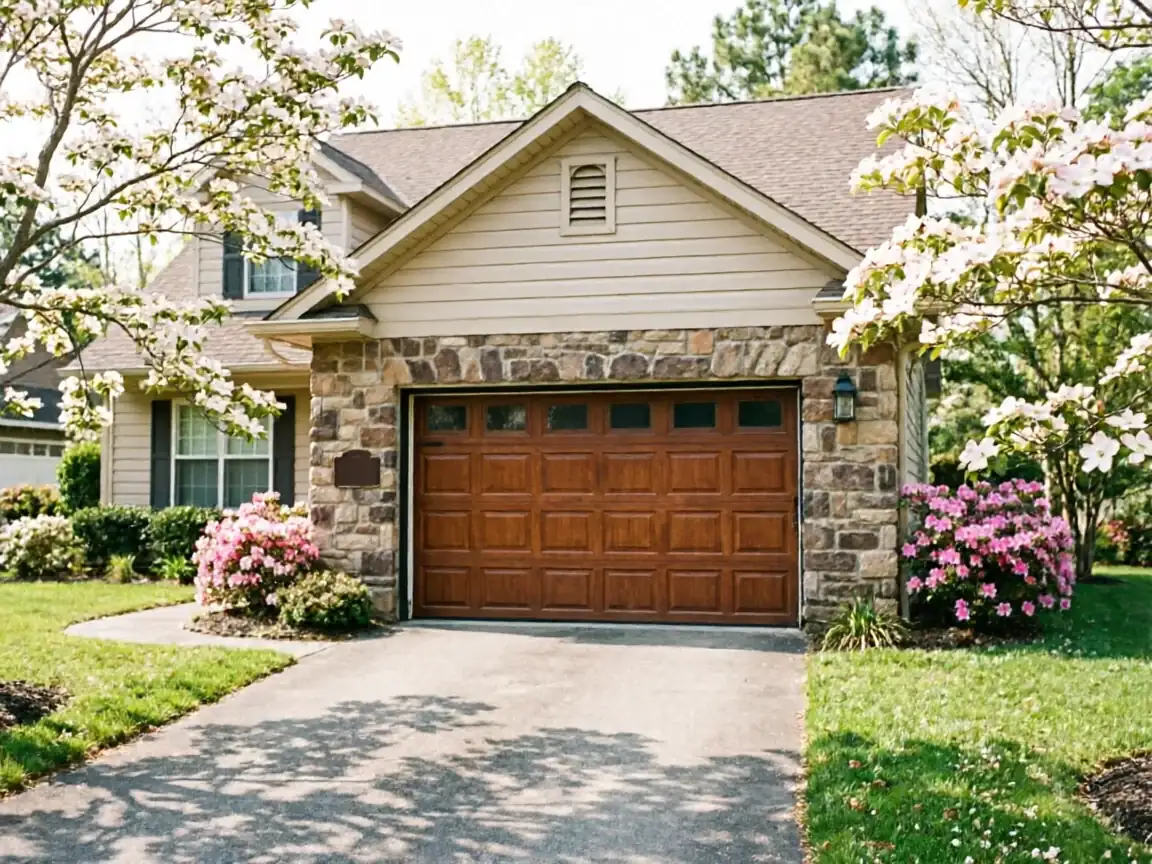
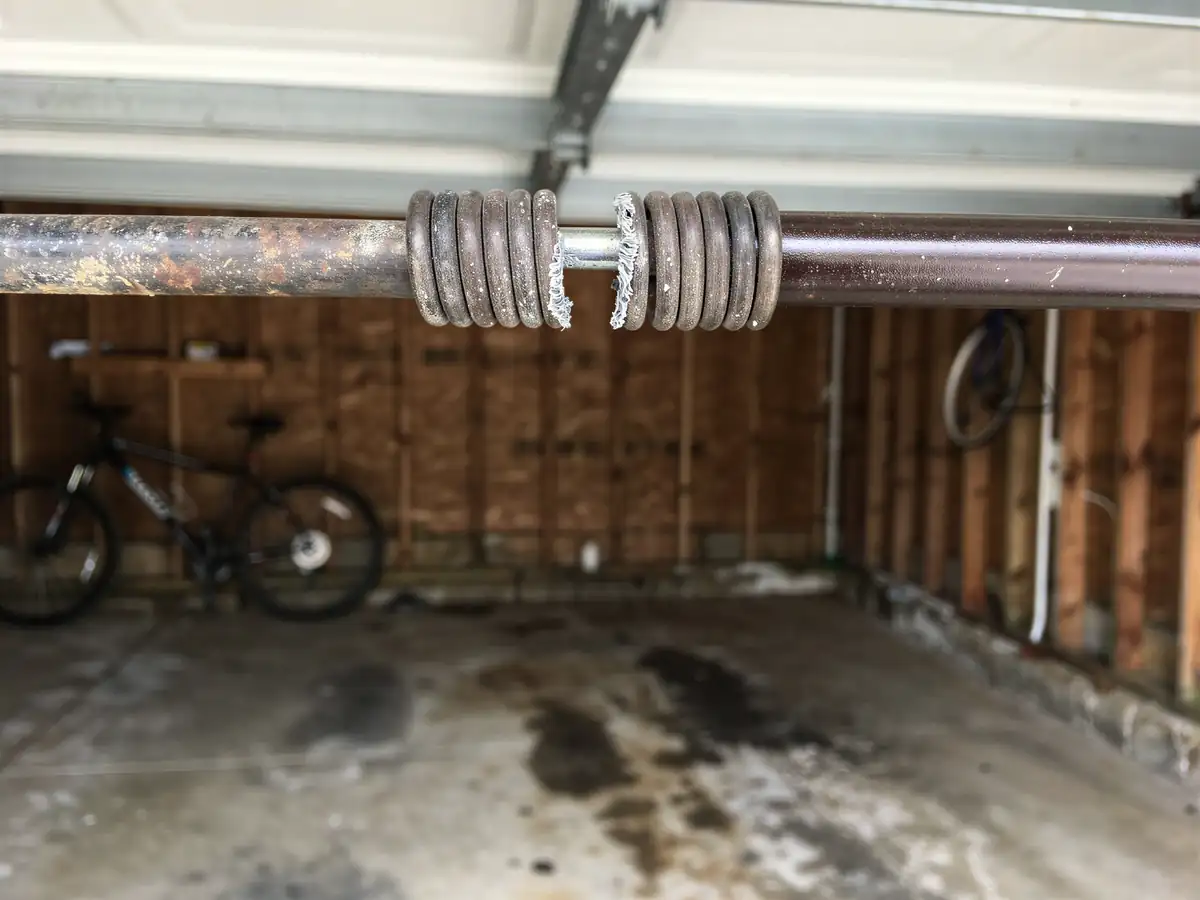
Most houses on the Phenix City side of this service area went up around 1983, give or take a few years either direction. That build year matters more than people think. Doors hung in that era came with one of two setups: a single torsion spring over a steel panel door, or a pair of extension springs running along the horizontal tracks with no safety cables holding them in place if one lets go. If your door slammed down hard, or won't budge past a foot or two, or the spring itself is visibly gapped open on one side, you're looking at a broken or badly stretched spring from that original hardware generation, or a later replacement that was never upgraded to match current safety practice. Builder-grade doors from that period were rated for a specific door weight, and springs wear out on a cycle count, not a calendar, so a 1983 door with its original spring has usually been on borrowed time for years before it finally snaps. What you're seeing is mechanical fatigue in a part that was never meant to be opened and closed for four decades.
Doing It Yourself
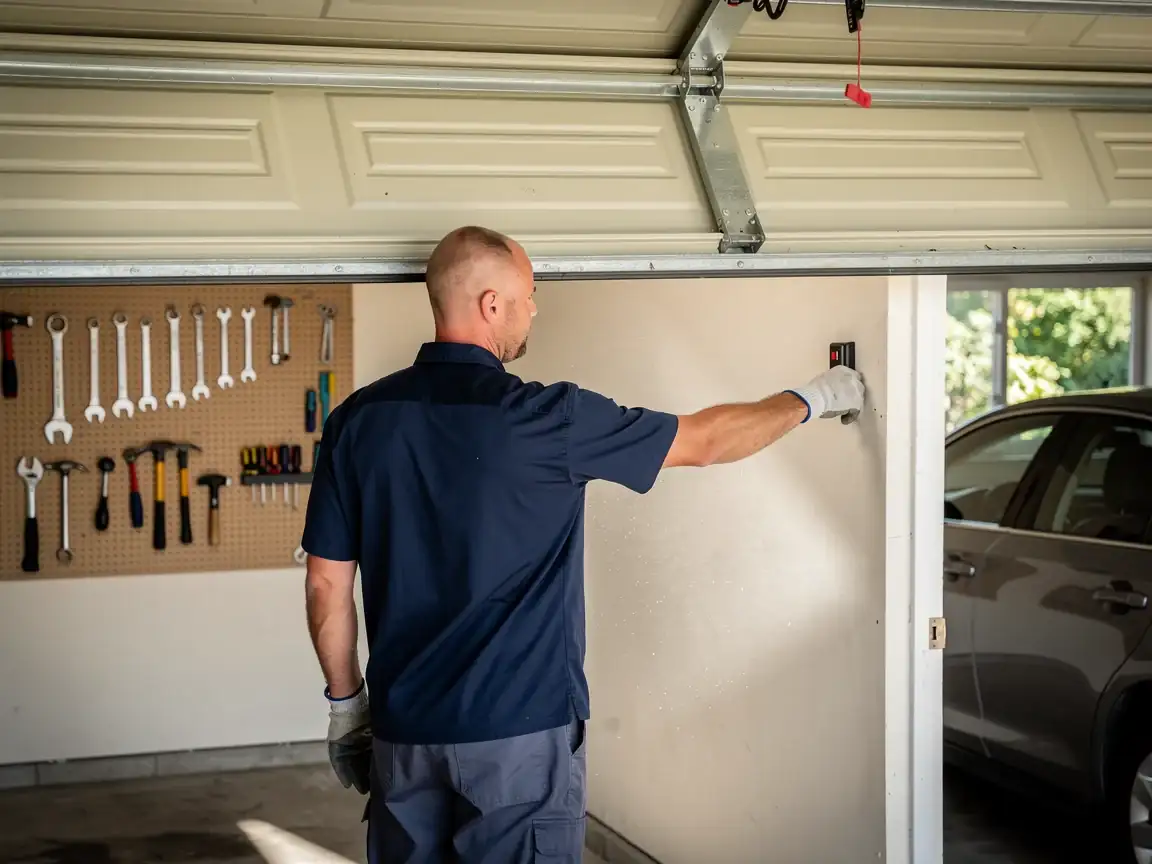
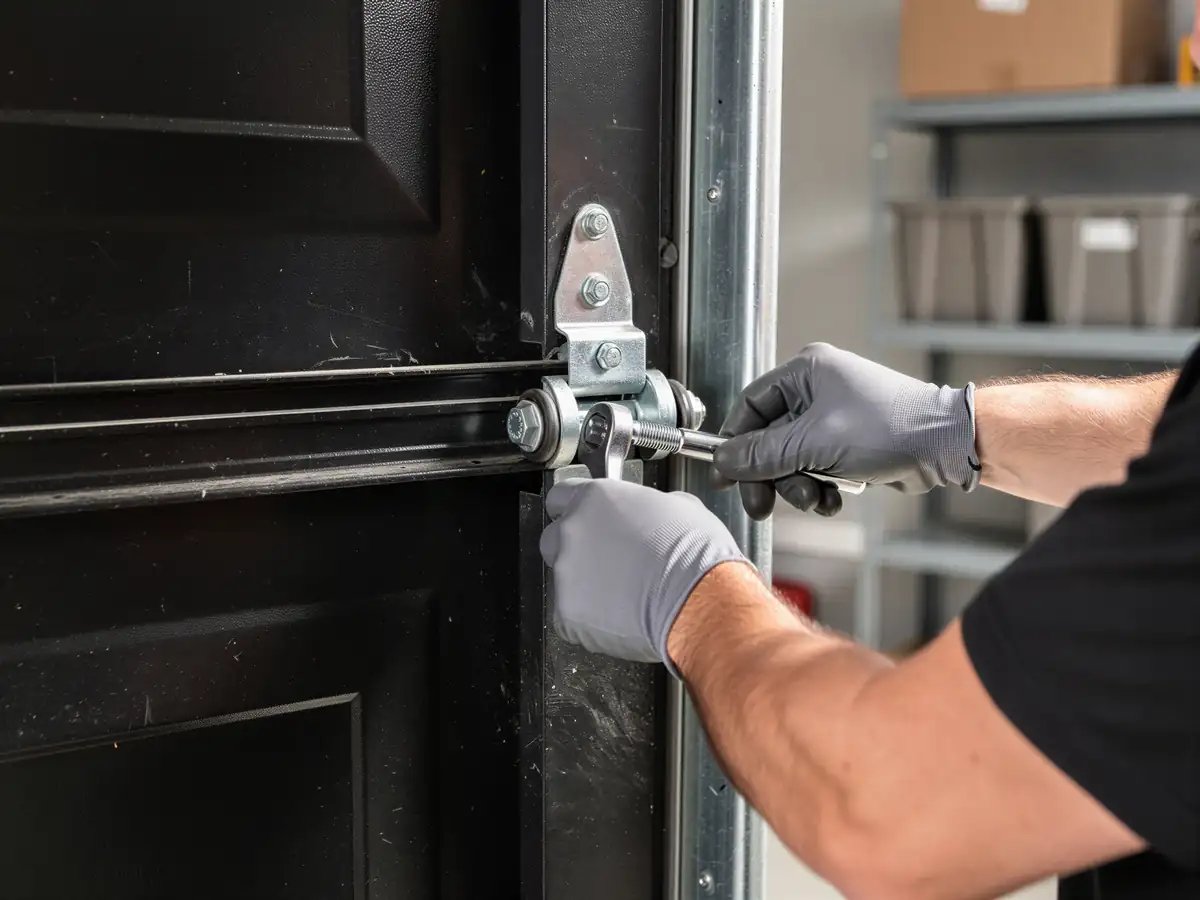
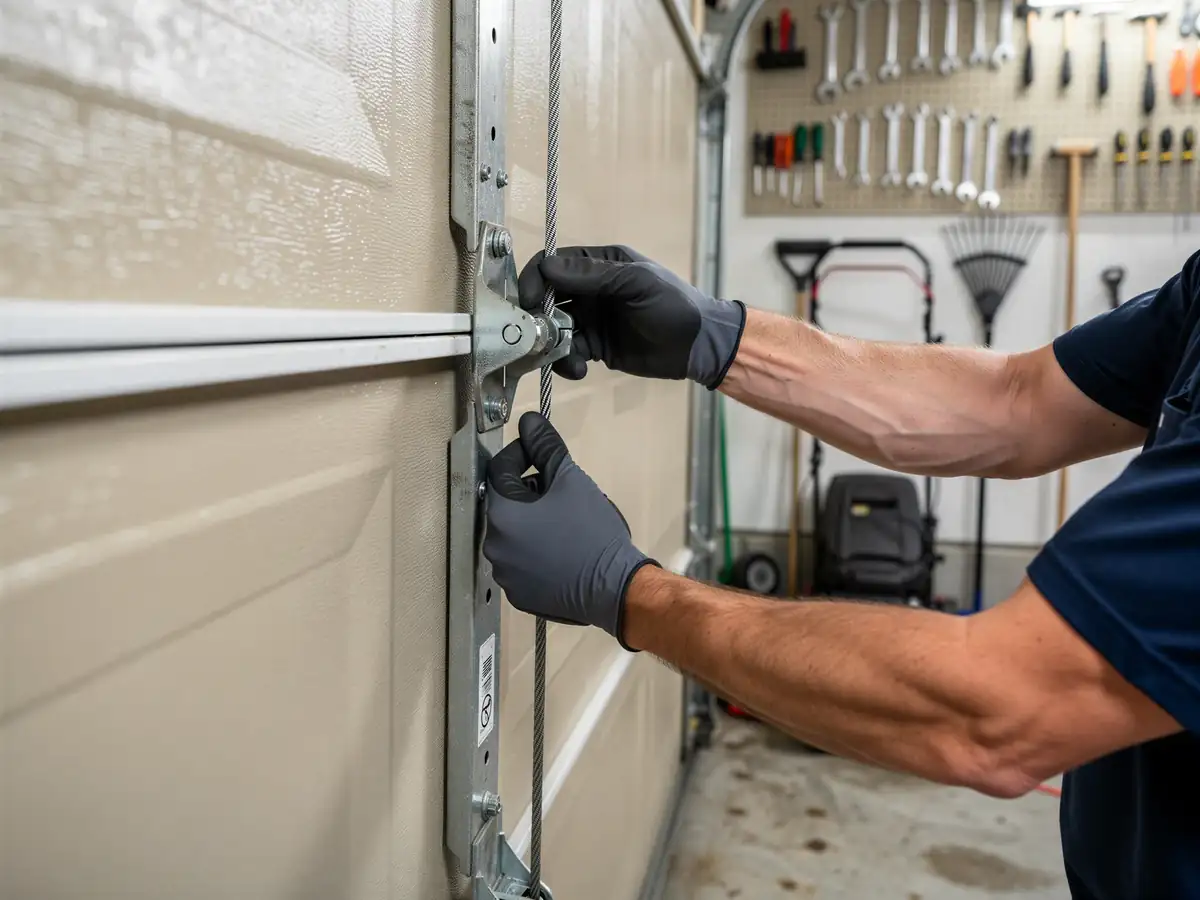
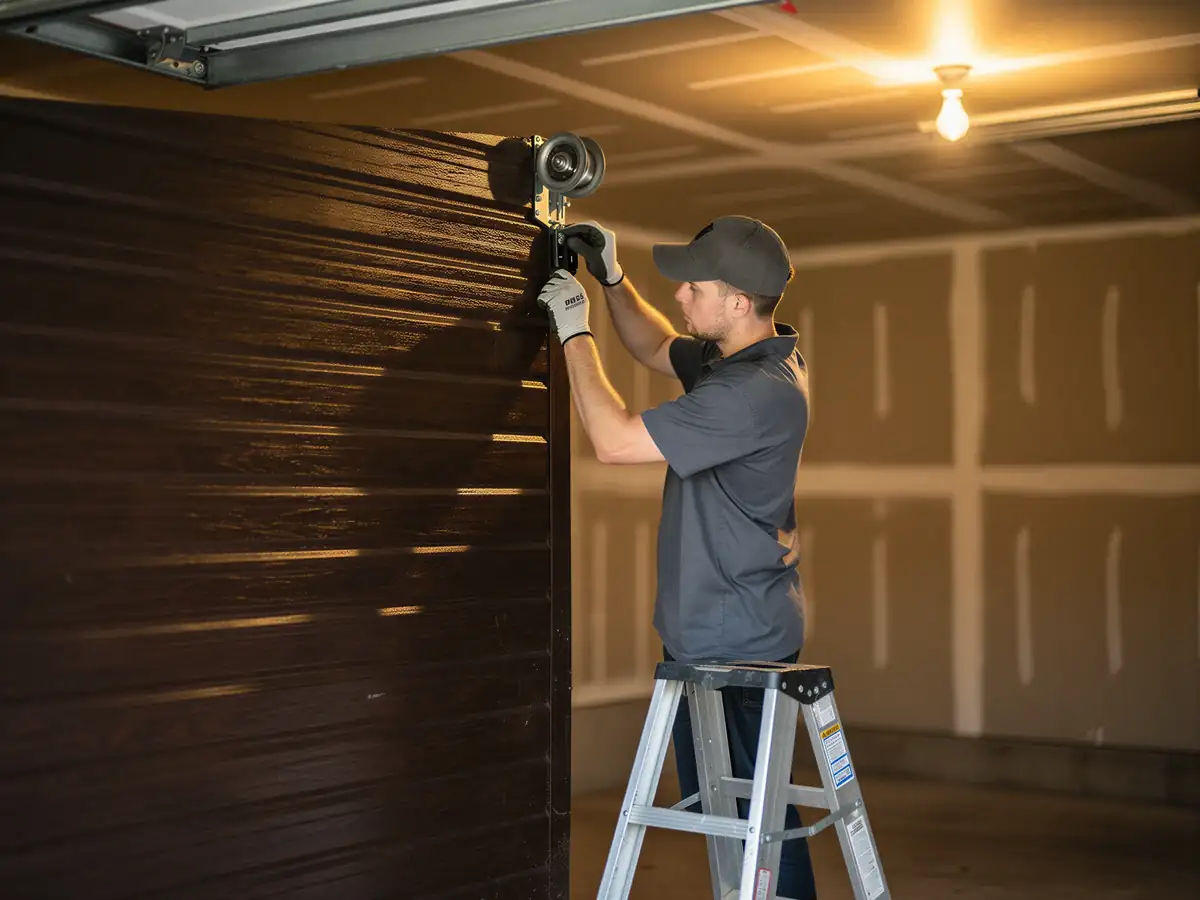
A torsion spring is wound under enough tension to break a bone or worse if it's released wrong, and the winding bars and clamping steps aren't something to improvise from a video. If you've got the extension-spring style common on 1980s doors, the risk is different but not smaller - a spring without a containment cable can fly the length of a garage if it snaps while under load. We're not going to pretend there's a safe shortcut here. What you can safely do yourself: check whether the door is binding on a bent track or a dragging roller before you assume it's the spring, and don't force the opener to lift a dead-weight door, since that burns out the motor fast. Beyond that, this is a two-person job with the right bars and clamps, and it's one of the few repairs where we'd rather you call than try it once.
How Long It Takes
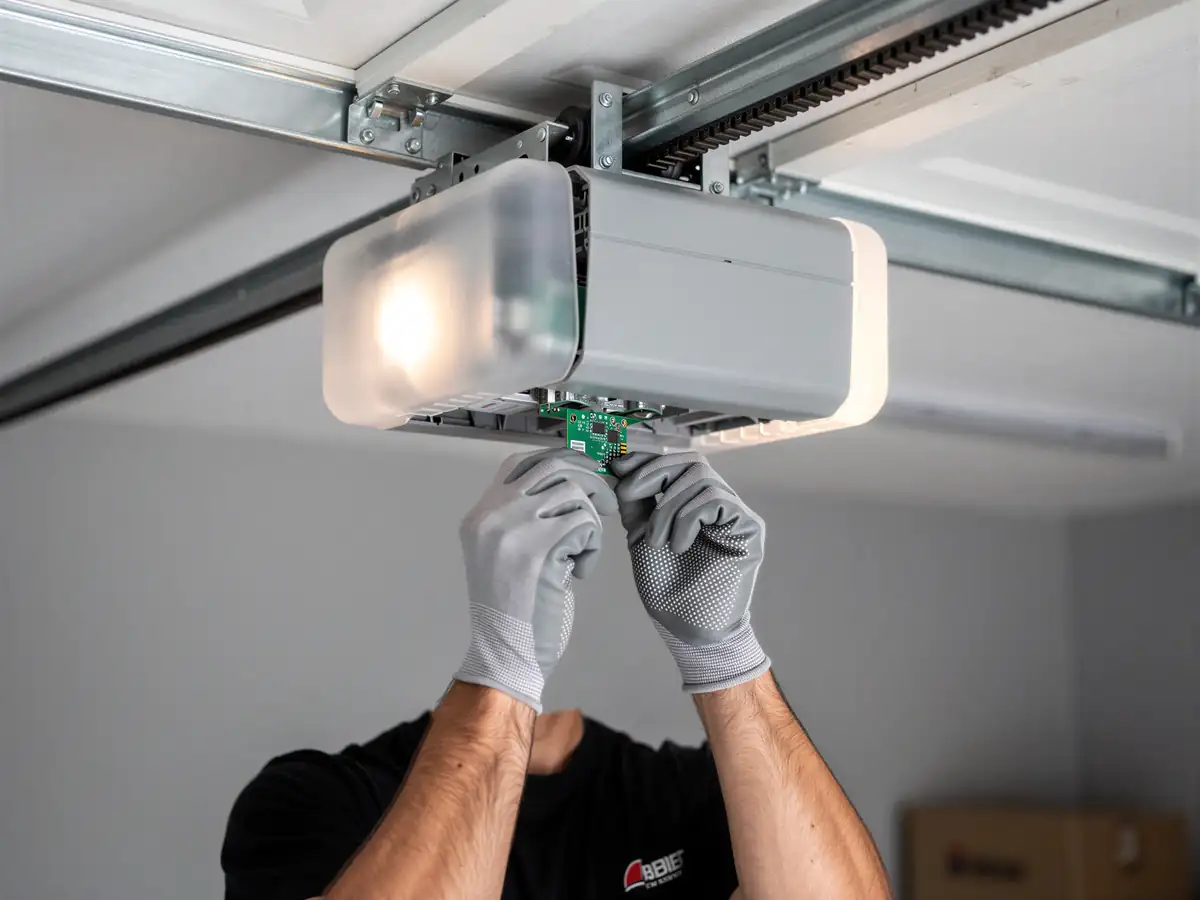
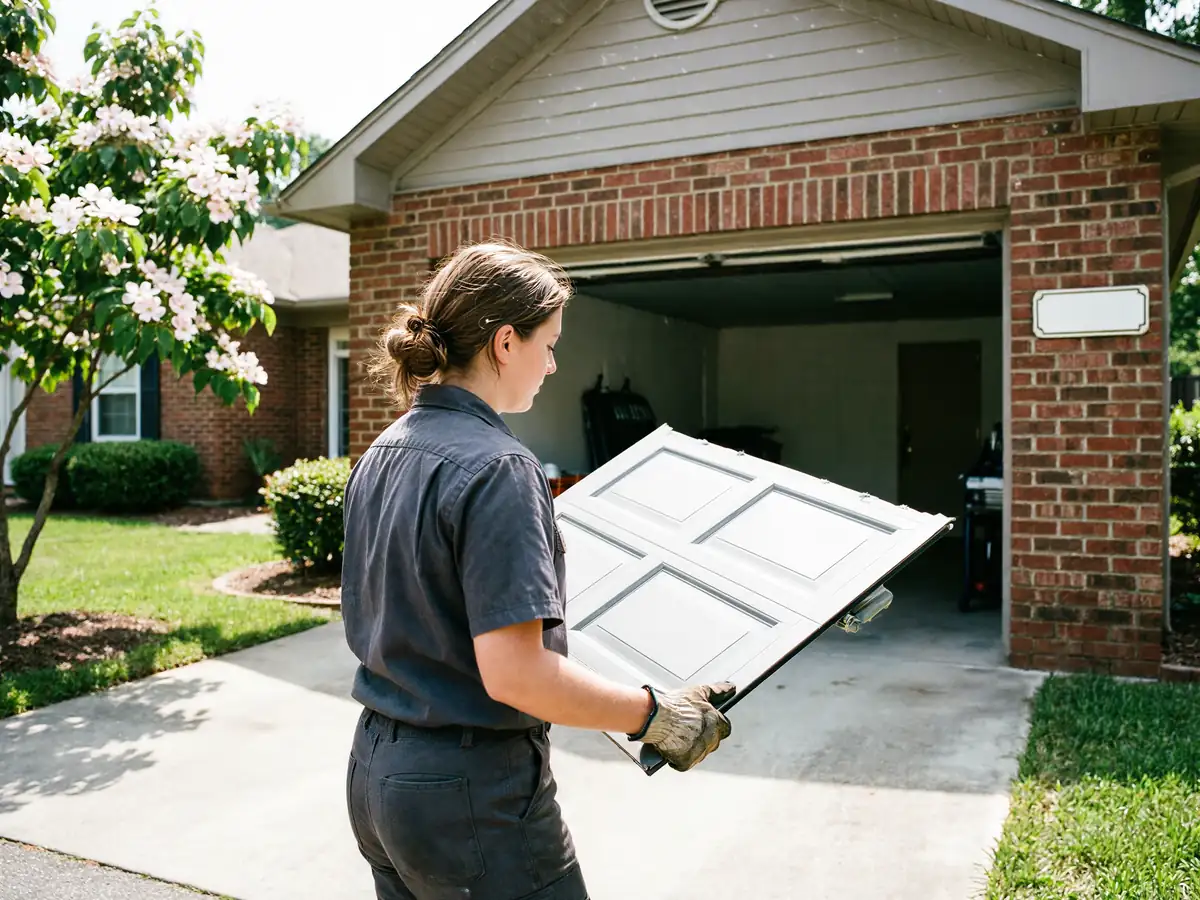
A spring swap on a standard torsion setup is usually finished in one visit once the truck is on site - the work itself is mechanical and doesn't take long once the old spring's off. Extension-spring doors from the same era sometimes take a bit longer if both springs need replacing and the cables and pulleys are worn too, which is common on original 1980s hardware that's never been serviced. We travel from Columbus, three miles out, to reach Phenix City, so the drive itself isn't the bottleneck - it's whether the spring size and door weight match something we're carrying on the truck or need to be special-ordered, which happens more often on older, less common door weights.
The Cost of This Job
We're not going to put a number here we can't stand behind - it depends on whether you've got one torsion spring or two, standard or extension style, and whether cables and rollers need attention at the same time. What we can tell you is that in a service area where median household income sits lower than some of the surrounding towns, we try to be straight about what's actually broken versus what's merely worn, so you're not paying to replace parts that still have life in them. If a door is original to a 1983 build and several components are failing at once, sometimes a full spring and hardware refresh costs less over time than fixing one part now and another in six months.