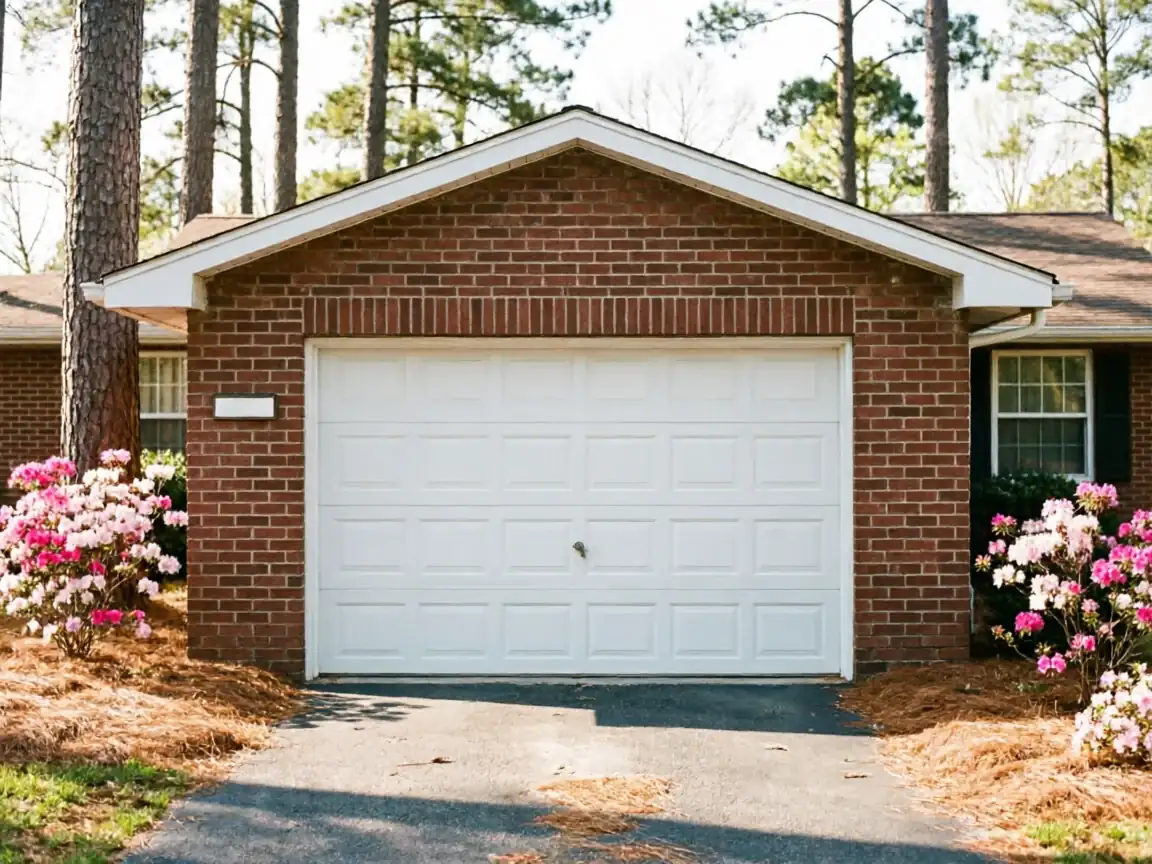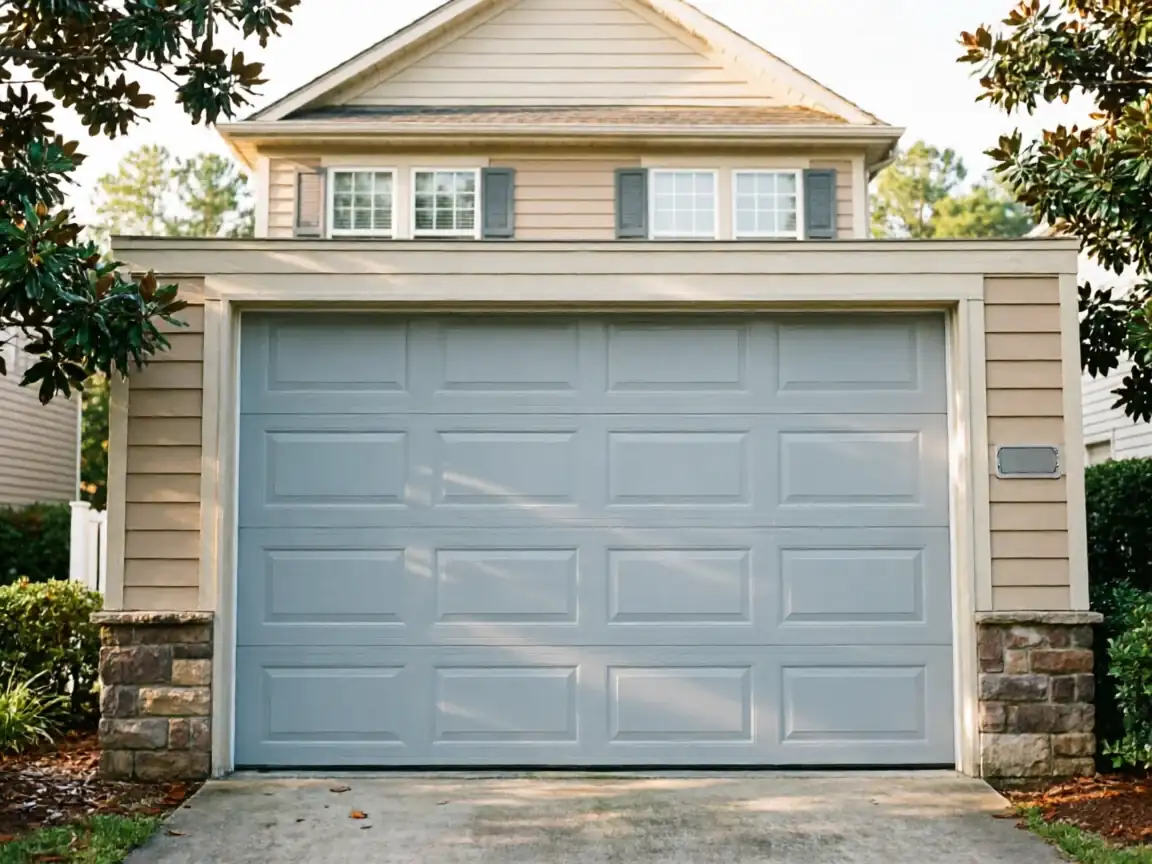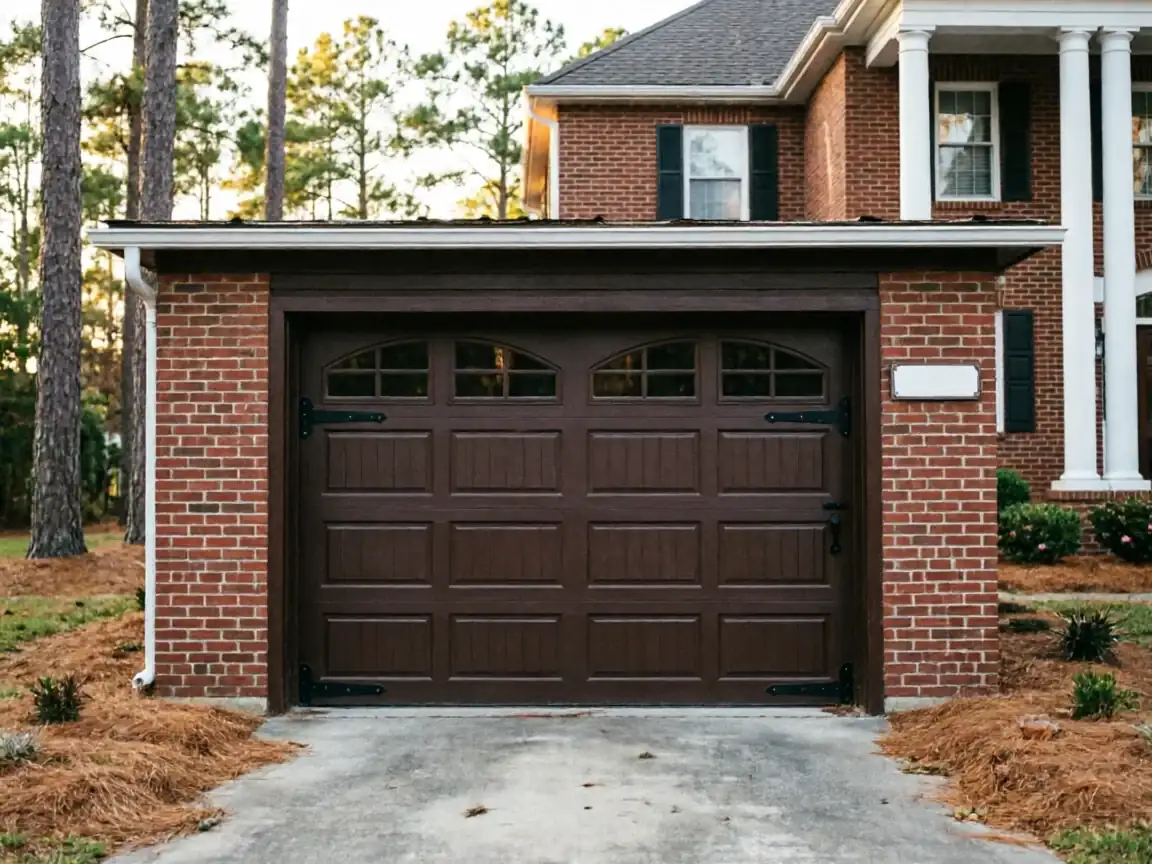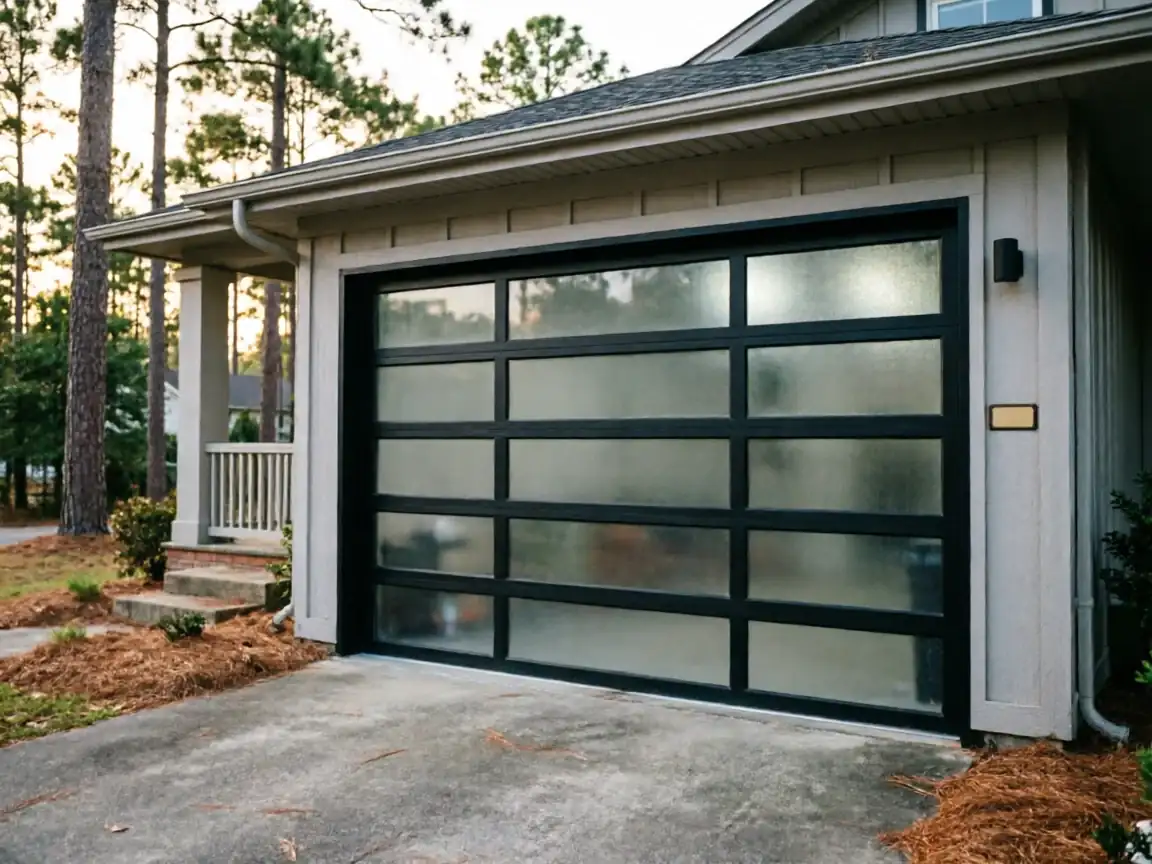
What You Are Seeing
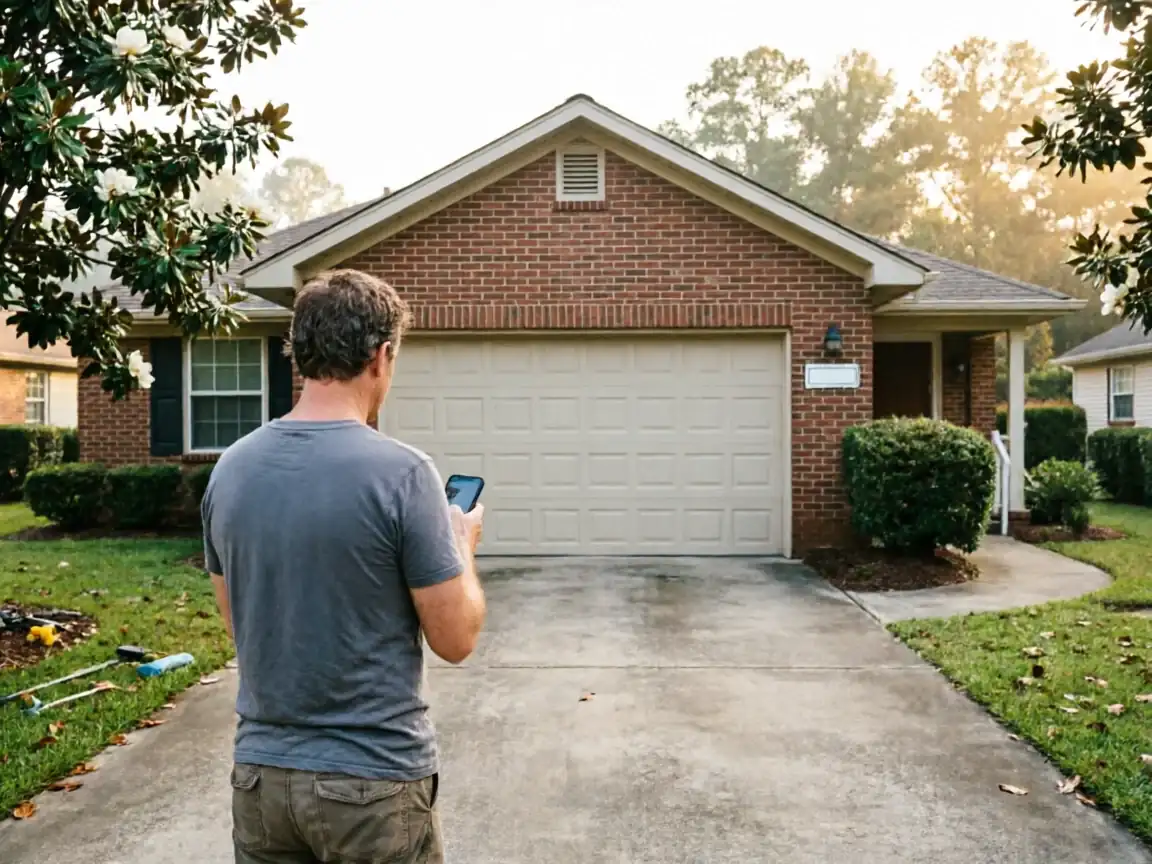
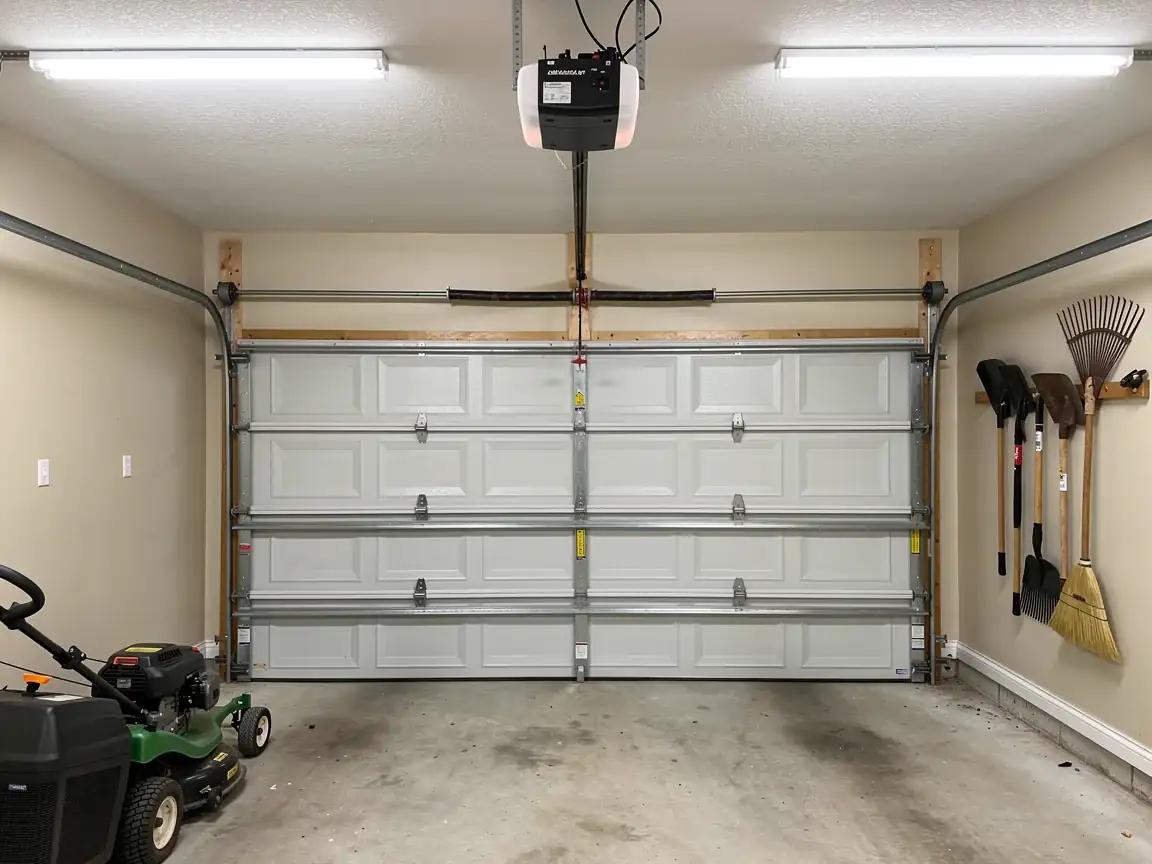
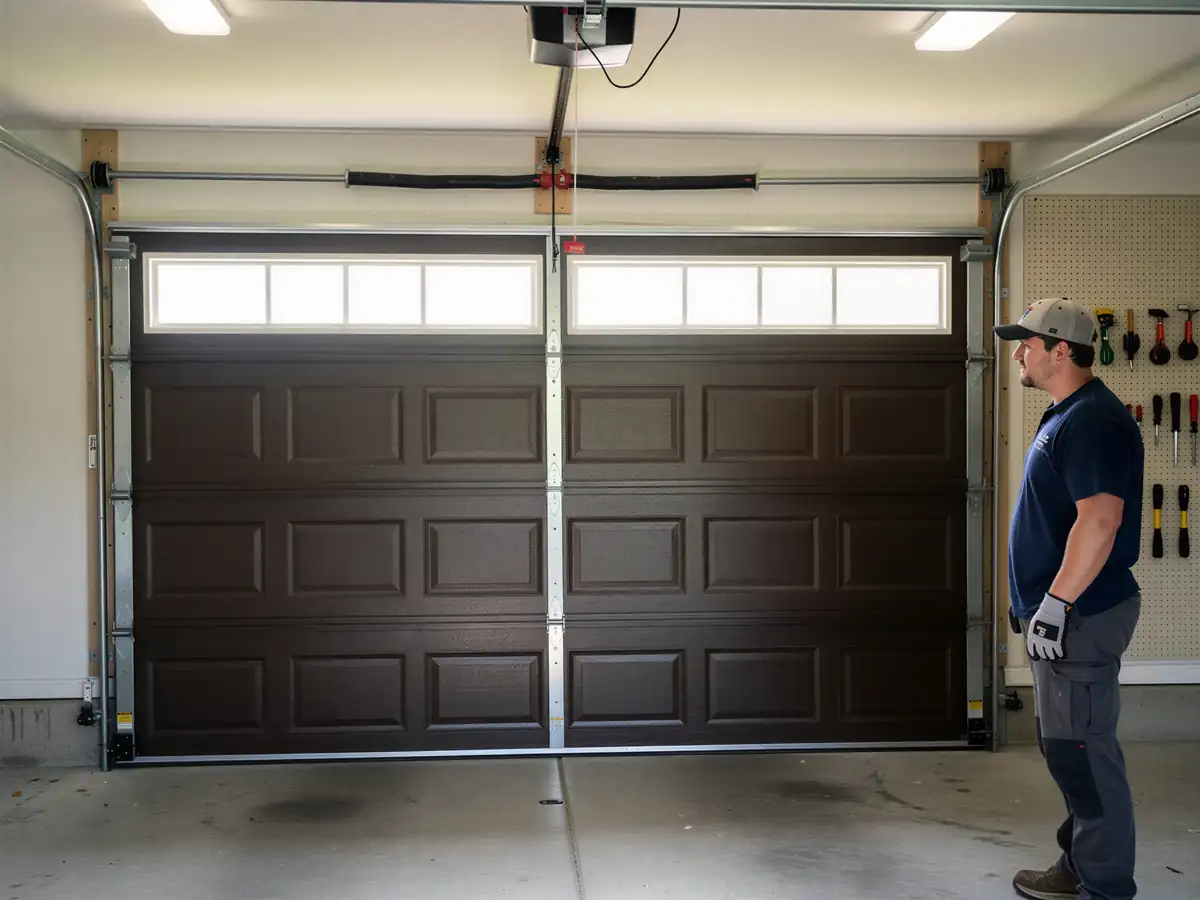
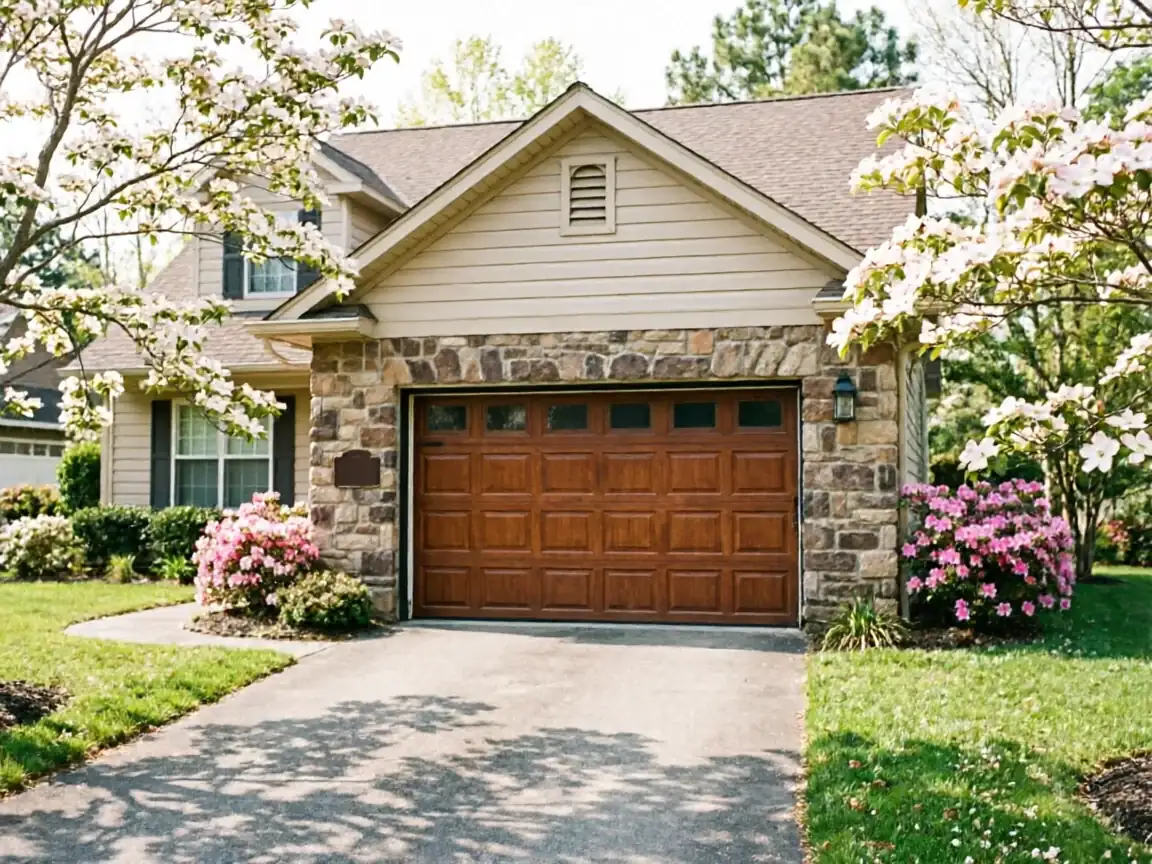
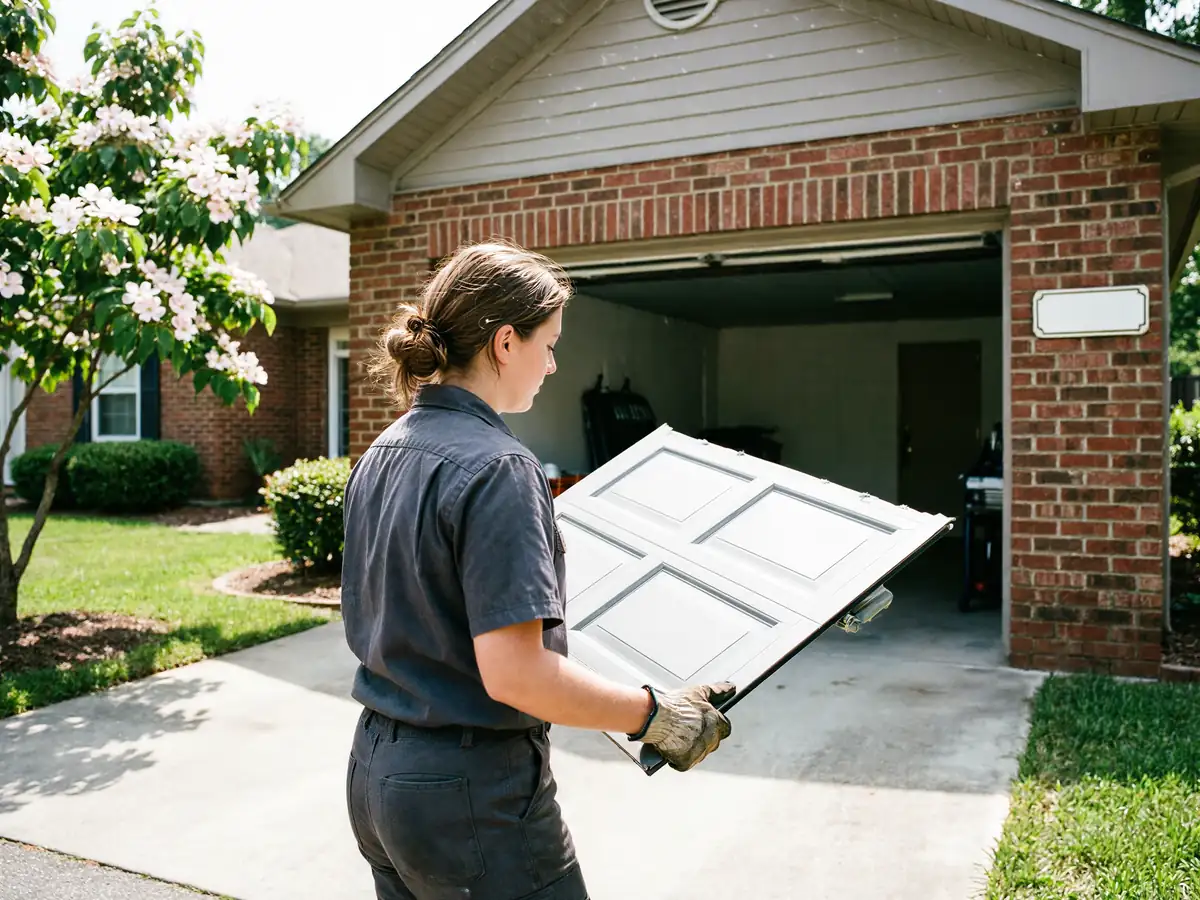
Most garage doors in Phenix City went up around 1983, give or take a decade on either side, which puts them squarely in the steel-door era - single doors near 9 feet wide, doubles near 16, hung on steel track with steel rollers riding on a steel shaft. That's the baseline hardware for this stretch of the service area, and it's a different animal from the nylon-roller doors built in the 2000s.
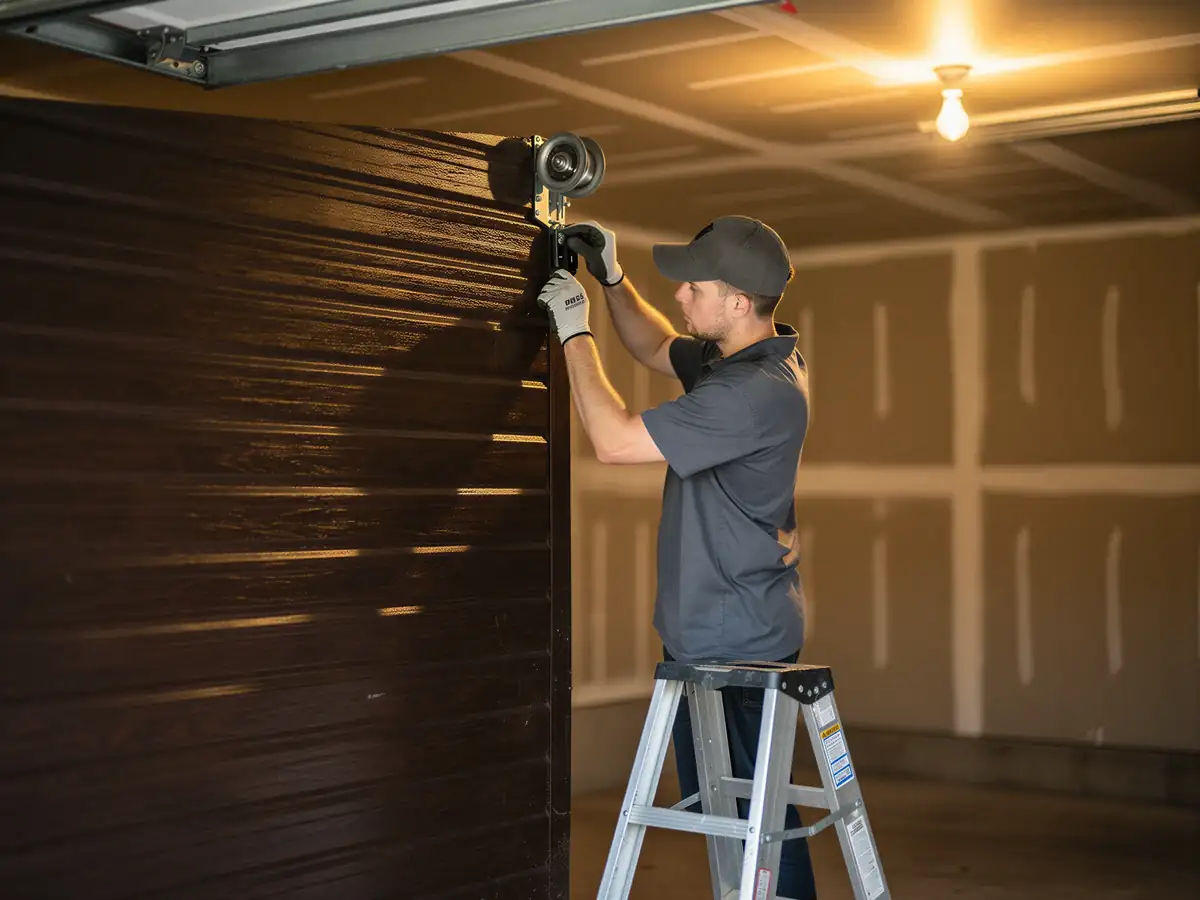
Steel rollers don't fail quietly. They start with a rattle at the top of the travel, then a grind every time the door passes the bend from vertical to horizontal track. If you're hearing a repeating clack-clack-clack as the door opens, that's a roller bearing that's worn past its grease and is now metal running on metal. Left alone, it scores the track, and then you're not buying rollers anymore - you're buying track too.
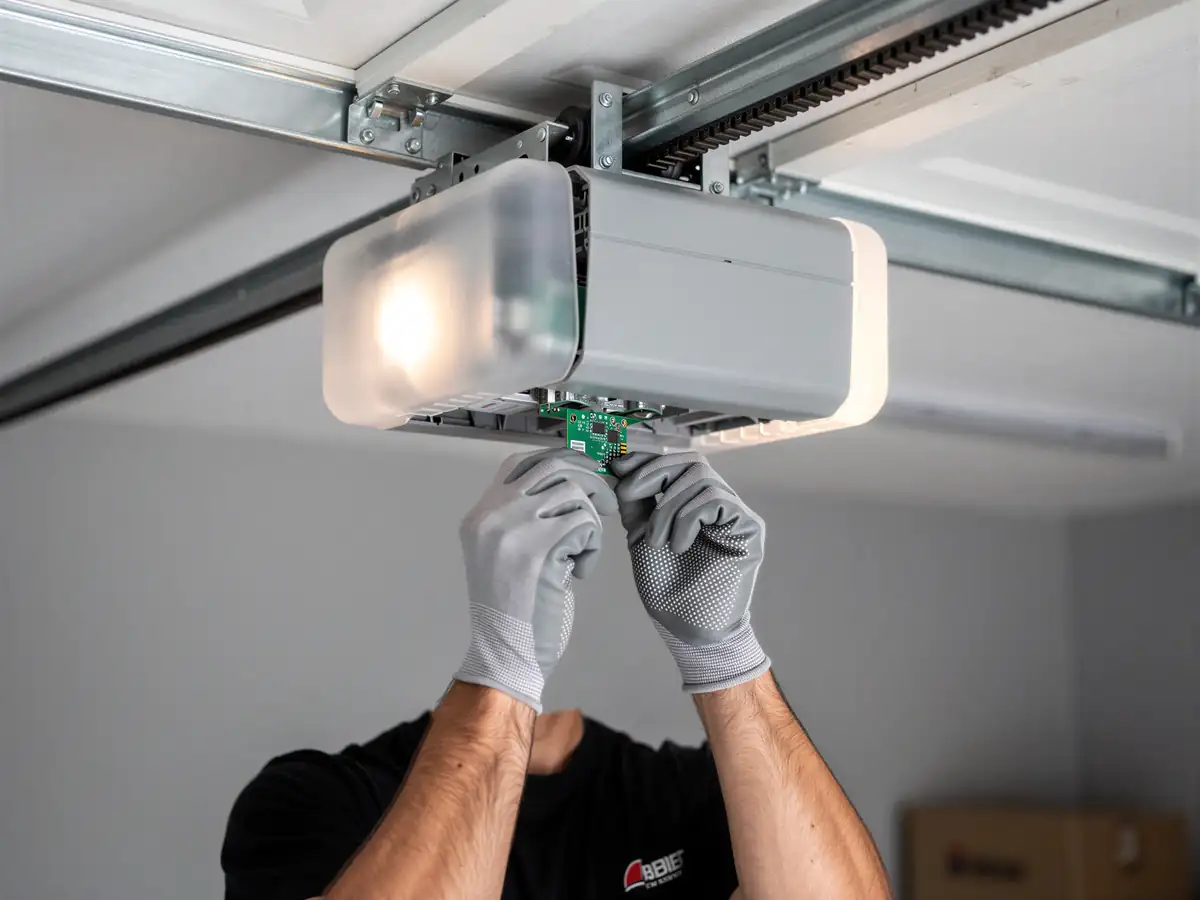
Some owners mistake this for an opener problem because the noise seems to come from "the motor area." It doesn't. The opener just pulls; the rollers carry the weight through the curve. Worn rollers put side-load on the opener's drive gear that it was never built to take, so an ignored roller problem shows up later as an opener bill.
Doing It Yourself
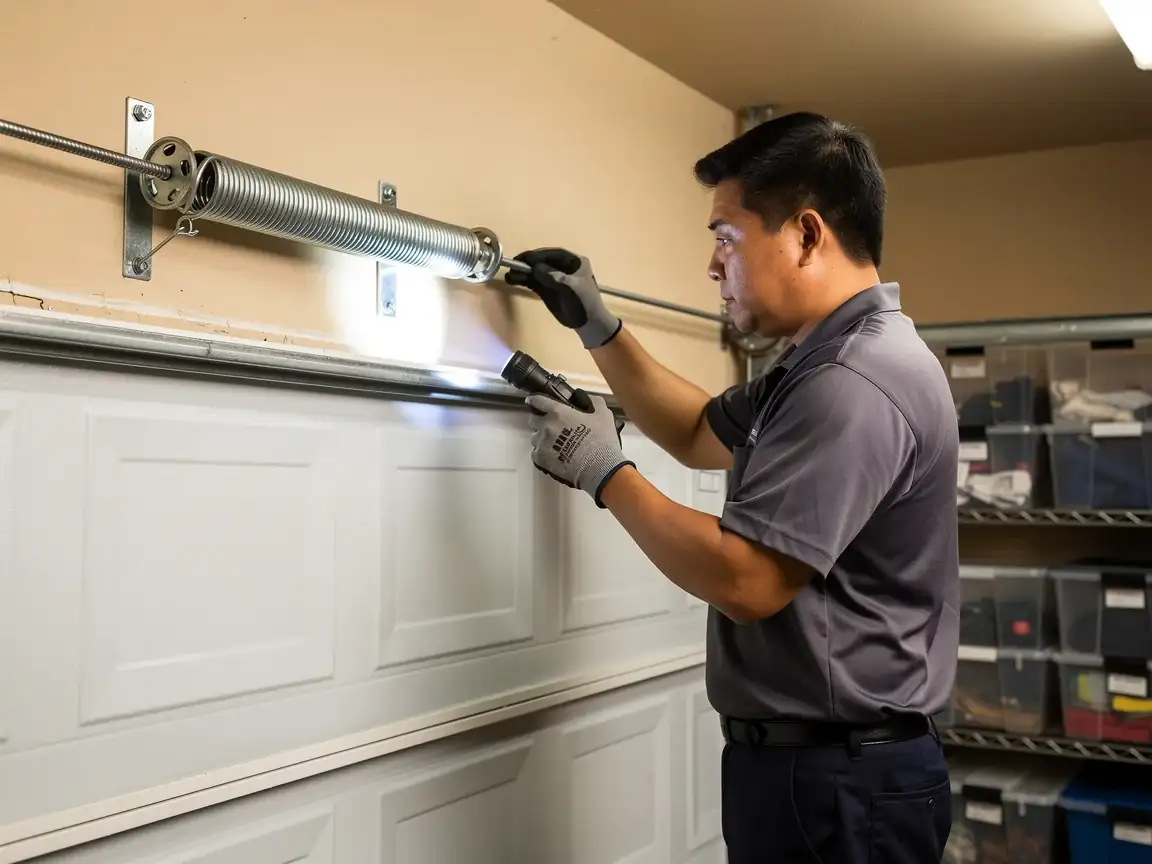
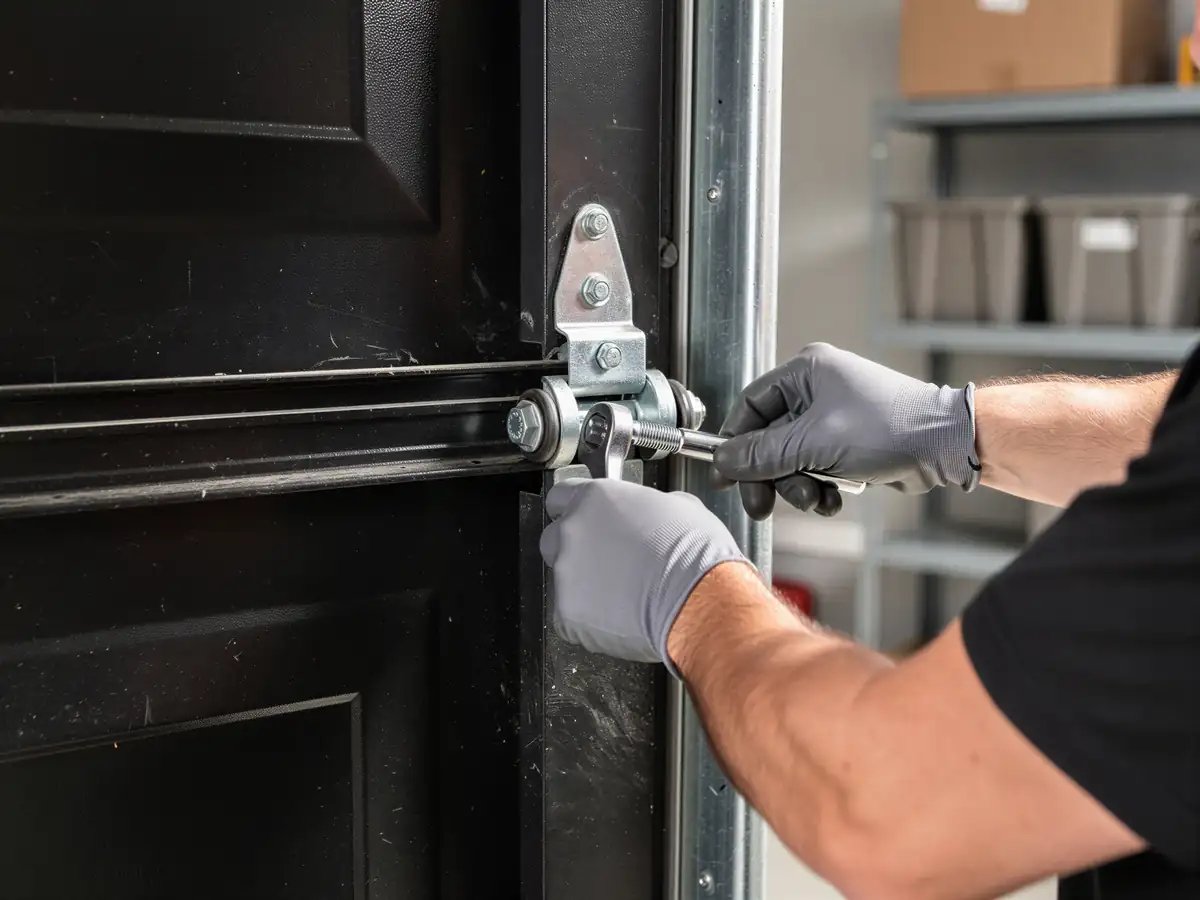
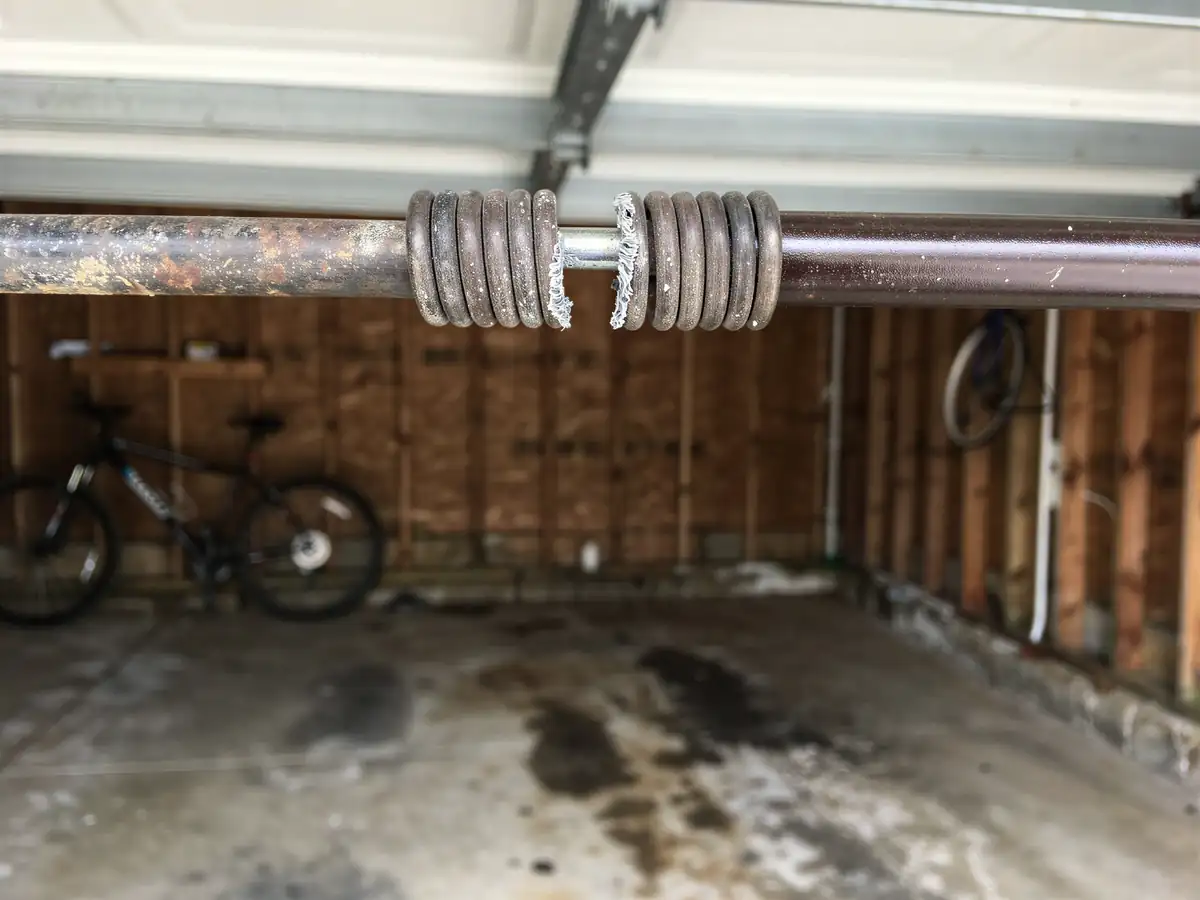
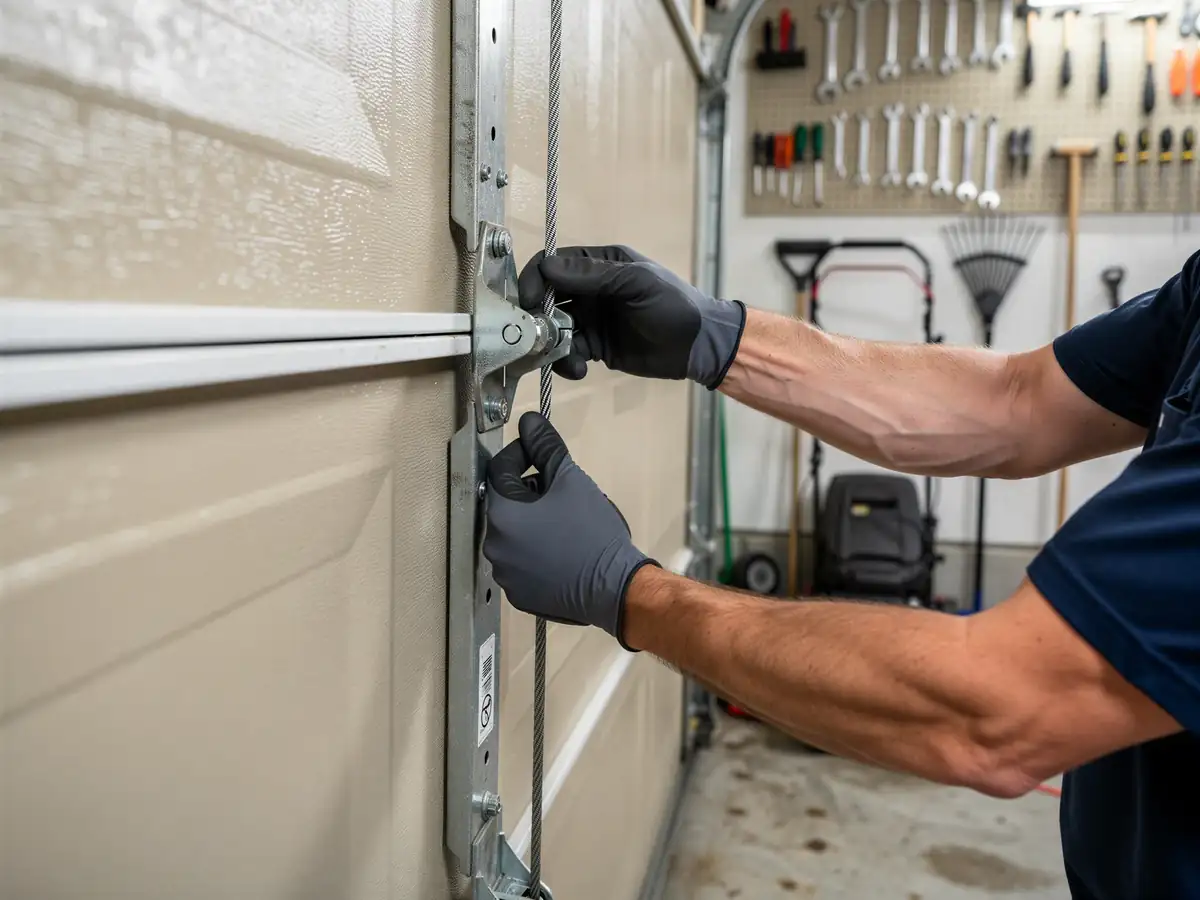
Replacing a bottom-bracket roller on a door that's down and unplugged is within reach for a lot of owners - loosen the bracket bolts, slide the old roller stem out, slide the new one in. The honest limit is anything above the bottom row. The brackets on the second and third roller positions carry cable tension and spring load, and the top roller sits closest to where the door meets the header. Open that bracket on a wound torsion spring and you're working next to stored energy that doesn't forgive a slip.
If your track is scored from a roller that ran dry too long, swapping the roller alone won't fix the travel - the door will still bind where the metal's grooved. That's a track replacement job, not a roller job, and it's worth knowing the difference before you order parts.
Nylon rollers with sealed bearings are the common upgrade from the original steel on these older doors - quieter, no grease schedule, and they don't gouge track the way a dry steel roller does over time. Whether that upgrade makes sense depends on what track and bracket hardware is already on the door, which is easier to judge in person than over the phone.
Why It Happens Here
Phenix City sits about 3 miles from Columbus
Close enough that it shares the same mild climate band with occasional freeze - not the extreme swings that crack hardware outright, but enough freeze-thaw cycling each winter to stiffen old grease in a steel roller bearing and make it work harder on cold mornings. That's a slow kind of wear, not a dramatic one, and it's why a roller problem here tends to show up as a door that's been getting noisier for months rather than one that fails in a single afternoon.
- 3 miles
The housing stock itself is the bigger factor
A door built in the early 1980s has had three or four decades of roller cycles - call it tens of thousands of open-close trips - on hardware that was standard for its time but wasn't designed to run that long without a roller change. Add in the two-area mix of 1980s-90s construction across this part of the service area, and roller wear is one of the most common calls out this way, right alongside spring fatigue on doors of the same age.
How Long It Takes
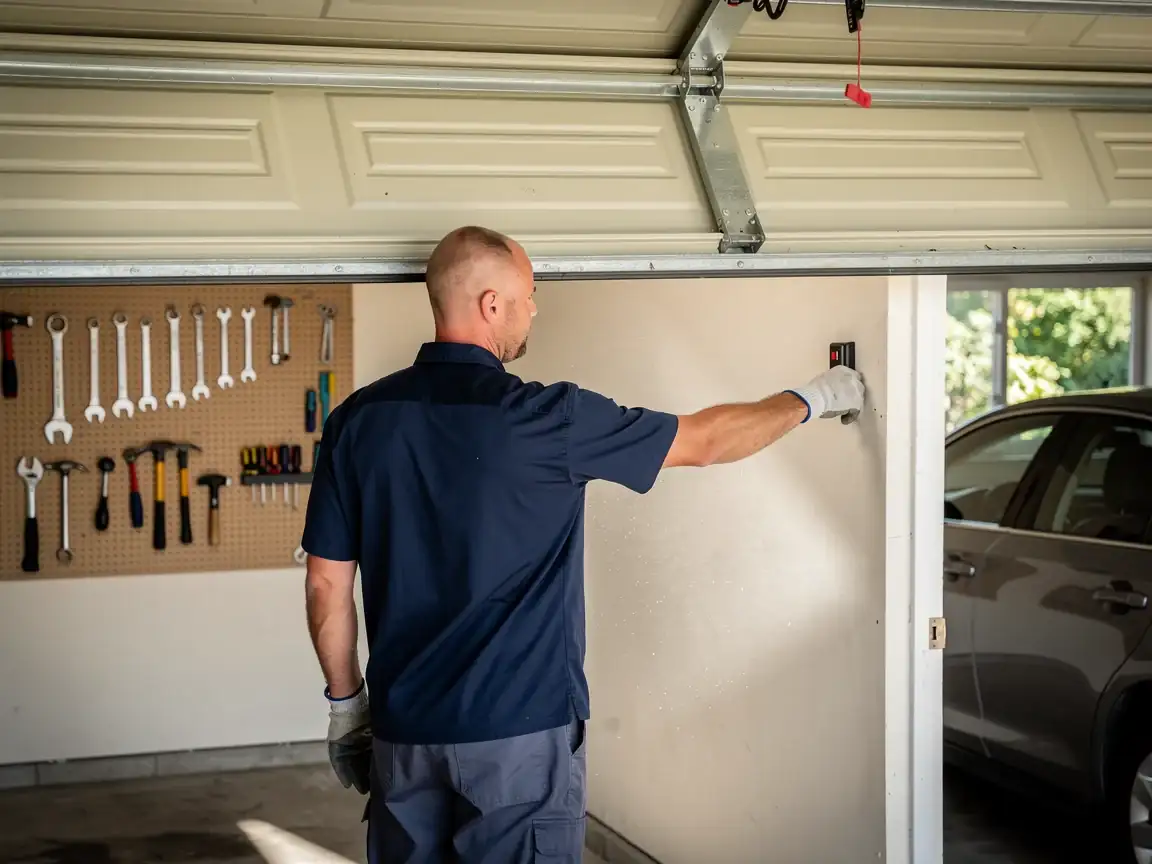
A straightforward roller swap - all rollers on one door, door already accessible, no track damage - is a same-visit job. Add scored track from rollers that ran dry too long, or a bent bracket, and the visit runs longer because the track has to come off and get replaced or straightened before new rollers go back in.
The variable that actually changes the timeline is the door itself, not the town. A single door with 9 or 10 rollers is quicker than a heavier double with hardware that's rusted into the bracket bolts from decades of exposure. On a door this old, at least one bracket bolt usually doesn't want to turn, and that adds minutes you can't fully predict until the panel's open.
The Cost of This Job
What this runs depends on how many rollers need replacing, whether it's steel or the nylon upgrade, and whether the track is still true or needs replacing alongside the rollers. A full-door roller swap with no track work is a smaller job than one where scored track has to come off too - that's the main cost split, more than anything specific to this address.
Household income in this part of the service area runs lower than some neighboring stretches, which is worth saying plainly: a roller job doesn't have to mean a full door replacement. If the panels are sound and the track is straight, replacing rollers is the cheaper fix, and it's the right one most of the time on a door this age. Replacement only makes sense once the track is gone or the panels themselves are failing - not before.