What Can Go Wrong
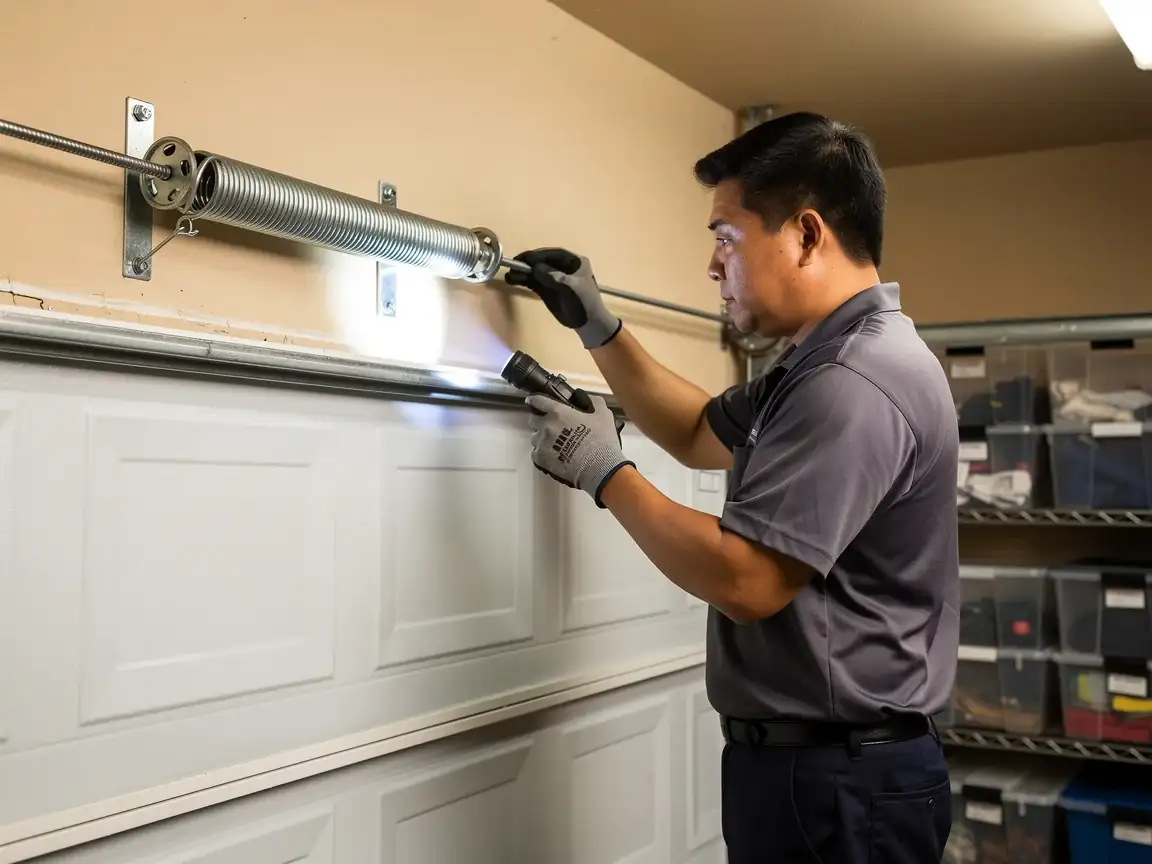
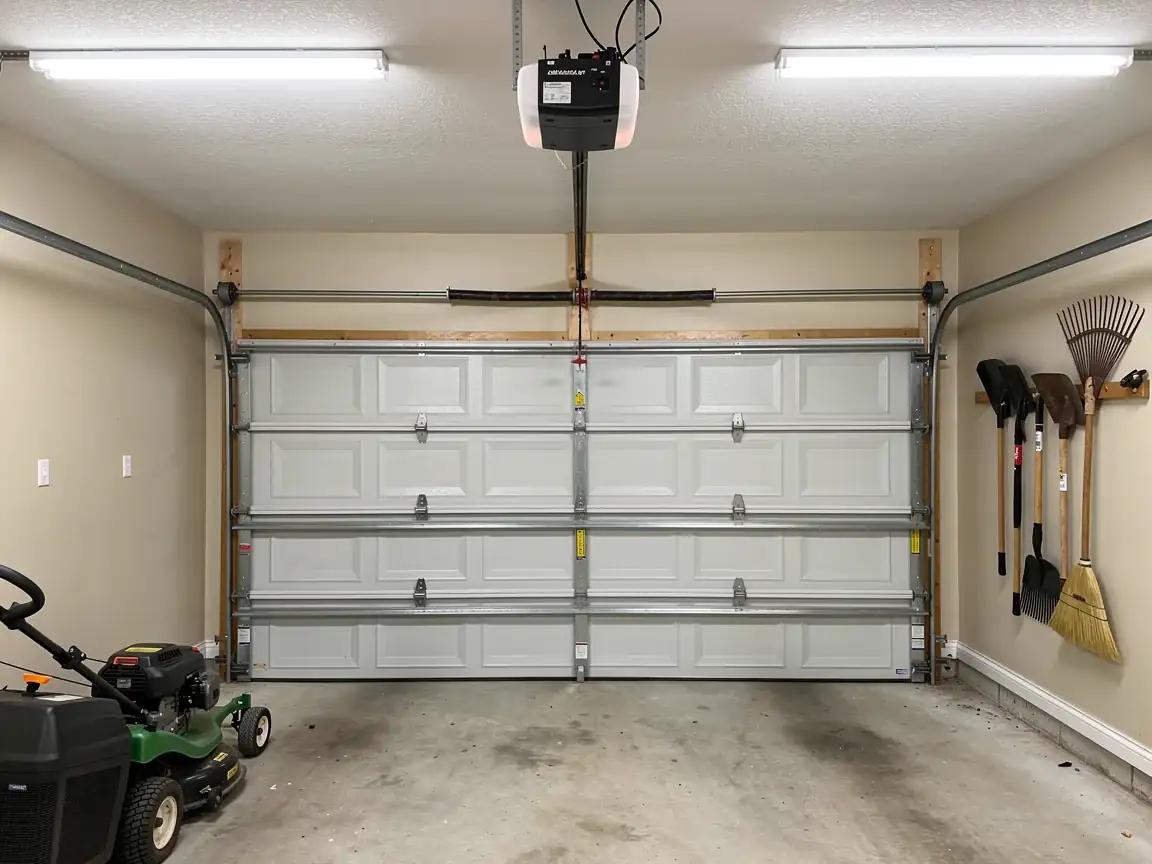
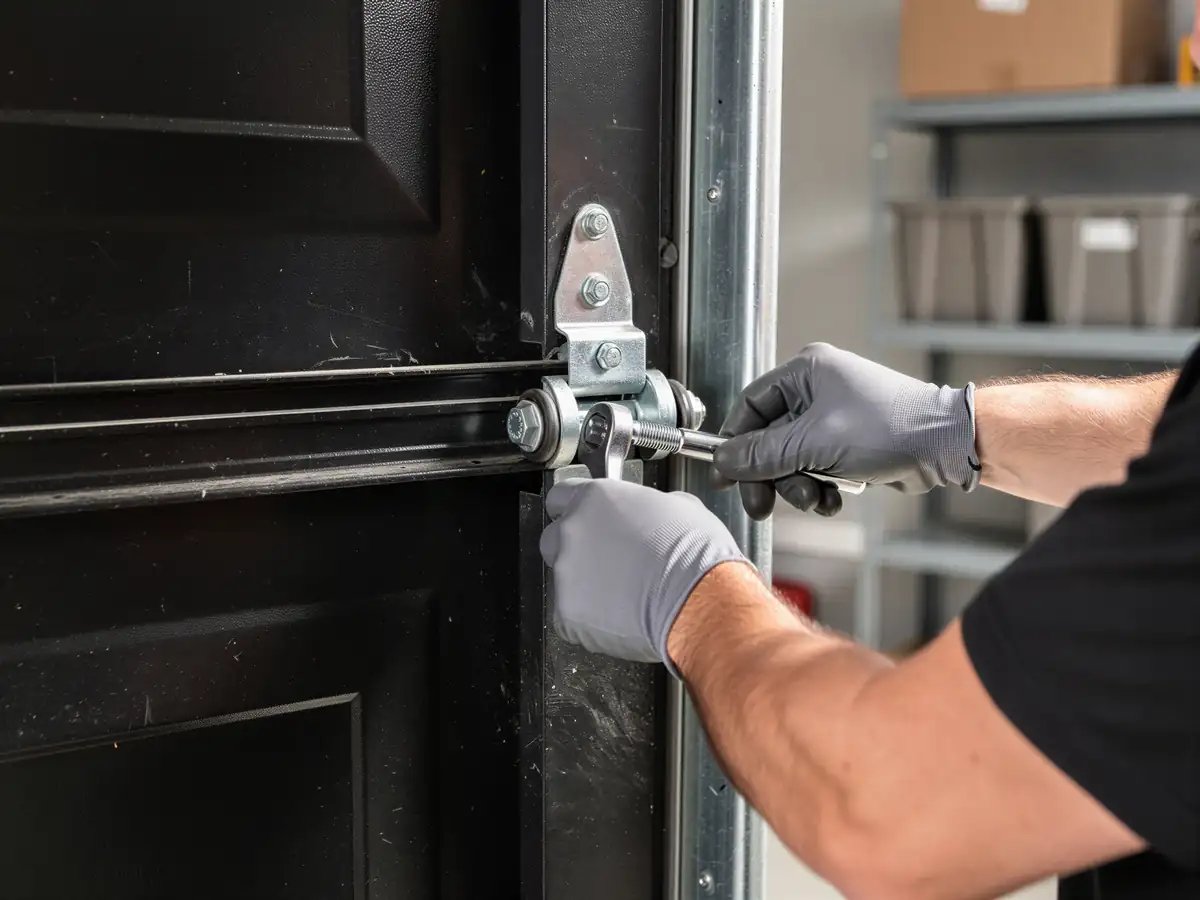
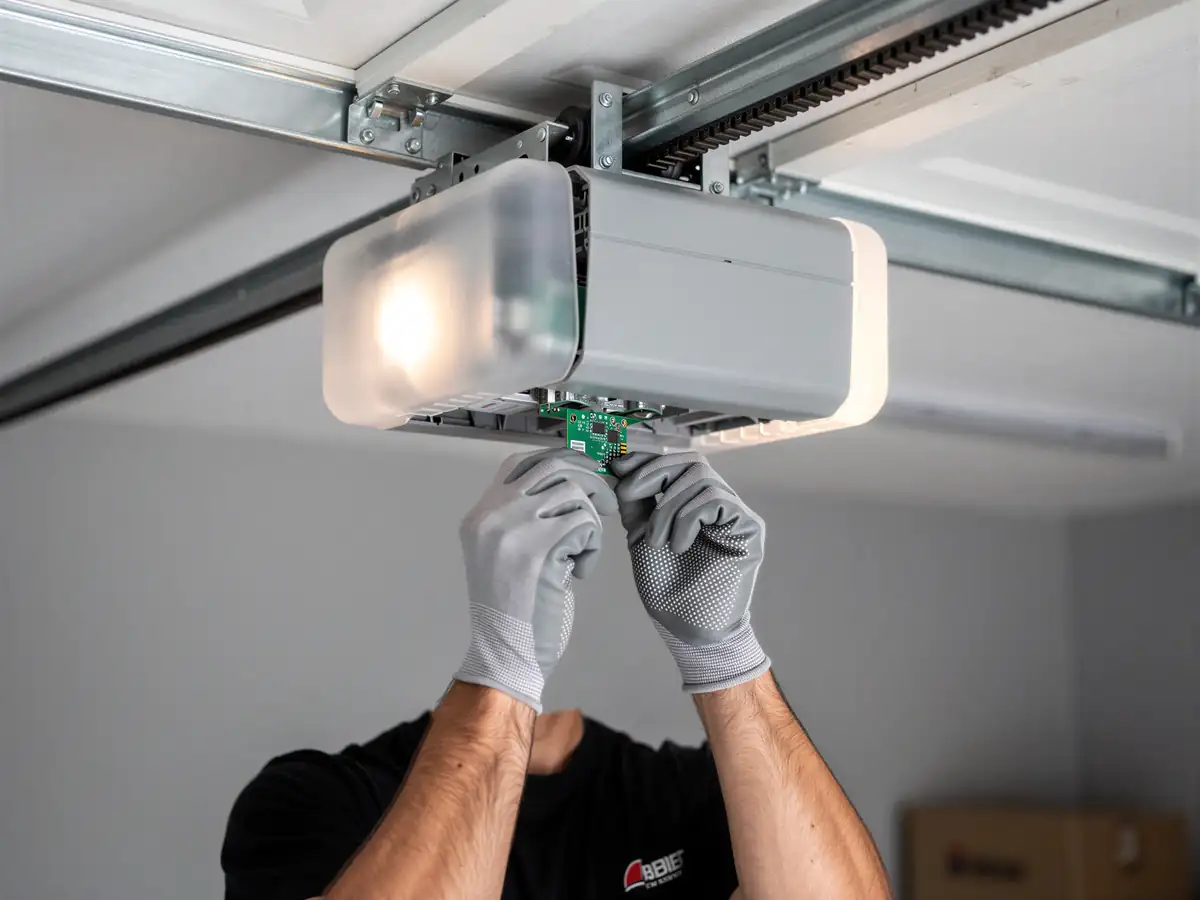
Talbotton's housing stock centers on a median build year of 1981, and across this part of the service area that means a lot of chain-drive openers with separate control boxes rather than the belt-drive, all-in-one units built today. On a unit that old, the usual suspects are a stripped plastic drive gear inside the motor housing, a worn chain that's jumped a tooth on the sprocket, and a logic board with swollen capacitors that makes the opener hum but not lift. Remotes on these older units often run fixed-code frequencies, so a dead remote can be the transmitter battery or it can be the receiver chip finally giving out after three decades of use. We also see start capacitors fail outright on the motor, which looks like a dead opener but is really a $20 part behind a $300 symptom. One honest limitation: if the opener is an original 1981 unit and the control board is gone, we're not hunting for a replacement board for something that old. At that point replacement is the only real repair.
The Cost of This Job
We don't post a price for Talbotton because the job varies too much to give one number - a capacitor swap and a full motor replacement aren't priced the same, and we're not going to guess at a figure we can't back up. What we can tell you is what moves the number: whether the part is still common (a modern logic board) or obsolete (a 1981 drive gear nobody stocks), and whether the trip out from Columbus is a standalone call or bundled with another job in the area. With roughly 360 households in Talbotton, we're not running a dedicated truck out this way every day, so a lot of what determines cost on any single visit is whether we can diagnose and fix it in one trip or have to order a part and come back. If your opener is original to a 1981-era house, ask us directly whether repair or replacement makes more financial sense before you commit - sometimes the honest answer is that a new belt-drive unit costs less over five years than patching a 40-year-old board.
Why It Happens Here
The pattern in Talbotton comes down to age and climate working together. A median build year of 1981 means most openers here are well past any reasonable service life, and a fair number have never been replaced - they've been repaired piecemeal instead, which is why boards and gears from three different decades sometimes turn up in the same unit. The broader service area's housing runs from 1972 to 2011 with a 1991 median, and the stock here leans toward that 1980s-90s pocket rather than the newer end, so the chain-drive, steel-rail opener is the norm rather than the exception. Add in the region's mild climate with occasional freeze - enough cold snaps to stiffen an old chain or crack a dried-out belt, but not enough to justify heavy-duty cold-weather hardware - and you get openers that fail slowly from age rather than all at once from weather. It's a different failure pattern than you'd see in a subdivision built in the 2000s, and it's why the fix here is more often a full motor-and-board swap than a simple sensor adjustment.