What Can Go Wrong
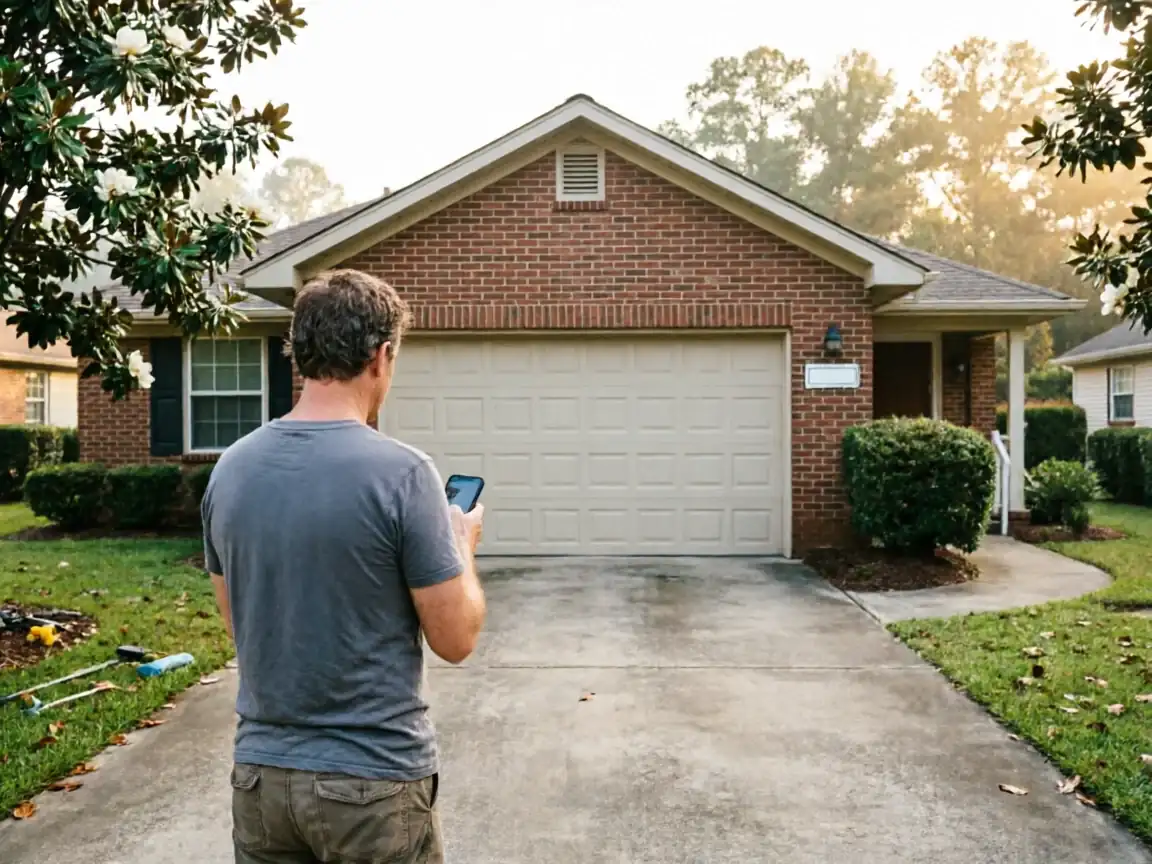
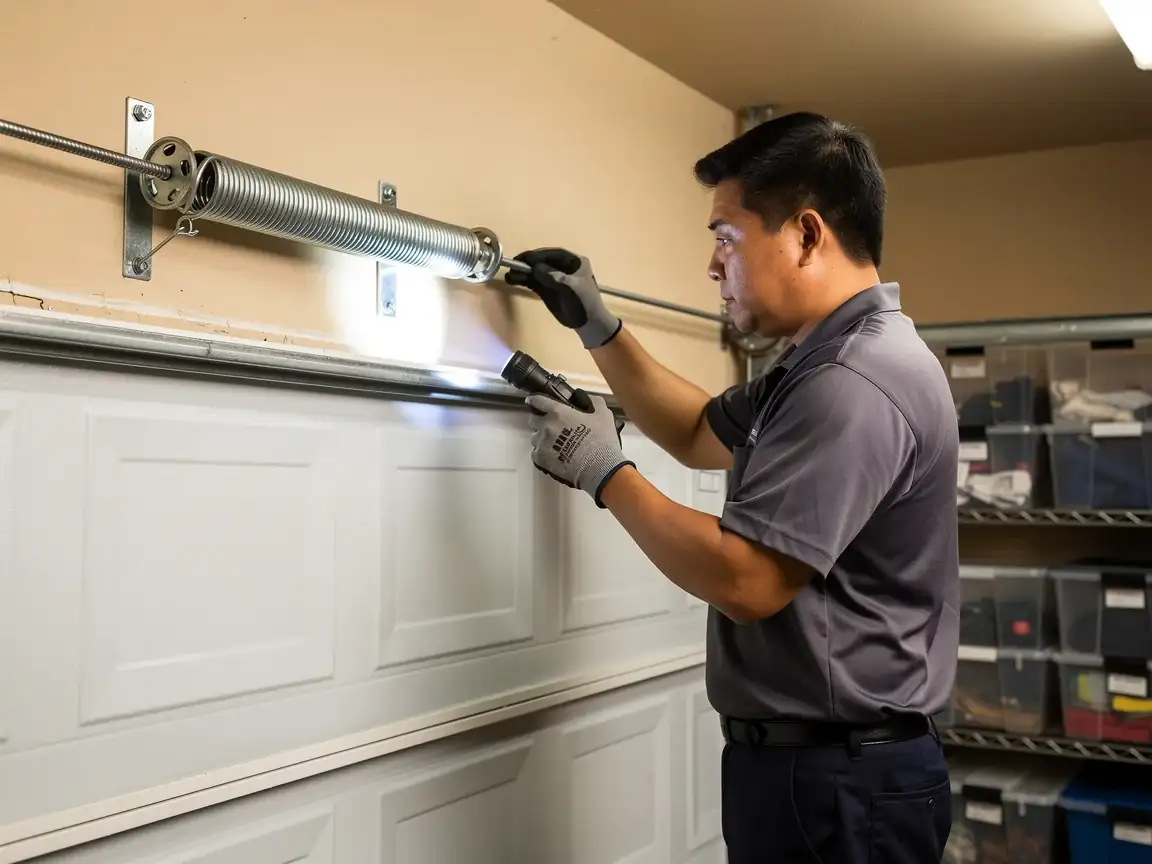
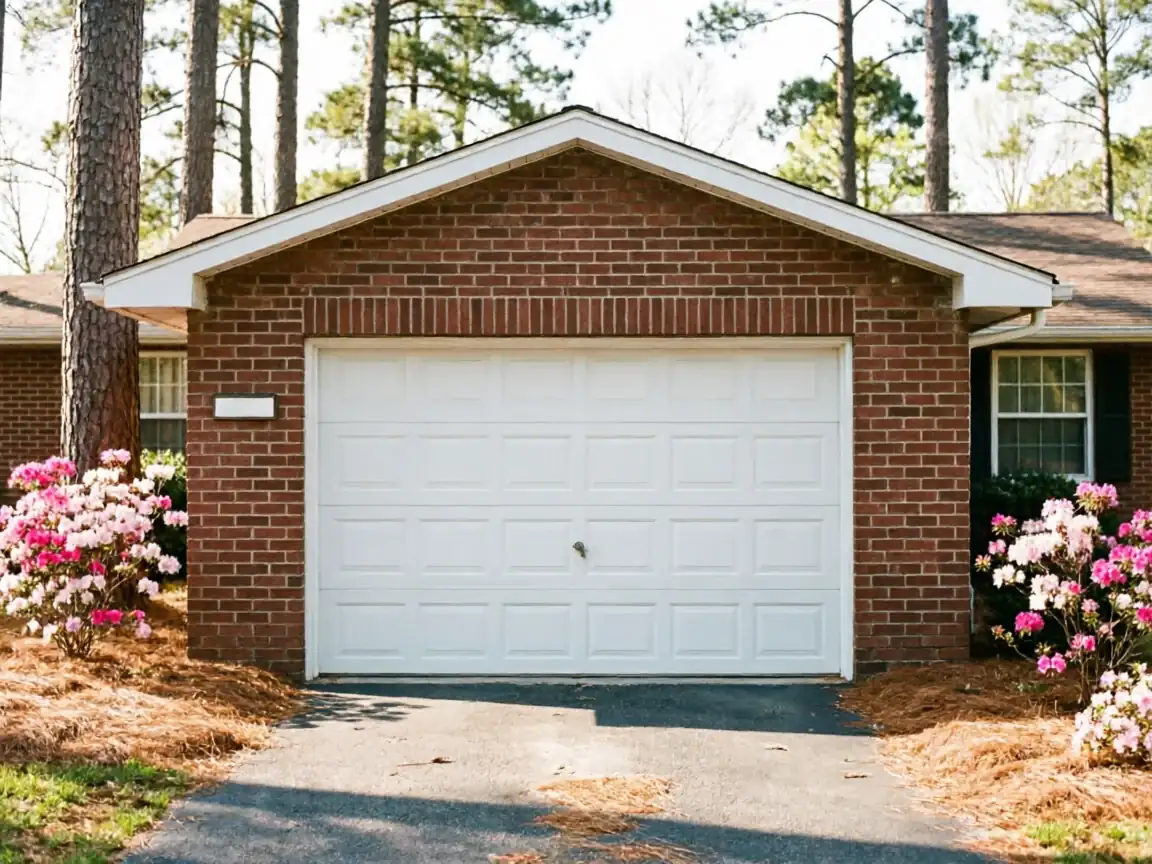
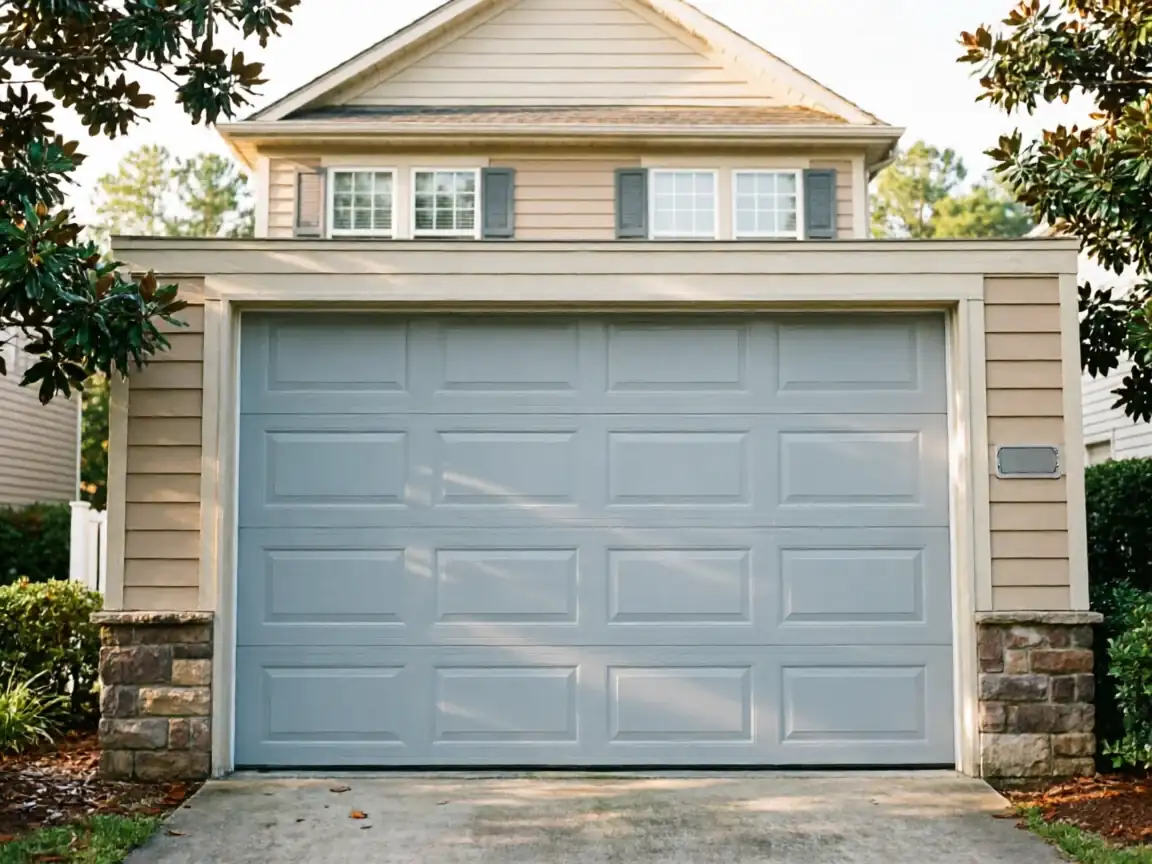
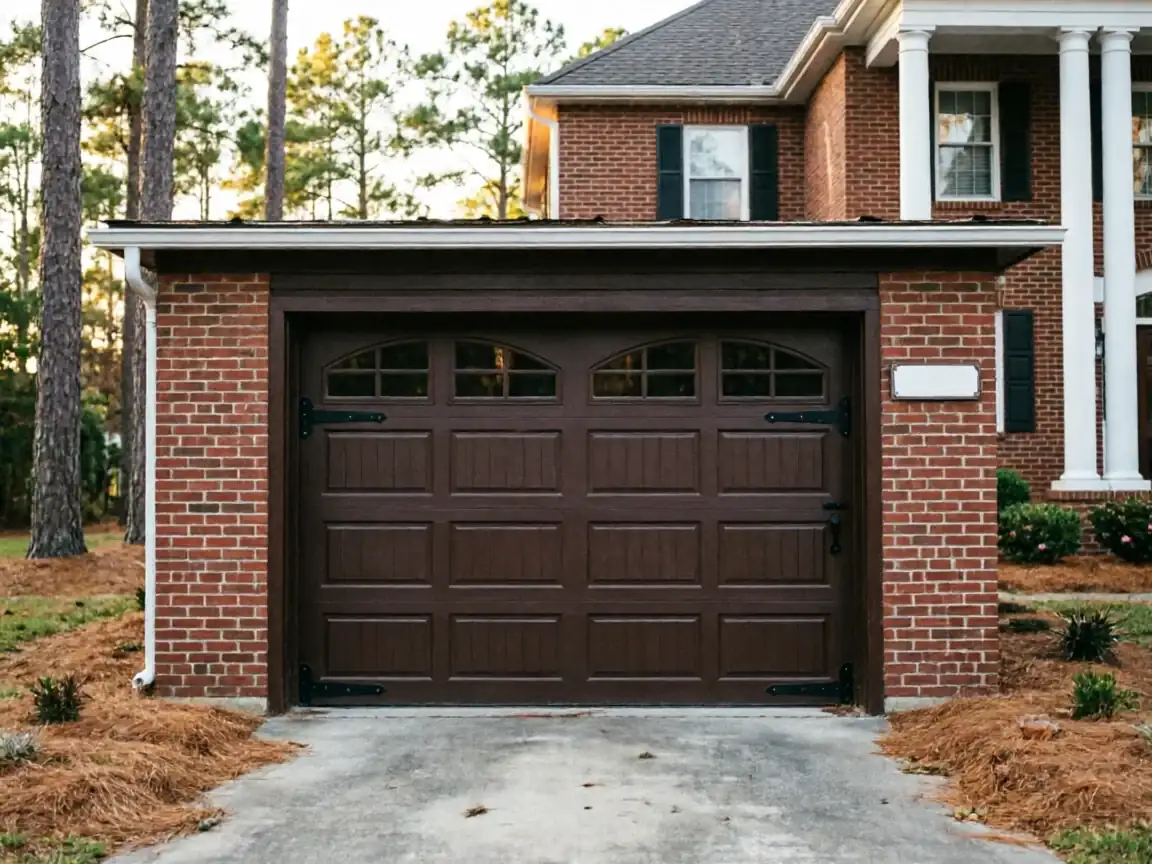
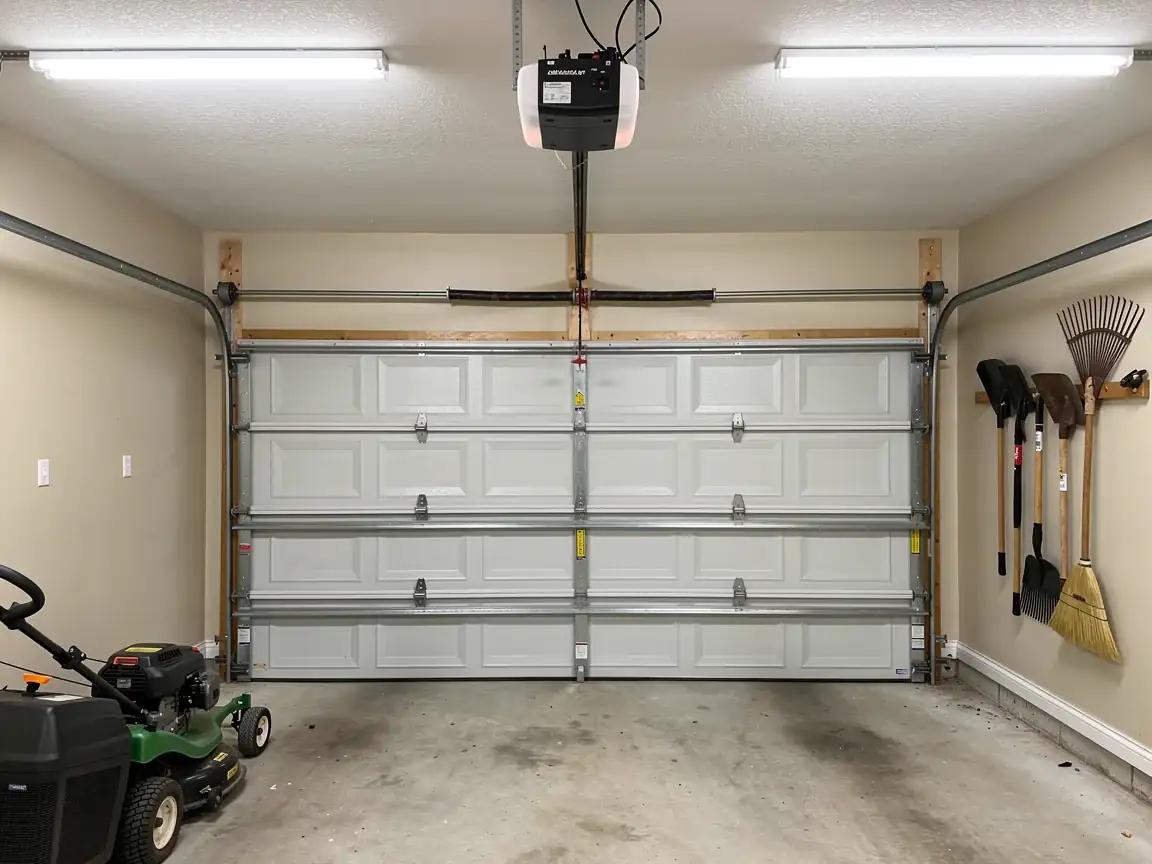
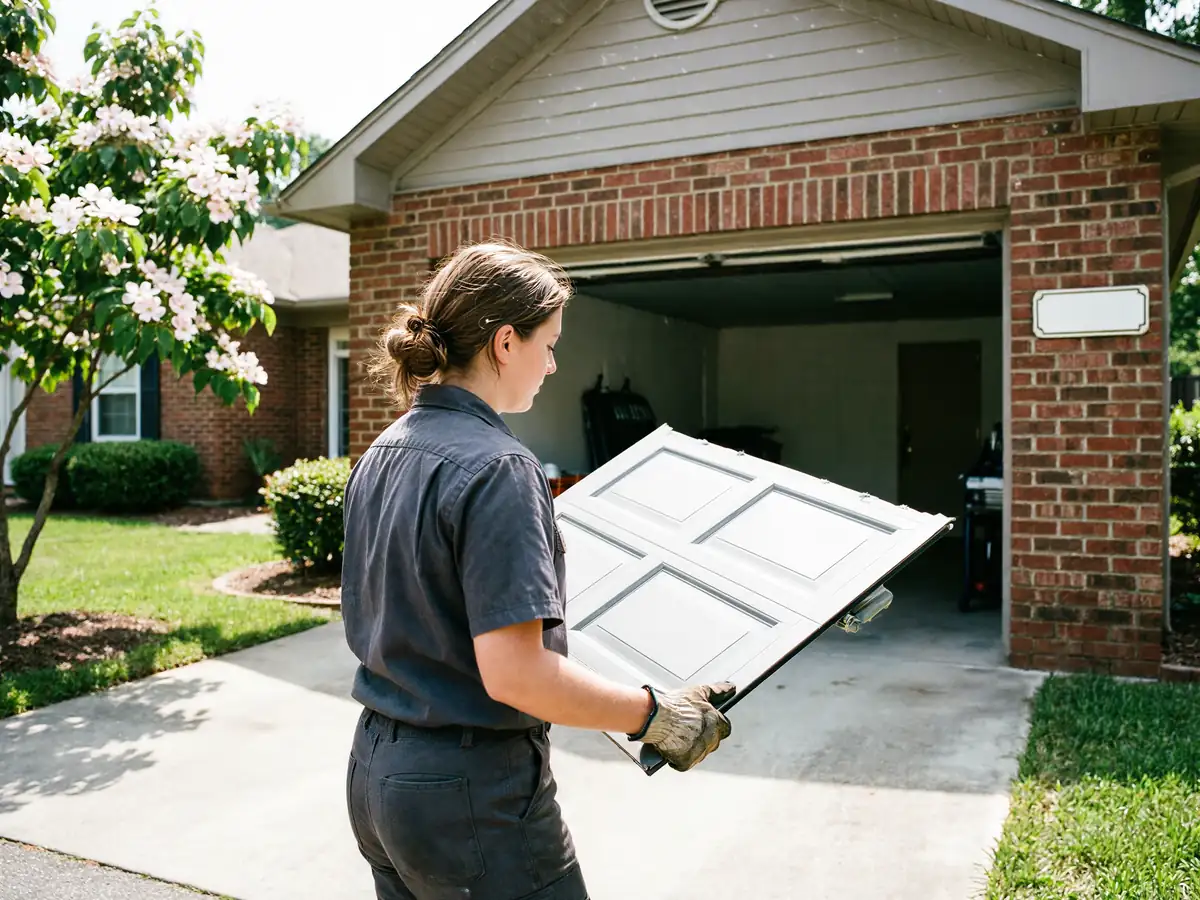
Most garage doors in Talbotton went up when the house did, and the median build year here sits around 1981. That means steel sectional doors, usually non-insulated, in the common widths builders used through the 1980s and 90s - single-car openings near 9 feet, double openings near 16. The panel skins on these are thin-gauge steel over a plain frame, not the foam-filled sandwich construction you see in newer builds. Thin steel dents easily: a backed-up trailer, a thrown rock, a kid's bike pedal catching the bottom panel. Once a panel is dented or torn, it doesn't fix itself with a mallet the way some YouTube videos suggest - the steel work-hardens at the crease and the dent telegraphs through paint within a season. Rust is the other failure mode. Climate here runs mild with occasional freeze nights, and that freeze-thaw cycle works moisture into the seam between panel sections where factory paint is thinnest. We see bottom panels rust through along the bottom edge before anything else on the door fails. The track, springs, and opener on a 1981-era door can all still be sound while one or two panels are the only thing actually wrong.
The Cost of This Job
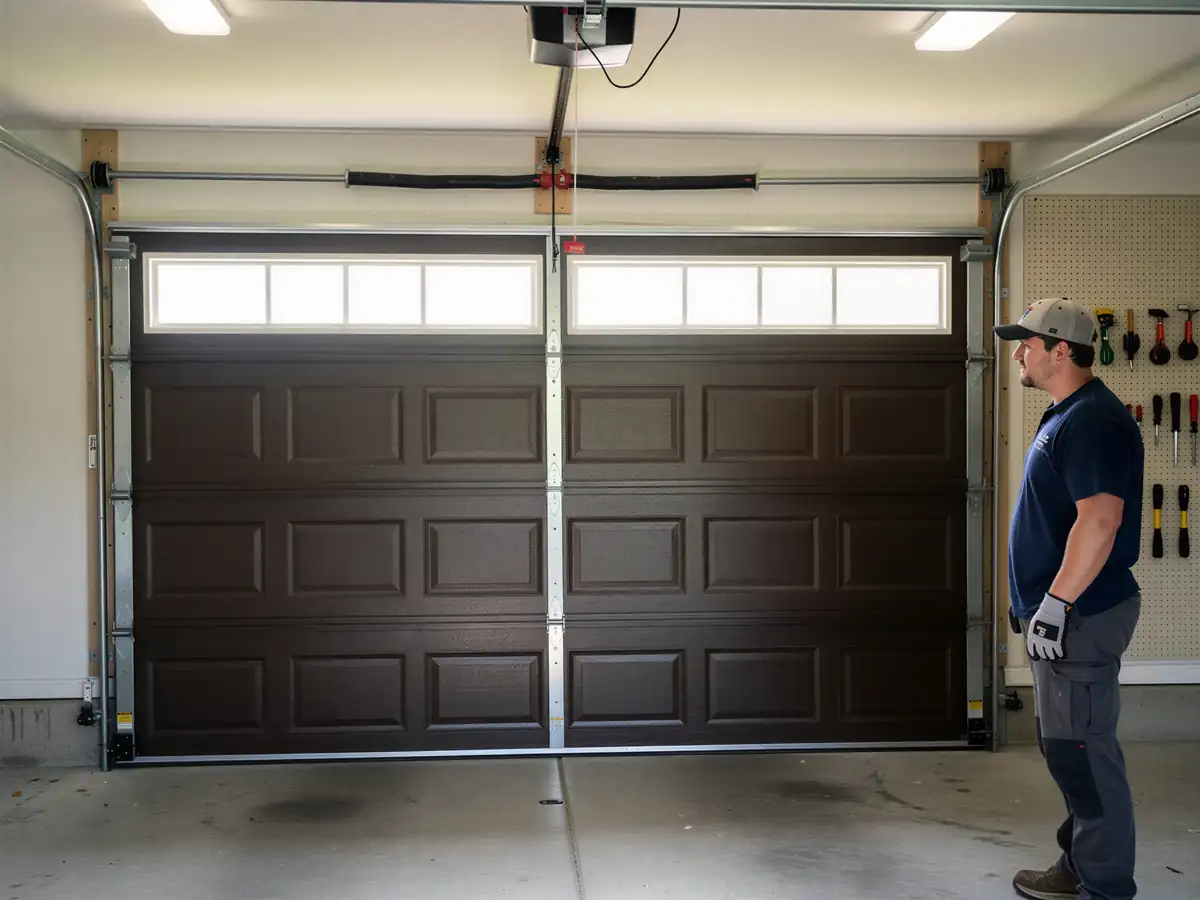
Panel replacement on a door this age almost always means an exact-match panel is no longer stocked by the original manufacturer, since most of these builder-grade doors came from suppliers that have since changed their panel profiles. That changes the job from "order one panel" to one of two paths: find a compatible panel from a current supplier that matches the section height and hinge spacing, or replace the full door if the match isn't close enough to blend. We quote both ways on site rather than guessing over the phone, because a door built in 1981 can have a panel height that no longer exists in current catalogs. We don't carry every discontinued profile on the truck - that's the honest limit here - so a single-panel job sometimes needs a short lead time while we source the right section rather than force a mismatch that looks patched forever.
Why It Happens Here
With roughly 360 households in the service area around Talbotton and most of that housing stock dating to the early 1980s, the doors on these streets are hitting the same age wall at roughly the same time - thirty-plus years on painted steel panels that were never insulated and never meant to be the final word on that door. That's different from the newer pockets closer to Columbus where insulated steel and composite panels are more common and dent or rust less. Here, the failure is less often a broken spring and more often the skin itself: a panel that's been denting and flexing for three decades finally cracks at a hinge point, or a bottom section rusts through after enough freeze nights work at the seam. It's steady, predictable wear tied to the age of the stock, not a sudden rash of storm damage or vandalism.