How We Fix It
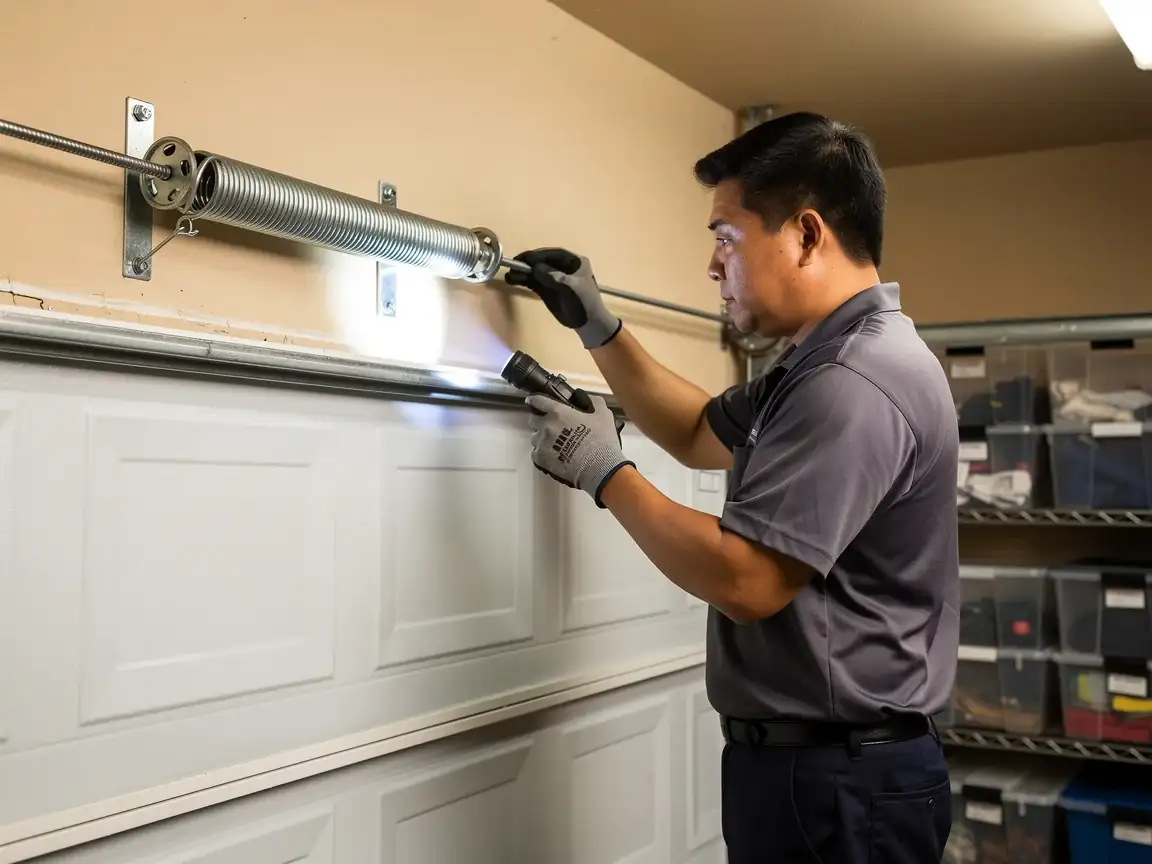
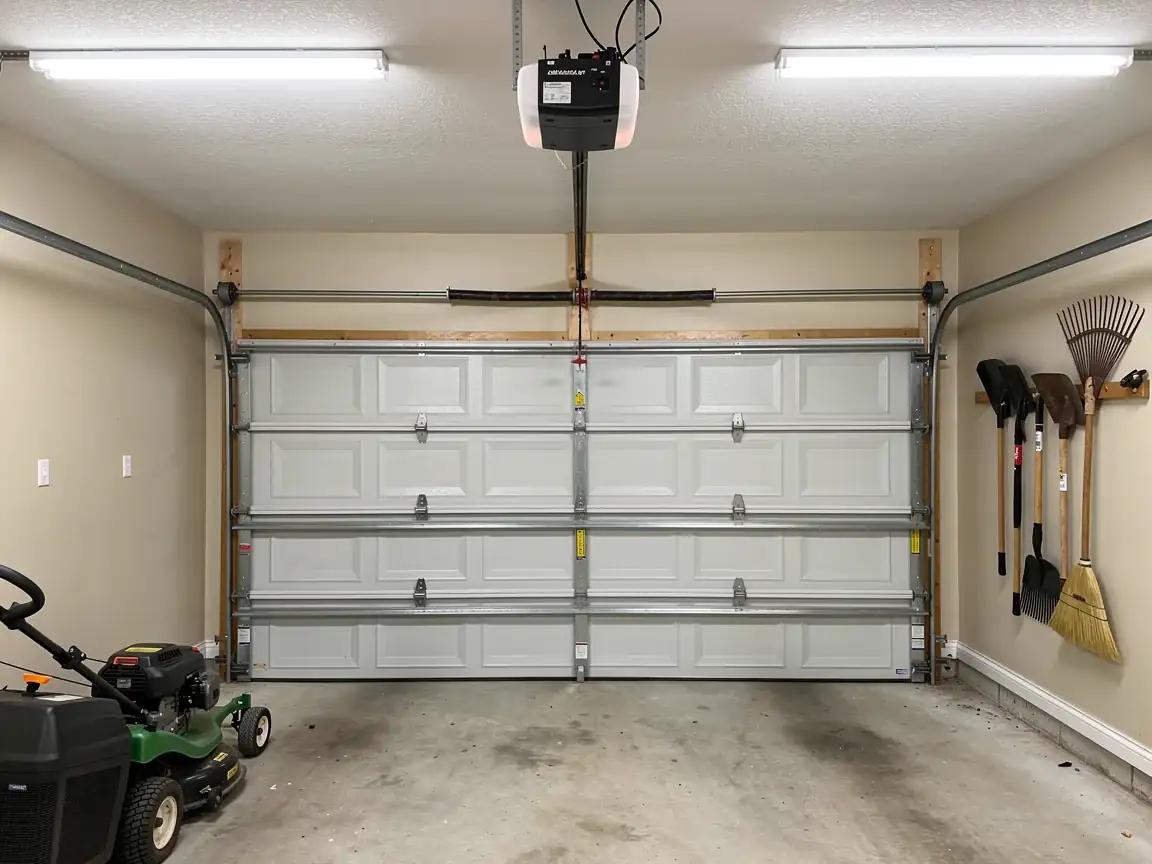
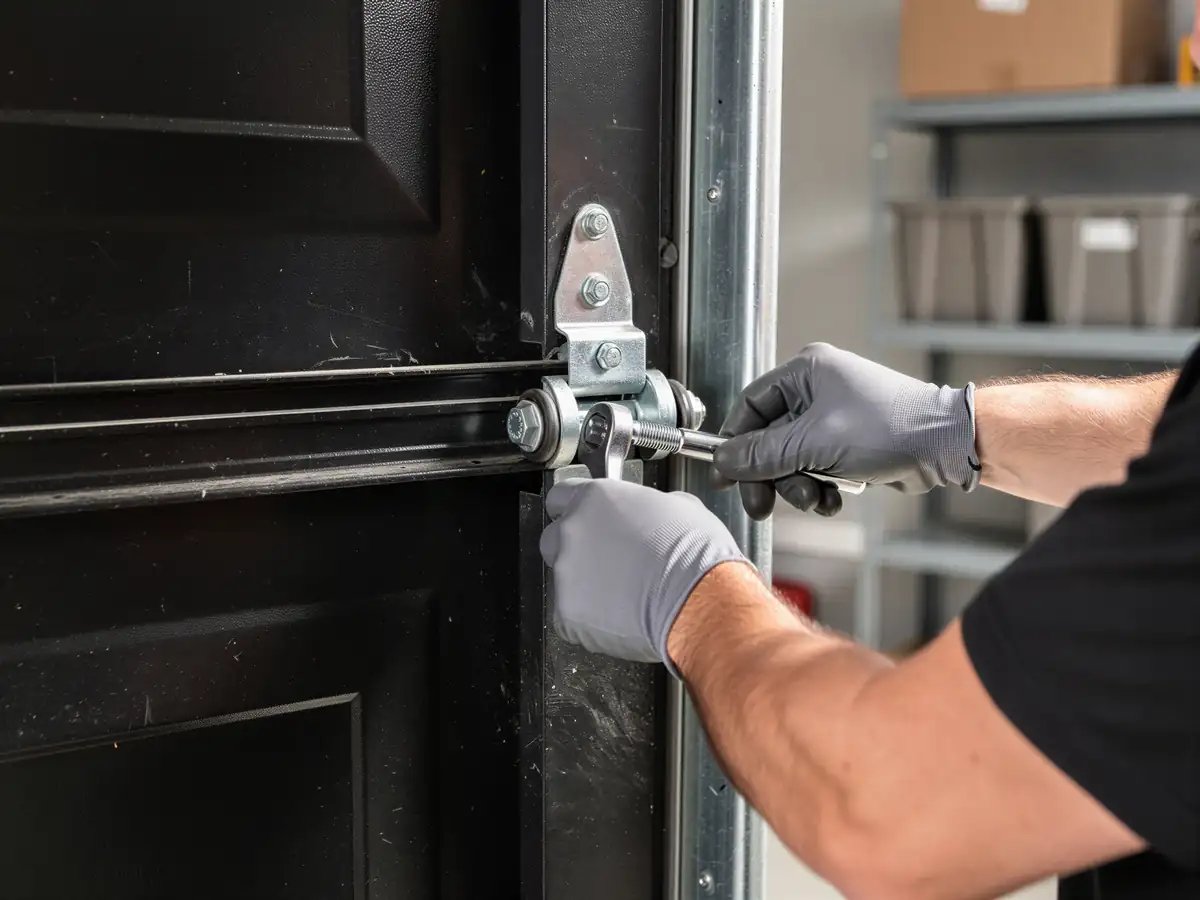
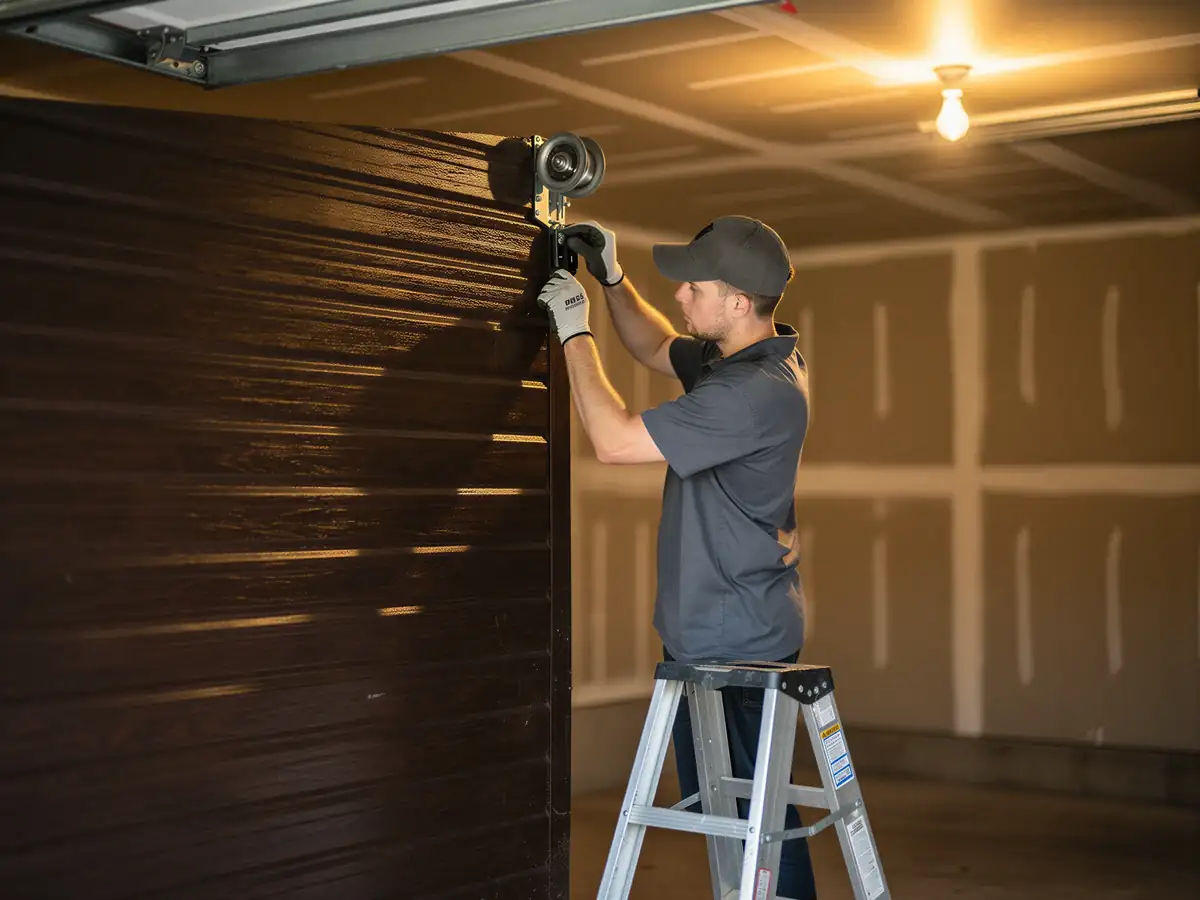
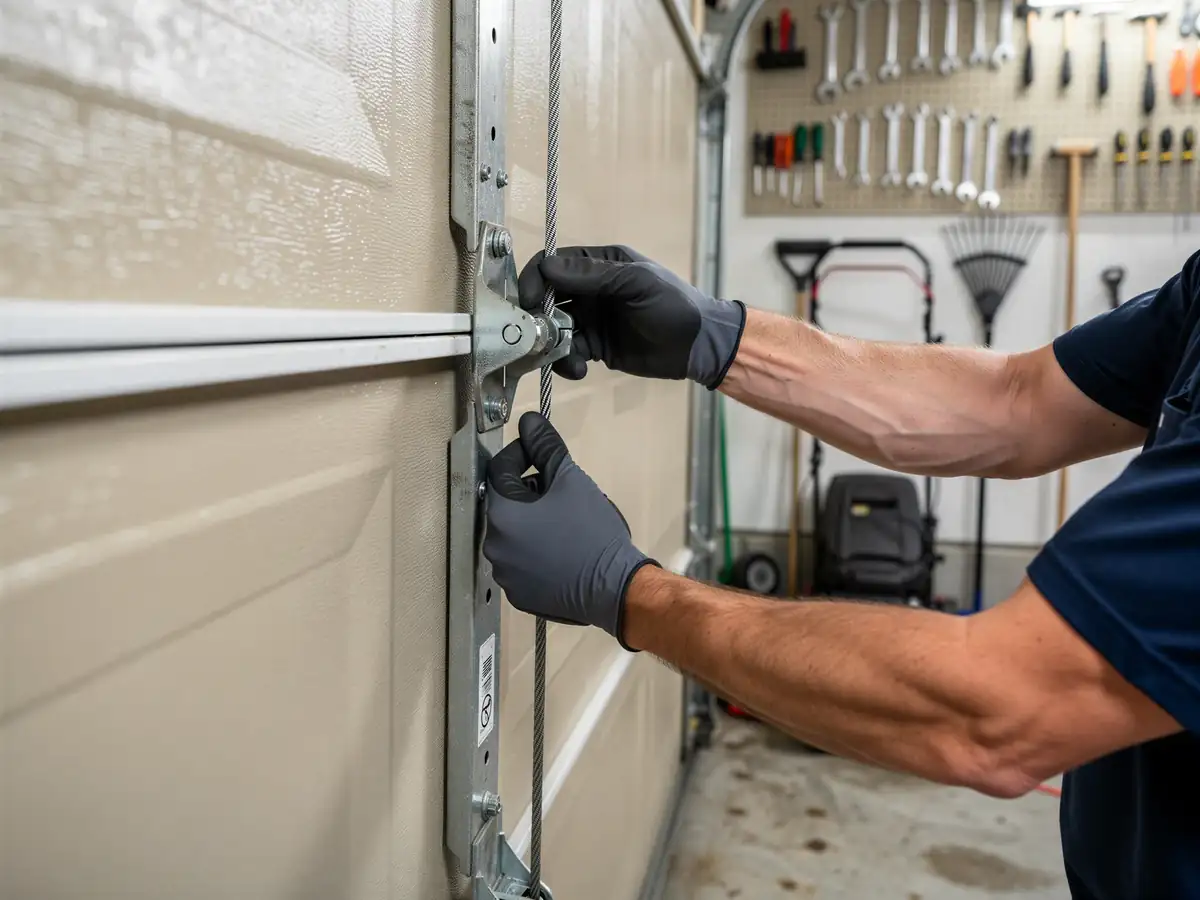
Most of the doors we see in Ladonia are steel sectional units hung on the hardware that was standard when the neighborhood went up around 1983 - galvanized lift cables running to a drum at each end of the torsion shaft, or on older setups, extension springs with a separate safety cable threaded through the coil. We start by pulling the broken cable off the drum or pulley, checking the drum groove for wear, and looking at the other side's cable even if it hasn't failed yet, because cable on one side rarely breaks without the other side being close behind.
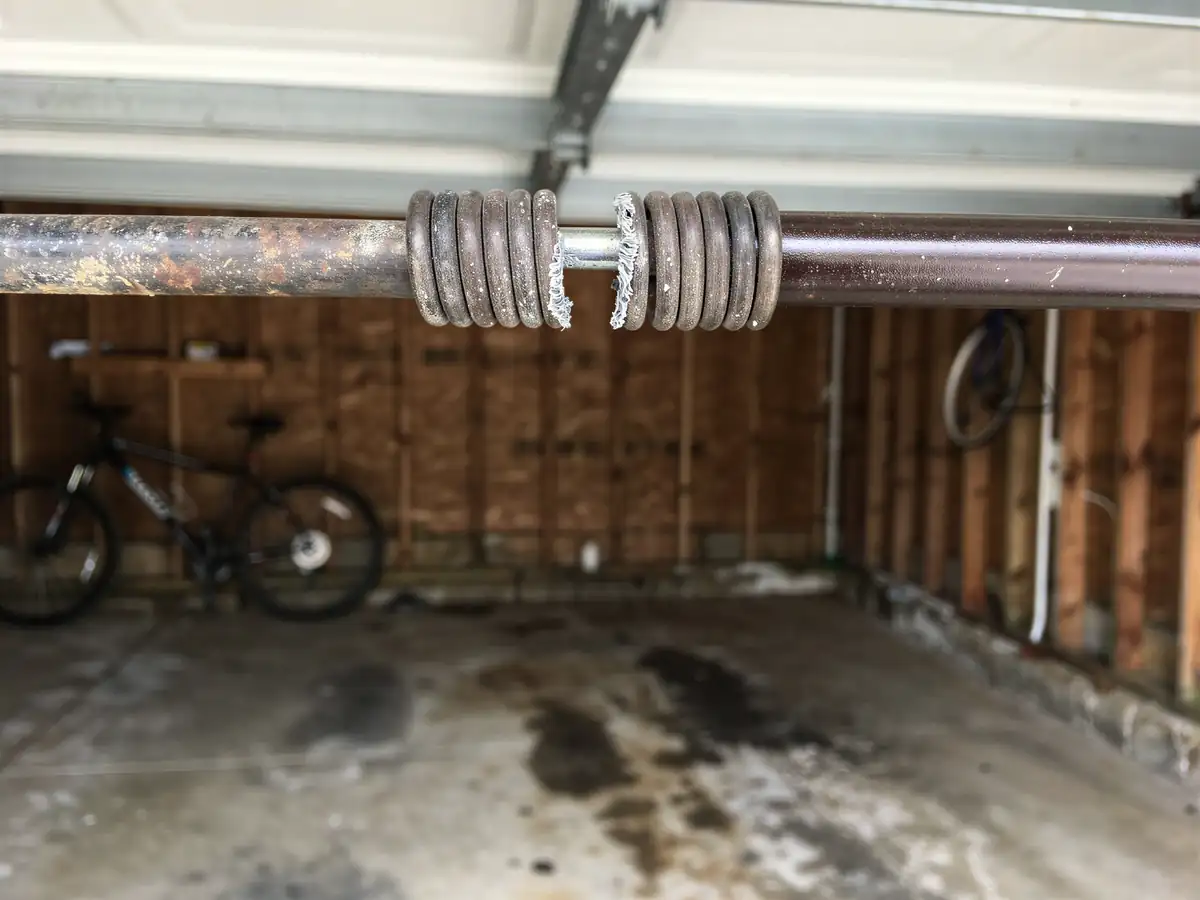
If the drum itself is grooved or the shaft is pitted, we replace those too rather than put new cable on worn metal. On extension-spring doors we always check that the safety cable is present and threaded correctly - a lot of these original installs either never had one or had it removed during a past repair, and that's a real hazard if the spring itself ever lets go.
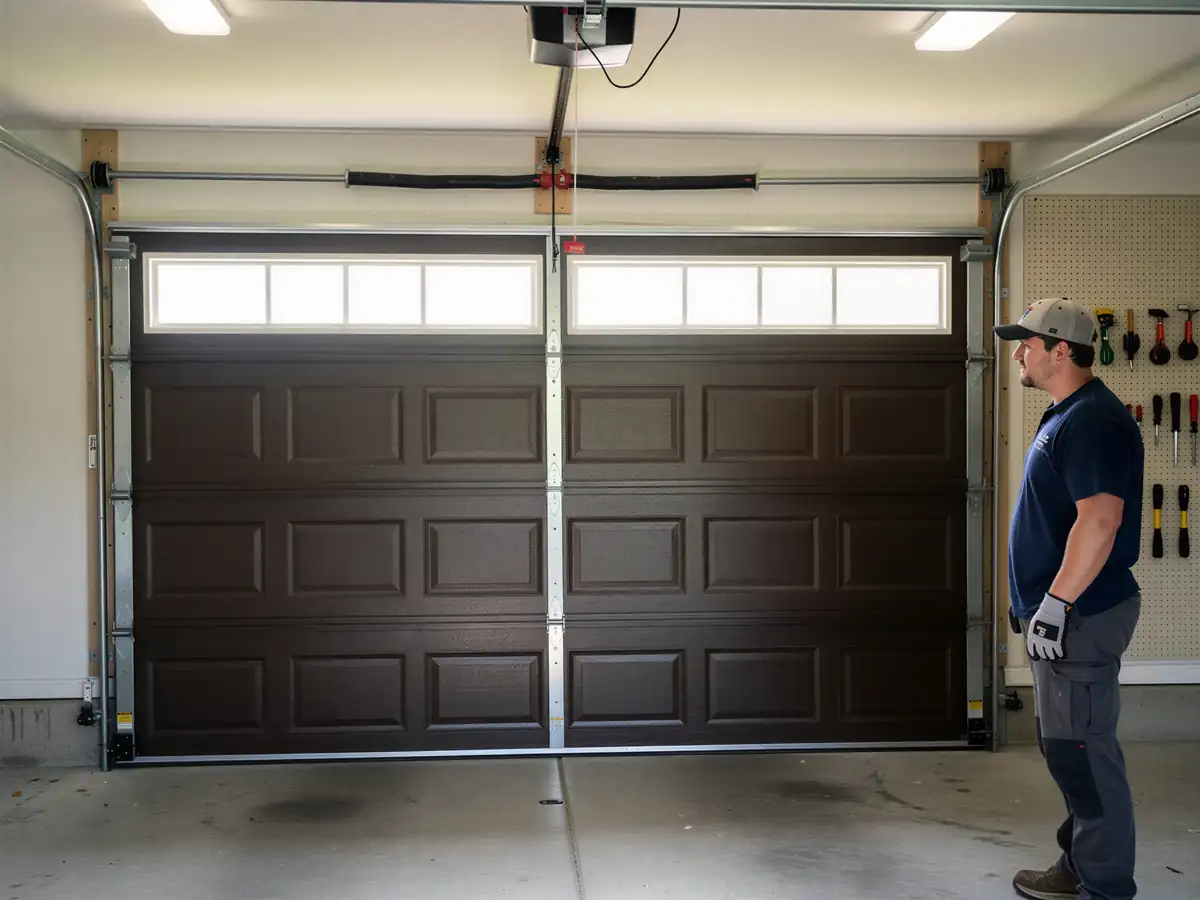
We wind the new cable to the correct length for the door size, balance the door by hand before we trust the opener to it, and run it through a full open-close cycle watching the drums for even wrap. A door that looks fixed but isn't balanced will just chew through the next cable in a matter of months.
What Can Go Wrong
Cable failure on a door this age is almost always wear, not a sudden event. The cable rides in the same groove thousands of times a year, and after four decades the groove wears a little wider than the cable itself, which lets the cable walk, fray, and eventually part - usually at the drum, not in the middle of the run. Rust is the other common cause here; Ladonia's climate runs mild with occasional freezes, and that freeze-thaw swing is enough to work moisture into the cable strands at the bottom roller bracket, where it sits closest to the slab.
A second, less obvious failure is the cable coming off the drum without actually breaking - it jumps the groove when the door gets racked slightly off-square, often from one spring being noticeably weaker than the other. That looks identical to a snapped cable from the garage floor, but the fix is different: re-seat and re-wind rather than splice.
We don't recommend patching a frayed cable with a clamp or a come-along fix you might find described online. Cable under torsion load that's already showing wear will finish failing on its own schedule, usually at the worst time, and a patched cable job isn't something we'll do our name on.
What You Are Seeing
The door that won't budge
With one corner sitting lower than the other, is the classic sign - one cable has let go and the opposite side is still holding, so the door hangs crooked instead of dropping flat. If the door came down hard and fast on its own, that's usually both cables going, or one cable plus a spring, and we treat that as more urgent since the door is no longer safely supported at all.
A grinding or popping noise right before the door stops moving is often the cable jumping its drum groove rather than snapping outright
The door will usually still be intact and level, just stuck. If you see a cable hanging loose and frayed at the bottom bracket but the door still opens and closes, don't keep running it; that's the cable about to go, and running it to failure risks the door coming down on something, or someone, underneath.
In every case, leave the opener alone and don't try to force the door by hand
A door off one cable is under uneven spring tension and can shift unpredictably.
The Cost of This Job
We don't price jobs sight unseen over the phone, because the difference between a single frayed cable and a cable-plus-drum-plus-spring job on a 40-year-old door is real money, and we'd rather look at it first. What we can tell you is what drives the cost on doors of this age in Ladonia: whether it's one cable or a pair, whether the drums are reusable or need replacing, and whether the springs underneath are original and due for replacement anyway. On a household income of roughly $52,045 for this area, we try to be straight about which of those are must-fix now versus can-wait, rather than bundling everything into one invoice by default.
What Is on the Truck
For cable work on doors from this era we carry galvanized aircraft cable in the common gauges and lengths used on single and double sectional doors, replacement drums sized for both torsion and extension setups, and safety cables for extension-spring doors that are missing one. We also stock the rollers and end bearing plates that commonly wear out alongside a cable failure, since replacing one without checking the other is how you end up back at the same door in six months.
What we don't carry is custom or discontinued hardware for doors that have been modified from their original factory spec - if a door's been re-tracked or converted from extension to torsion springs at some point by a previous owner, we may need to order a part rather than fit it that day. We'll tell you up front if that's the case rather than make the drive out twice.