How We Fix It
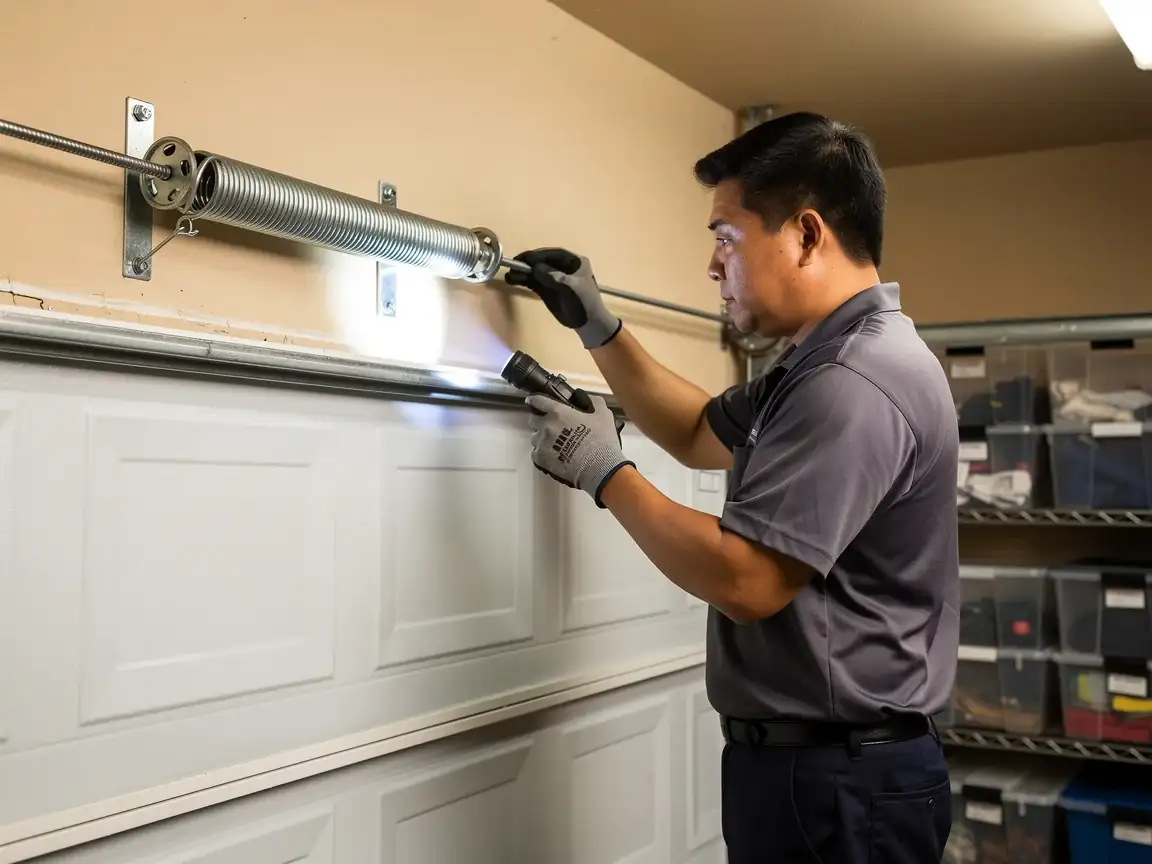
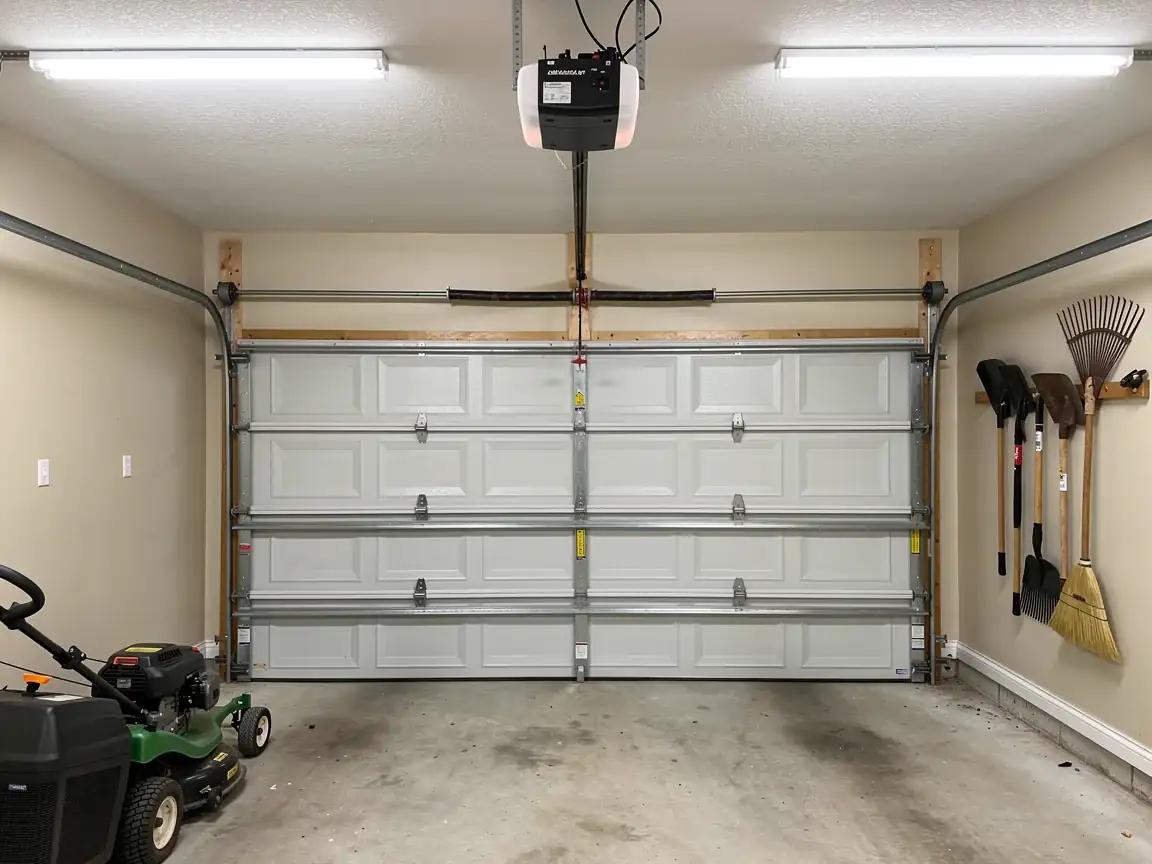
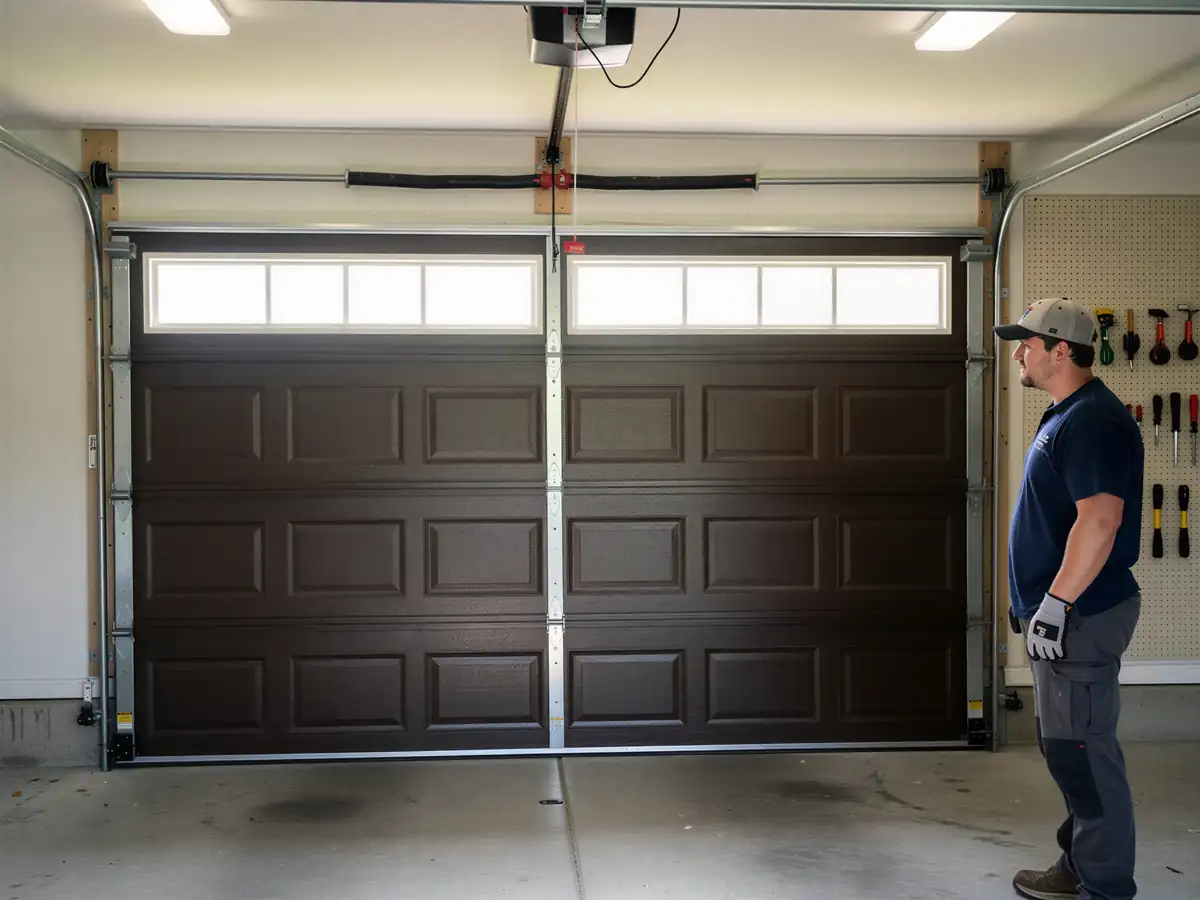
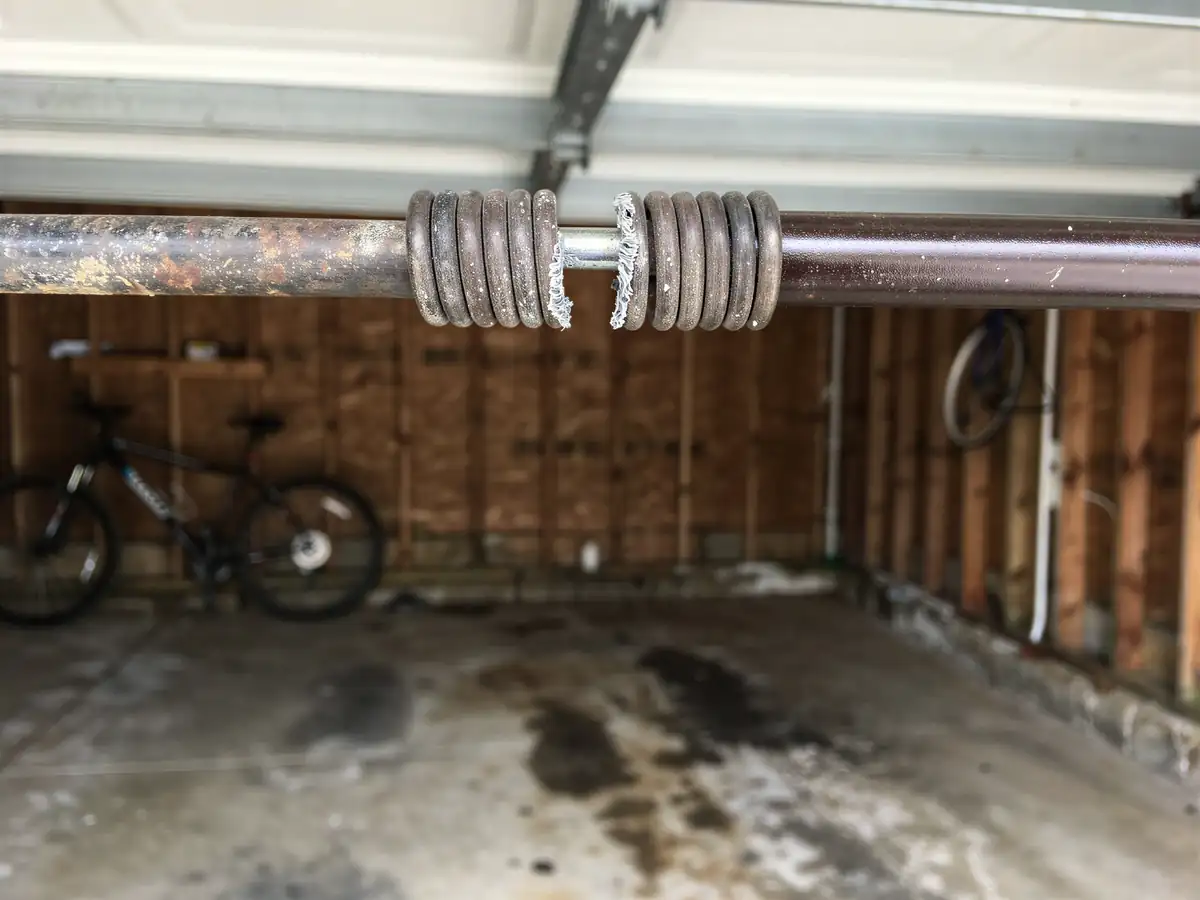
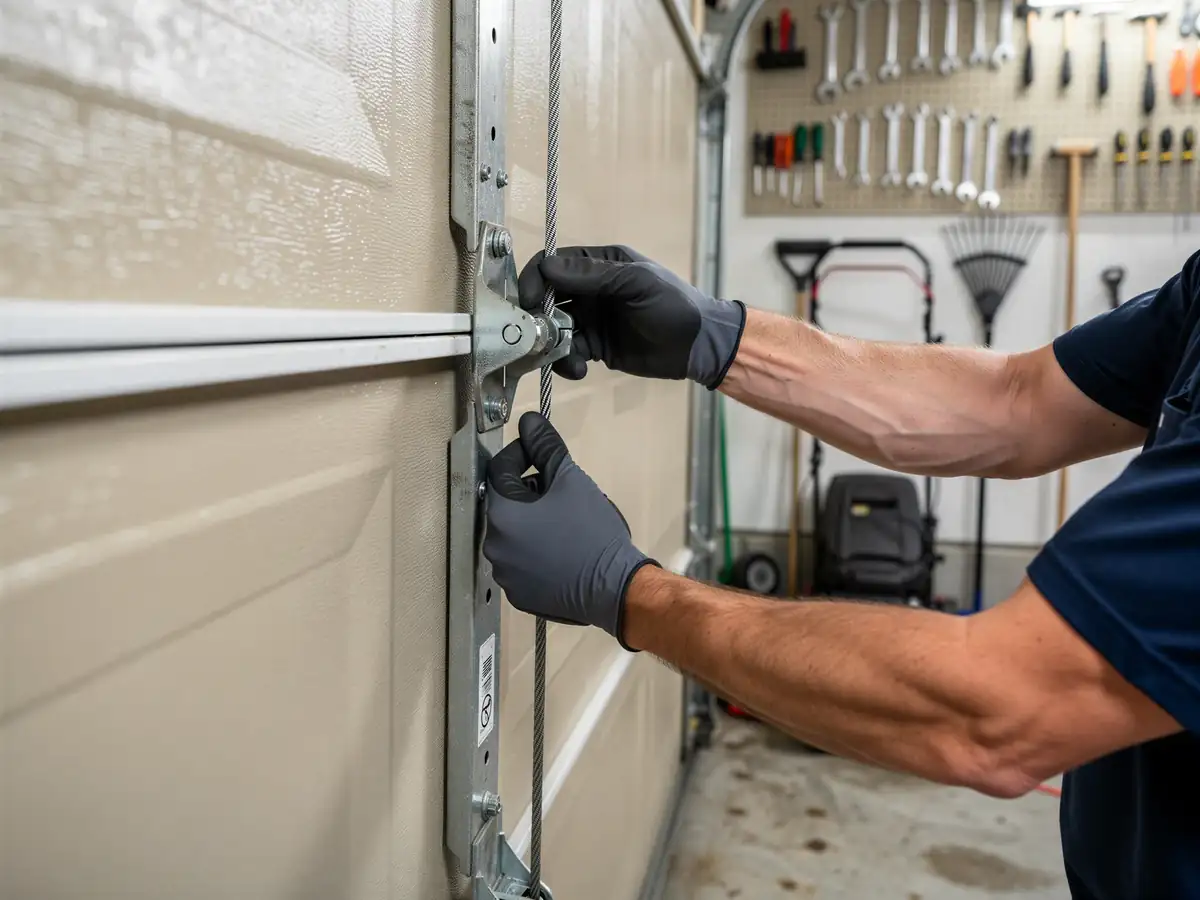
Most of the trouble calls we take in Ladonia trace back to the same decade: the typical house here went up around 1983, which puts it right in the middle of the 1972-2011 build window across our whole service area, but on the earlier side of it. That matters because doors installed in the early 80s often still have their original torsion springs and the galvanized tracks that came standard then - not the beefed-up hardware you see on anything built after the mid-90s. When we get a call here, we start by checking spring wind and cable wear before we touch the opener, because on a door this age the spring has usually done thirty-plus years of work and it's either close to done or already snapped.
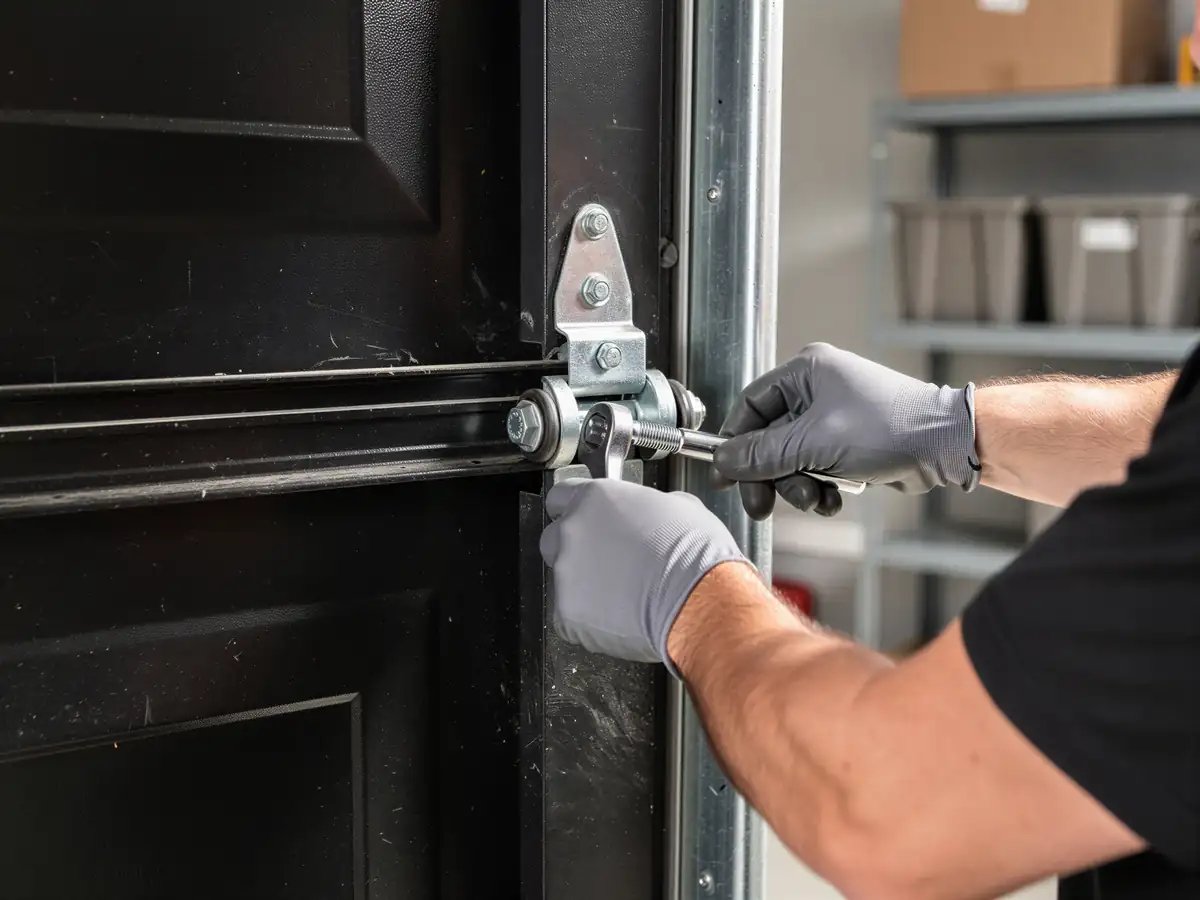
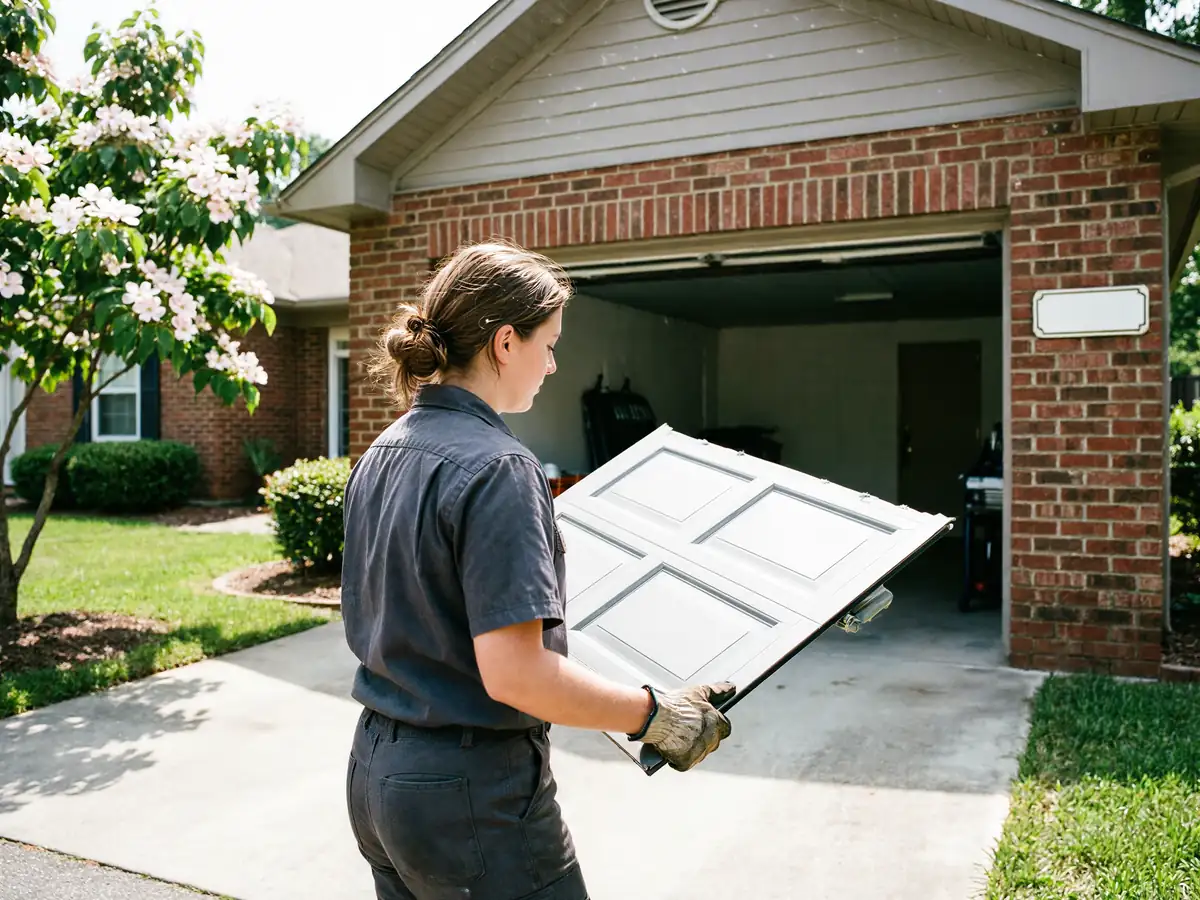
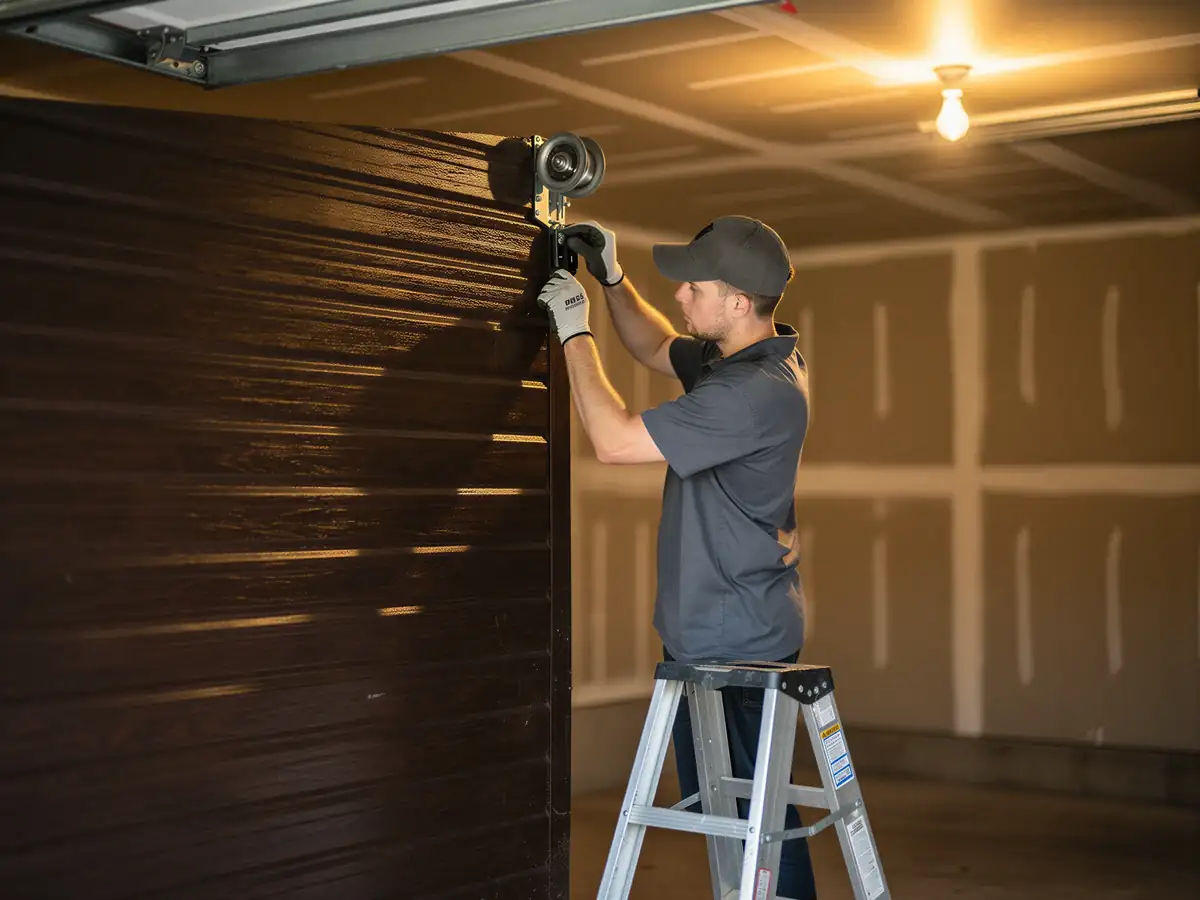
We pull the panel, check the rollers for pitting, and look at the track alignment, since original steel tracks from that era weren't always set as square as current code calls for. If the door is original, we'll tell you straight whether a spring swap and a roller set gets you another decade, or whether the whole unit is past the point of patching. We don't push a full replacement on a door that just needs a spring - but we also won't pretend a cracked 1983 panel is a one-part fix.
What Can Go Wrong
On a house built in 1983, the garage door has likely been through two or three spring replacements already if anyone's kept up with it - and if nobody has, you're probably on borrowed time with the original one. Extension springs from that era (before torsion became standard on lower-cost builds) are a common find here, and they fail without much warning: one day the door's fine, the next it won't lift past knee height.
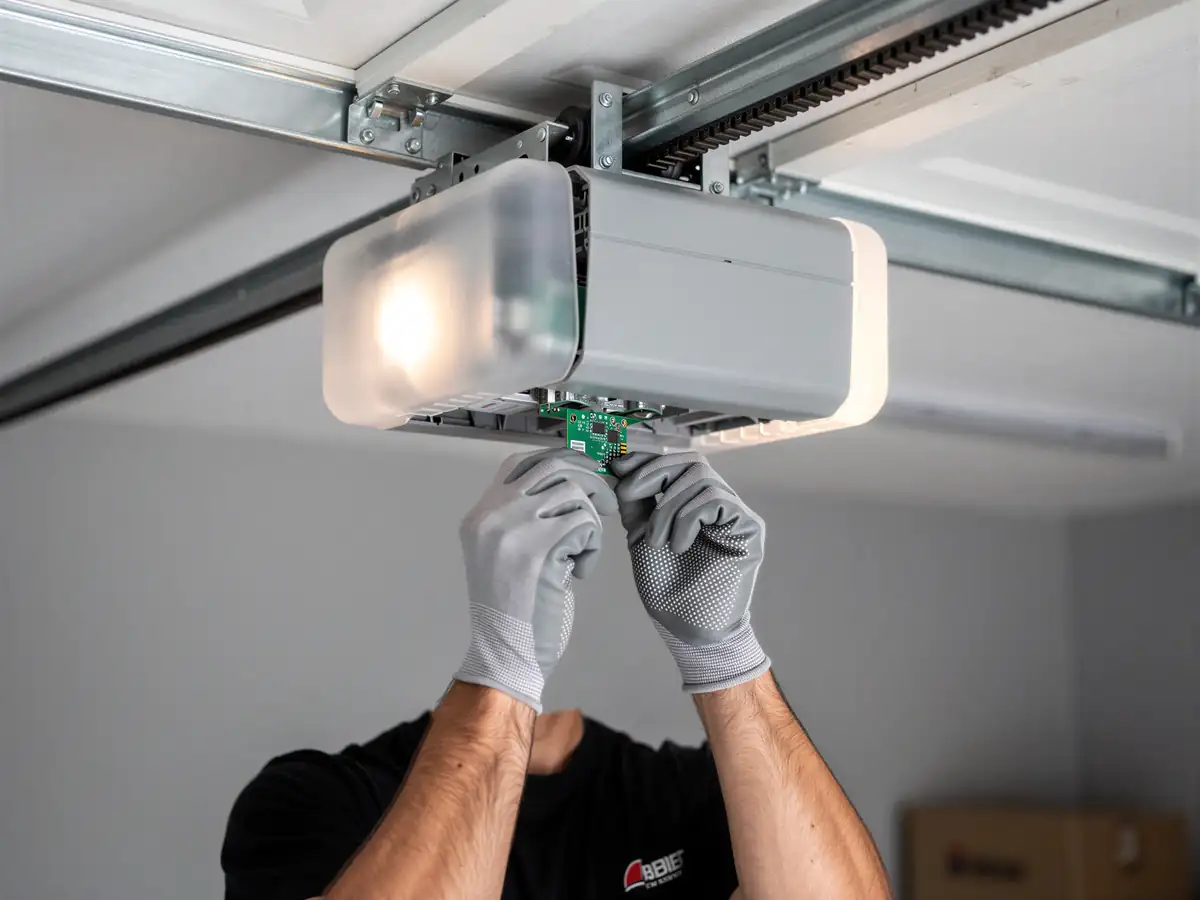
Openers from the 80s and 90s also used chain-drive units with limit switches that drift out of adjustment over time, so a door that reverses for no reason or stops short of the floor is a frequent call. Columbus sits in a mild climate with occasional freezes, and while that's not hard on hardware the way a true freeze-thaw region is, cold snaps still stiffen old grease in track rollers enough to make a marginal spring finally let go. None of this is dramatic weather damage - it's just thirty-plus-year-old steel and springs doing what thirty-plus-year-old steel and springs do.
What You Are Seeing
If your door is heavy to lift by hand
Or the opener strains and groans before it moves the door at all, that's a spring losing tension - common on original hardware from the early 80s. A door that slams the last foot instead of settling down slow is telling you the same thing from the other direction.
Gaps at the bottom corners
Or a door that looks like it's racking to one side as it goes up, usually point to track that's shifted out of square - not unusual on original steel track that's seen four decades of seasonal movement. If the opener light blinks and the door won't budge, check the obvious stuff first (a tripped breaker, a sensor knocked out of line) before assuming it's the motor. We've opened plenty of service calls in homes this age where the fix turned out to be a $20 part, not a new unit.
The Cost of This Job
We don't have a published price list for this page, and we're not going to make one up. What we can tell you is that the jobs we see most in Ladonia - spring replacement, roller and track work, opener repair on original 1980s hardware - are bread-and-butter calls, not full-system overhauls, unless the door itself has failed structurally. Median household income here runs around $52,045, and we price repairs with that in mind rather than assuming every job needs the most expensive fix on the shelf.
If a door is original from 1983 and the track, springs, and panel are all near the end at once, replacement can end up cheaper over five years than repeated patch repairs - we'll walk you through that math on site rather than guess at it here.
What Is on the Truck
Because we're coming from Columbus - about 6 miles away - we stock the truck for the hardware we actually see on this route: standard torsion and extension springs sized for the panel heights common on early-80s builds, rollers, cables, and the limit-switch and sensor parts that fail on chain-drive openers from that generation. What we don't carry is a full stock of obsolete parts for doors that have been discontinued for decades - if your door needs something that specific, we'll tell you on the spot rather than have you wait on a truck that doesn't have it, and we'll order it instead of guessing.