How We Fix It
Most garages in Ladonia went up around 1983, and that build year tells us a lot before we even open the panel. Houses from that era were almost always fitted with chain-drive openers and mechanical travel limits - no digital logic boards, no belt drives. A lot of those original units are long gone, replaced once or twice over, but the wiring runs, mounting brackets, and header clearance still follow that older layout, which shapes what we can swap in without reworking the frame.
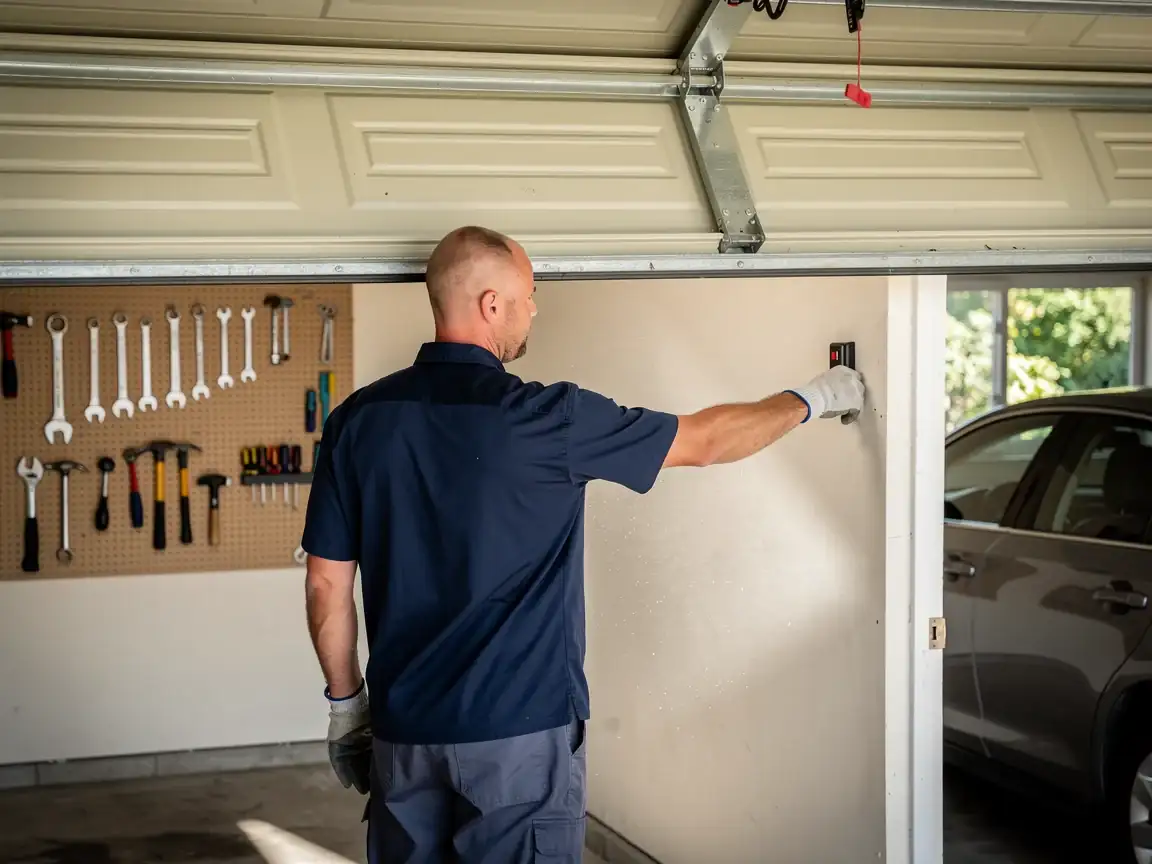
We start the same way every time: test the wall station and remote separately, check the logic board for power, then watch the door through a full cycle to see where it hesitates or reverses. If the opener runs but the door doesn't move, we're looking at the drive gear or chain, not the motor. If the door reverses early, it's almost always the safety sensors - either misaligned or dirty, which is common once a slab has settled a little over forty-plus years.
Our climate here runs mild with the occasional freeze, which matters more than people think. Grease on an old drive rail hardens on a cold morning, and a stiff chain or belt can mimic a dying motor. We check lubrication and rail condition before we condemn the motor itself.
What Can Go Wrong
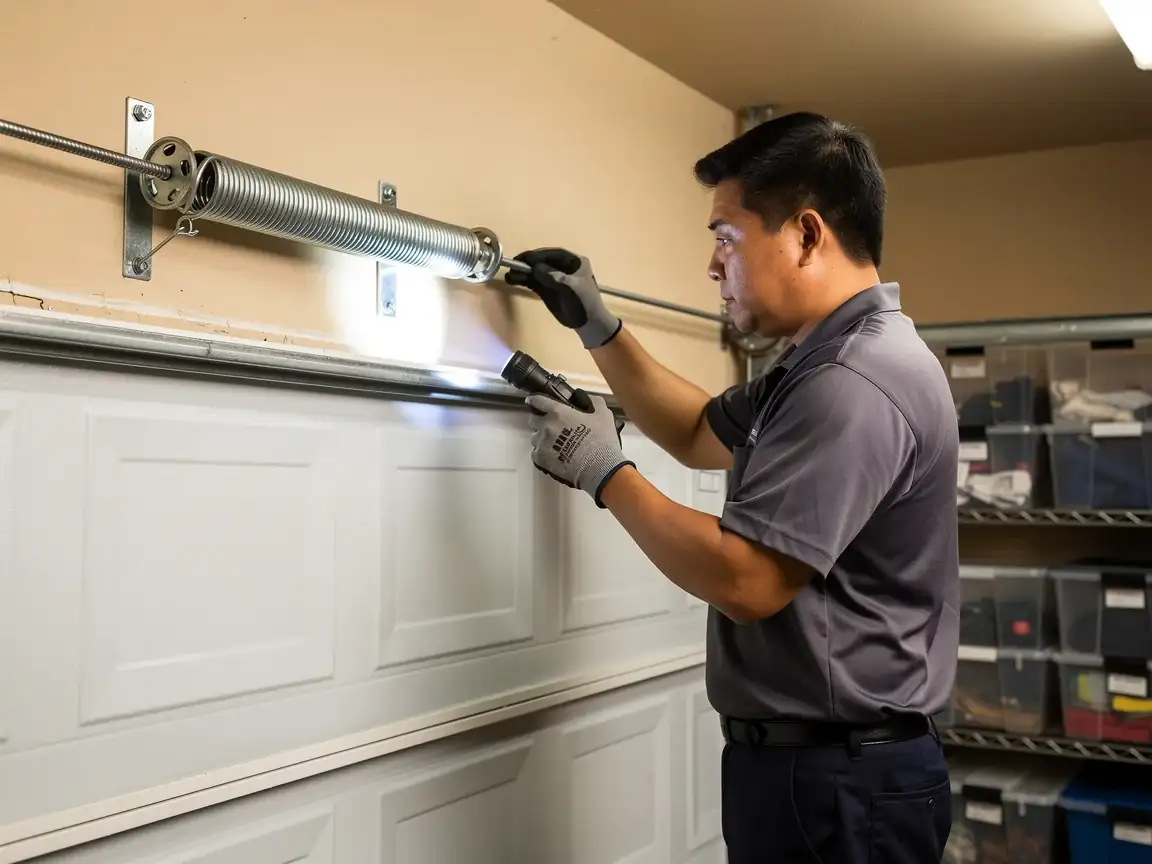
The most common failure we see on openers from this era is a stripped nylon drive gear inside the motor housing - it's a wear part by design, and on a chain-drive unit from the 1980s or 90s it's usually the first thing to go. Second most common: a failed start capacitor, which shows up as a motor that hums but won't lift the door.
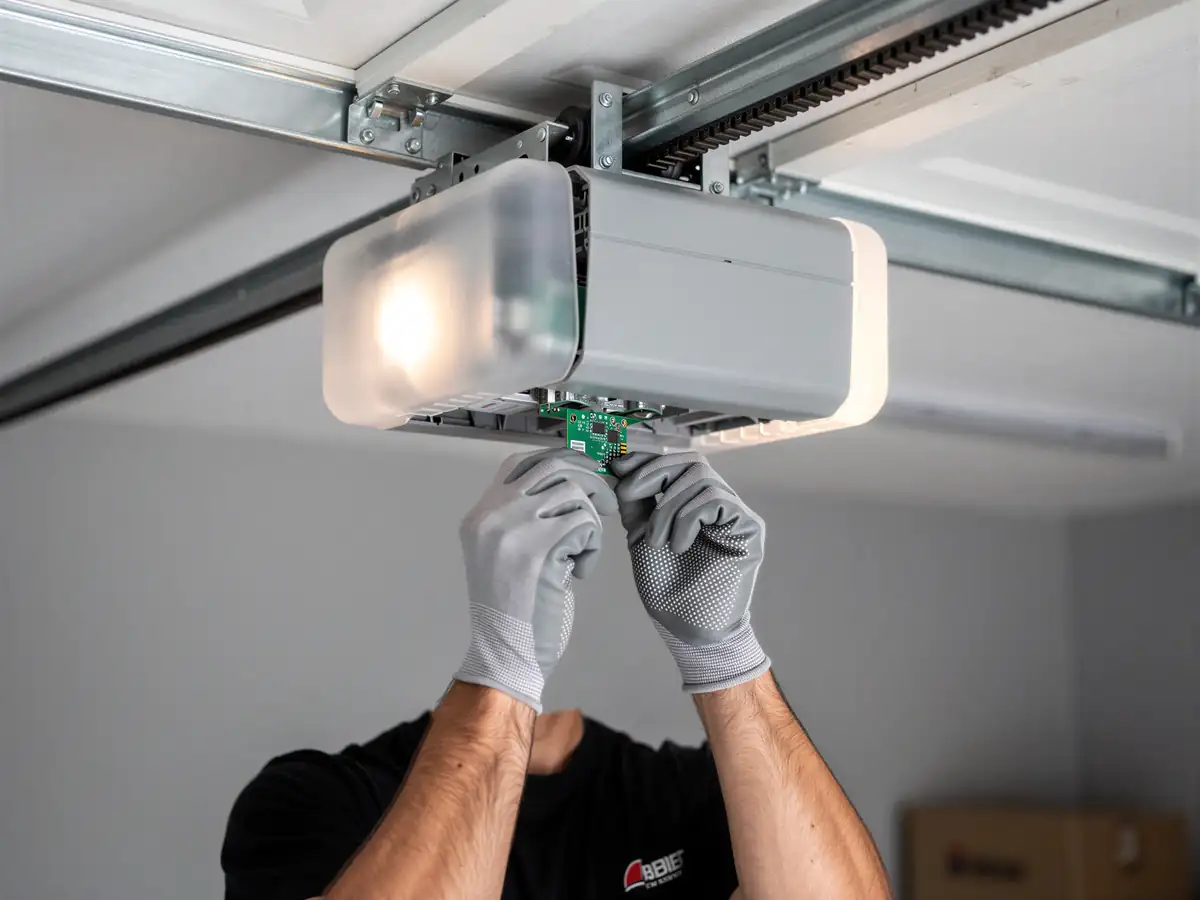
Circuit boards fail too, usually from a power surge rather than age, and on older units the replacement board may not match the current remote frequency, which means a remote swap at the same time. Safety sensor misalignment is its own category - not a broken part, just two eyes that no longer point at each other, often because the bracket shifted as the slab settled.
Wall stations wear out from button presses over the years; the switch inside fails long before the housing looks bad. And on any opener this old, the chain or belt itself stretches or frays, which throws off the travel limits even when the motor is fine.
One thing we won't do is force a fix that isn't there. If the gear housing is cracked or the motor windings are gone, we'll say so rather than patch around it.
What You Are Seeing
If the opener runs
You hear the motor, maybe see the light - but the door doesn't move, that's almost always the drive gear or a snapped chain, not a dead unit. If the door starts down and reverses partway, check the sensors at the bottom of the tracks; a spider web or a nudge from a bike is enough to throw the alignment off.
A motor that hums for a second and then stops is usually a capacitor on its way out, not a burned-out motor
Those are two different repairs with two different price points. Flickering opener lights or a remote that works from ten feet but not from the driveway often points to a logic board losing its memory of paired remotes, especially after a power blip.
Grinding or slow travel on cold mornings
Paired with normal speed once the garage warms up, usually means the chain or belt has stiffened overnight rather than failed outright - worth mentioning when you call, since it changes what we check first.
The Cost of This Job
We don't publish a flat price here because openers fail in different ways and the fix ranges from a ten-minute sensor realignment to a full unit swap. What we can say is how we think about it for a town like this one. Household income in Ladonia runs lower than the wider service area - $52,045 here against $73,654 across the area we cover - and that gap shapes the advice we give. We lean toward repair first: a gear kit, a capacitor, a board, rather than jumping straight to full replacement when the motor housing and rail are still sound.
The honest limitation: if your opener is an older or less common model, the exact replacement board or gear kit sometimes isn't something we carry on the truck, and we may need a day or two to get the right part rather than force a mismatched one in. We'd rather order the correct part than install something that'll fail again in six months.
Replacement makes more sense than repair once the motor housing is cracked, the rail is bent, or the unit is simply past the point where parts exist for it at all.
What Is on the Truck
Given how many openers out this way are running on original or second-generation hardware, the truck carries what fits that stock: safety sensor pairs, universal logic boards, start capacitors, drive gear kits for the common chain-drive models, and a stock of chains and belts in standard lengths. We also carry remotes and wall stations that pair across most brands, since matching a 1990s remote to a new board is routine out here.
With the mild-freeze climate, we carry the right grade of lubricant for cold-morning stiffness rather than a one-size grease that gums up in summer heat.
The limit: we're driving the six miles out from Columbus, not running a branch in Ladonia, so if a job calls for a part we don't stock - an obsolete logic board for a long-discontinued model, say - we'll tell you on the spot rather than guess, and we'll get it ordered.
How to Book
Call and describe what the opener is doing
Motor runs but door won't move, lights blink, remote works close but not far, door reverses before it touches the floor. That tells us what to load before we're six miles down the road, which saves a second trip if the first diagnosis needs a part we didn't bring.
We cover Ladonia as part of the wider area worked out of Columbus
See the service area page for what's included, or the Columbus opener repair page for the full rundown of what we handle across the shop.