Why It Happens Here
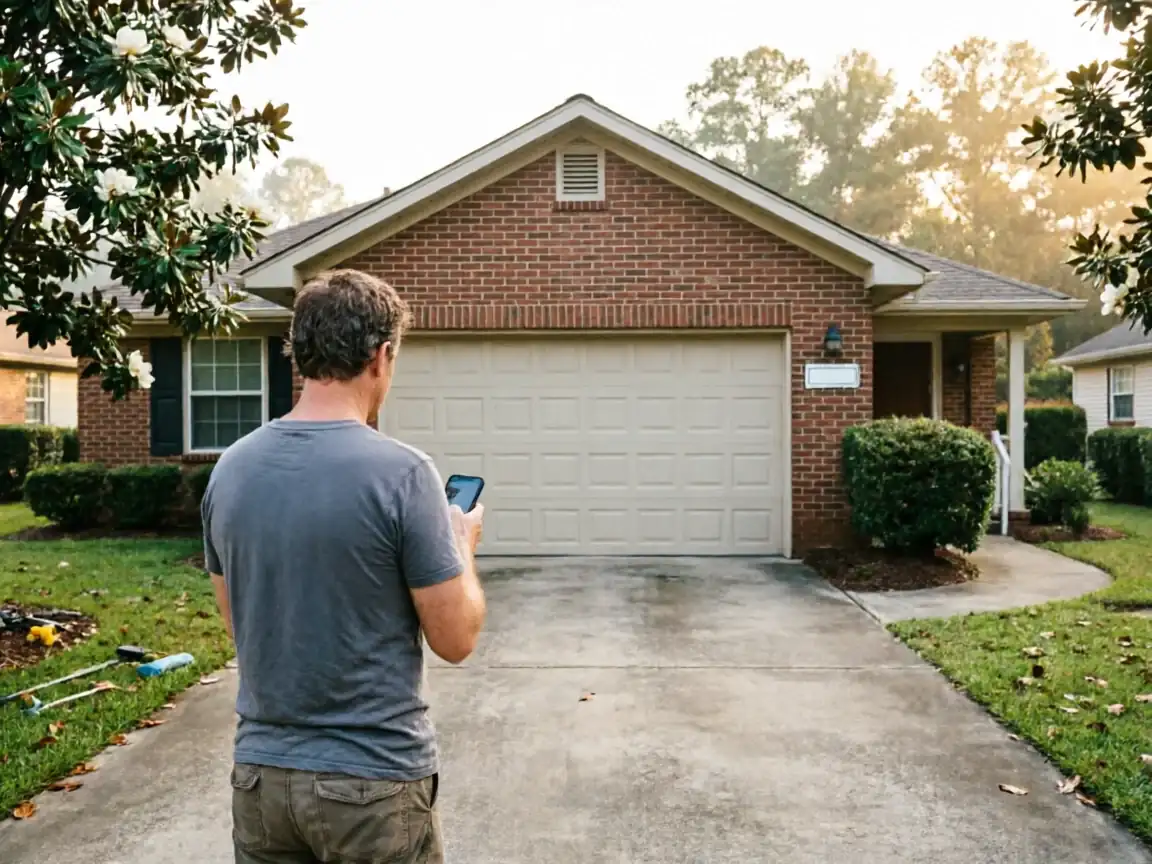
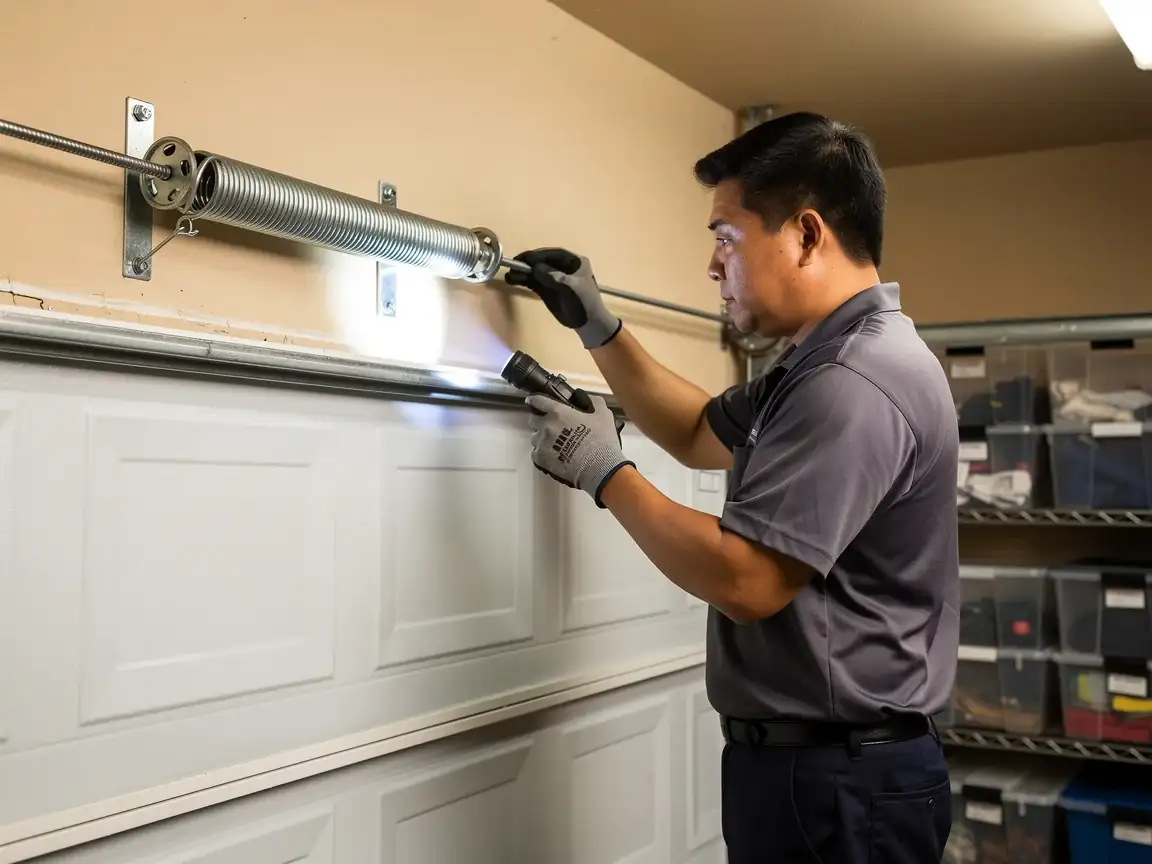
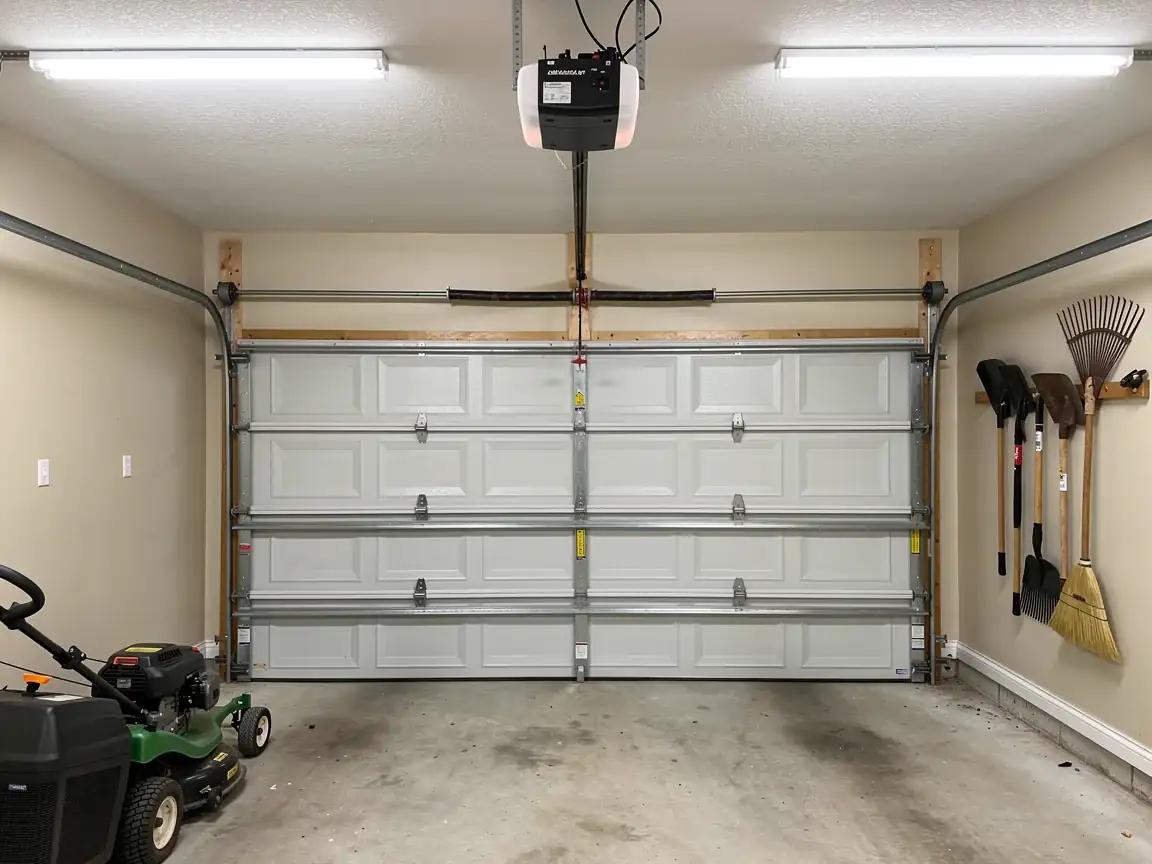
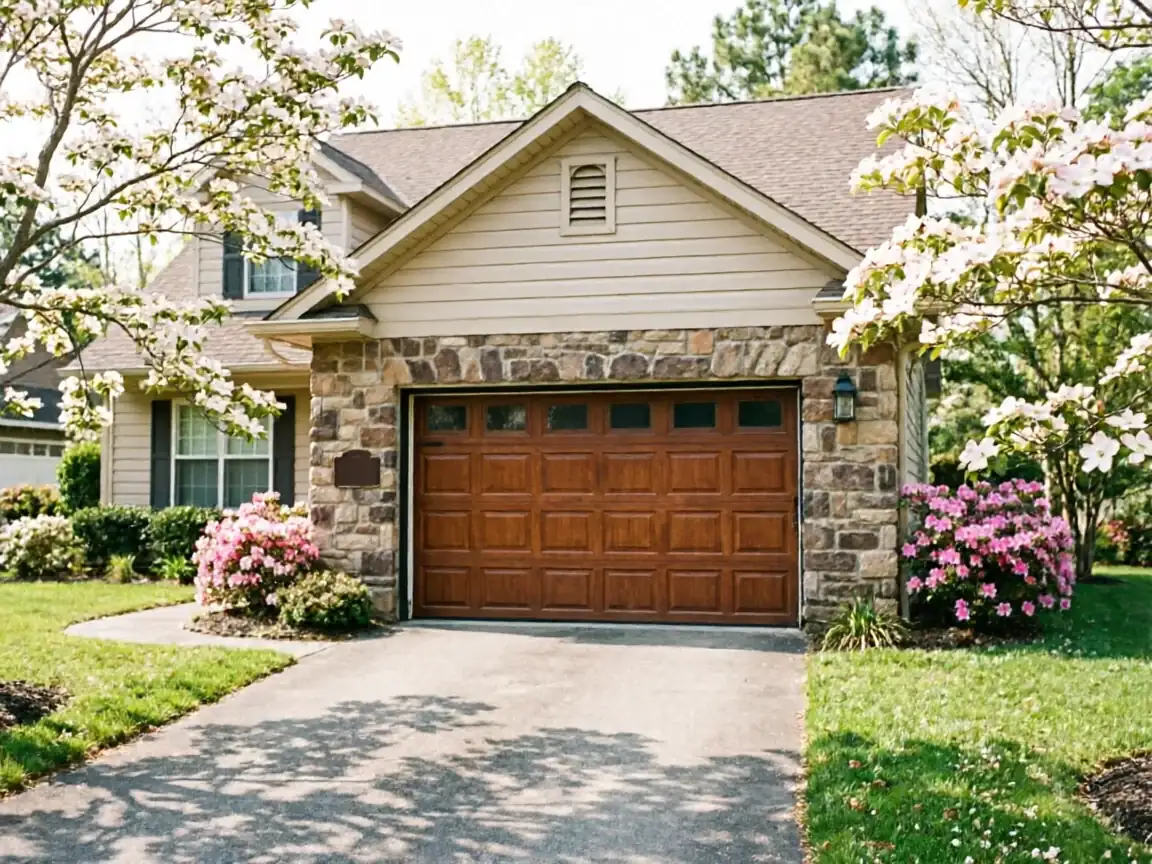
Most of the houses we work on across the wider Columbus service area went up between 1972 and 2011, with the typical home dating to around 1991. Hamilton skews younger - its housing stock centers closer to 2011 itself, which means a lot of the doors and openers we see out here are a full generation newer than what we pull parts for in older pockets of the service area. That matters for the job. A 1991 door usually means a steel section door on a torsion spring that's been re-wound once or twice and an opener that's had at least one logic board swapped. A 2011-era door more often means a factory-insulated panel, a belt-drive opener with a safety-reversal sensor pair, and hardware that's still under its original spec rather than a field retrofit. The failures skew different too - newer installs tend to fail at the opener electronics or the photo-eye alignment before the spring ever goes, while older doors fail at the spring and the drum first. We also work the mild, occasional-freeze climate common to this part of the state, so condensation on steel panels and track binding after a cold snap show up here the same as everywhere else we go, just on younger equipment. None of that changes how we diagnose it - it changes which parts we bring on the truck.
How to Book
We cover Hamilton from our Columbus base, about 18 miles out. There's no local branch here - a technician drives in for the job, so booking ahead matters more than it would somewhere with a depot around the corner. Tell us the door's approximate age if you know it (post-2011 builds are common here) and whether the opener or the door itself is the problem; that helps us load the right spring size and opener parts before we leave Columbus instead of discovering what's needed once we're on site. You can request service through our service area page for Hamilton or call in. We don't publish a guaranteed arrival window for outlying stops like this one - we'll give you a realistic estimate when you call based on the day's schedule.
What You Are Seeing
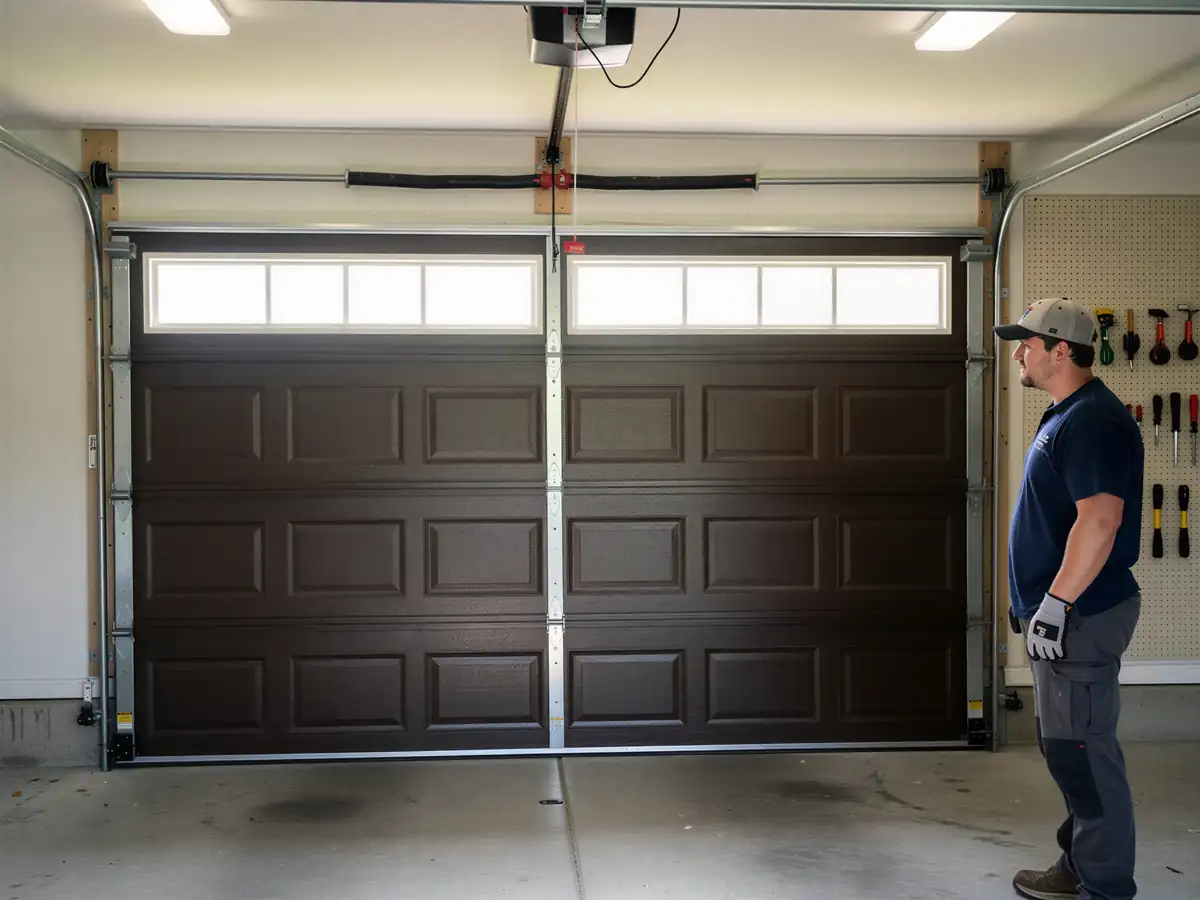
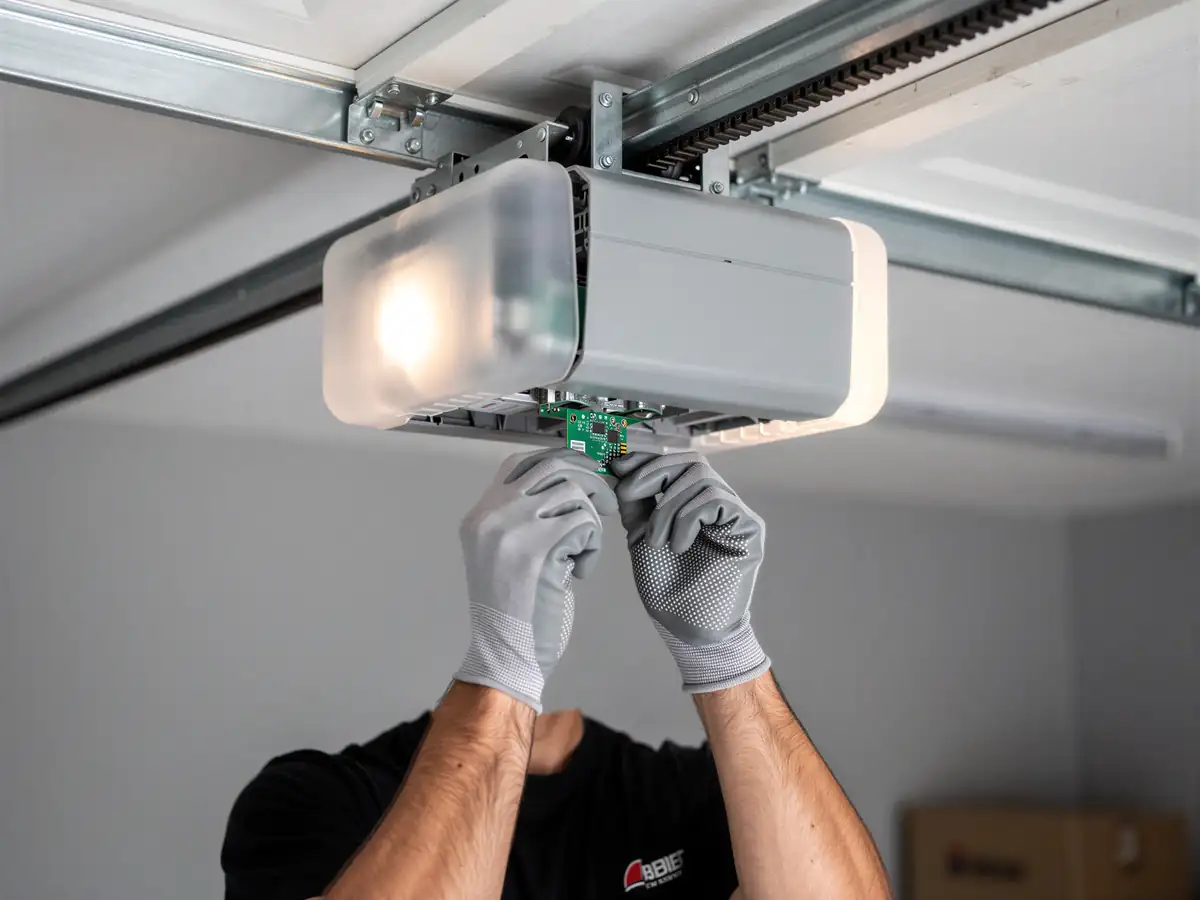
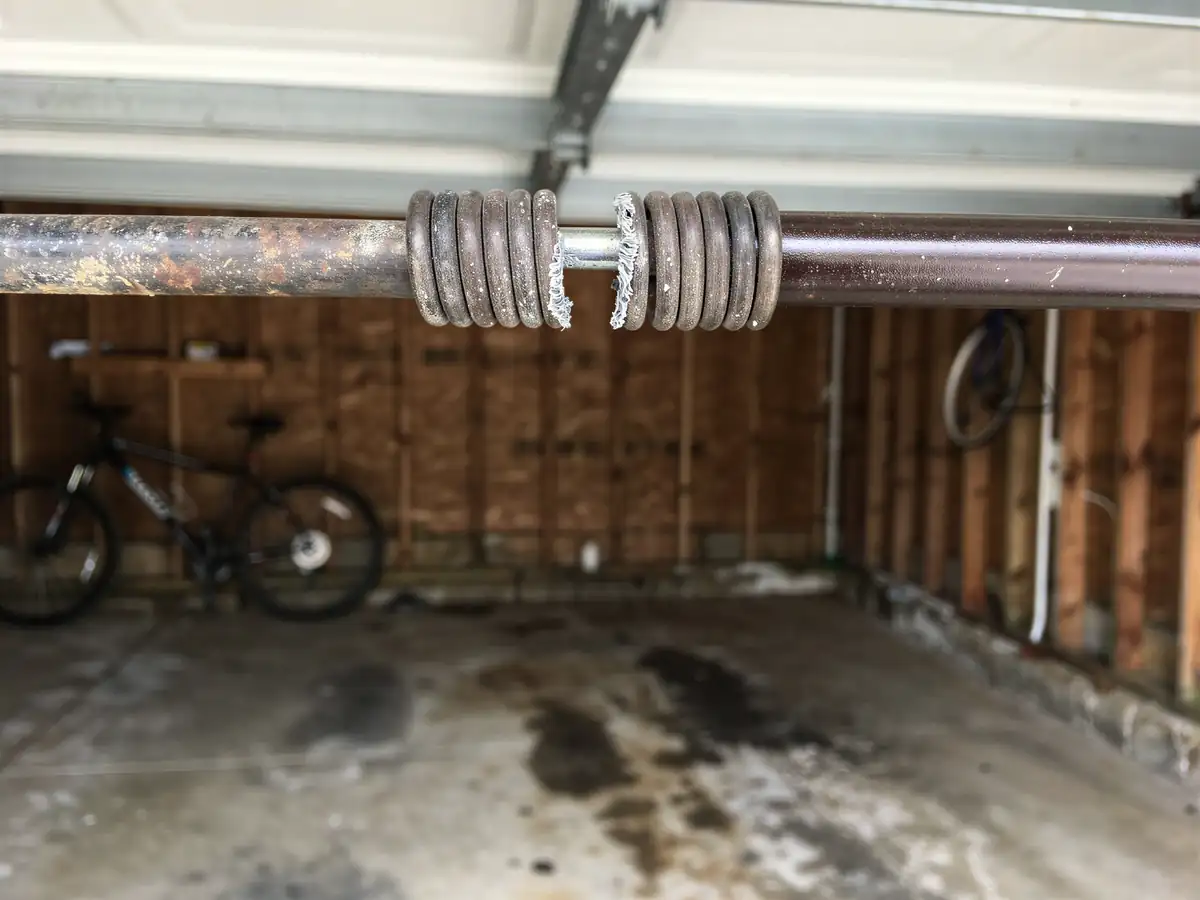
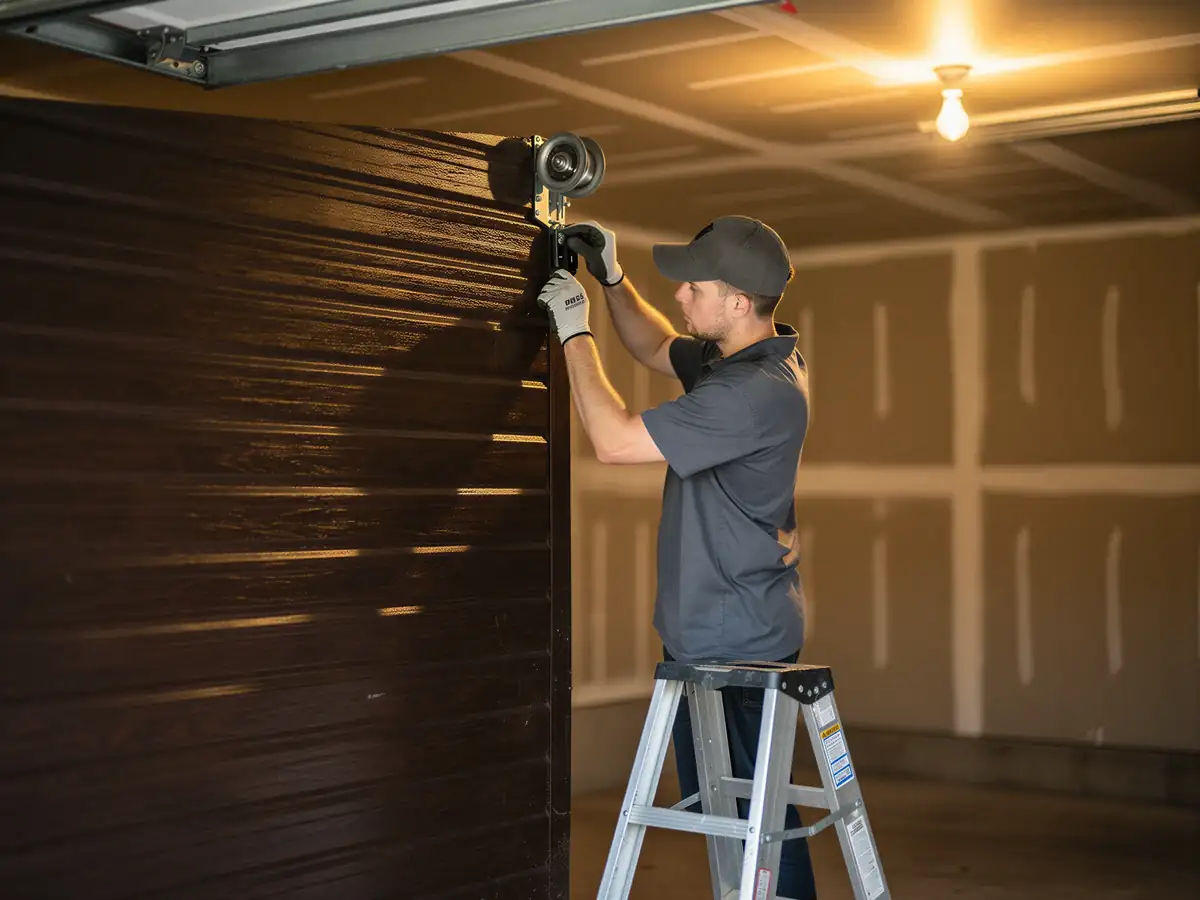
If your door is newer - built with the house sometime after the early 2010s - the complaints we hear most are an opener that reverses for no visible reason (usually a photo-eye that's drifted out of alignment, not a safety defect), a remote that stopped working after a power blip, or a door that runs but makes a new grinding noise at one roller. These are opener and sensor problems more than spring problems, which is the opposite of what we see in older sections of the service area. True spring failure - the door won't lift, or it slams down - still happens here, it's just less common on a system this young unless the spring was undersized or the door's been cycled hard for over a decade already. Track binding after a cold snap shows up regardless of door age, since that's a climate issue, not a hardware-era one.
Doing It Yourself
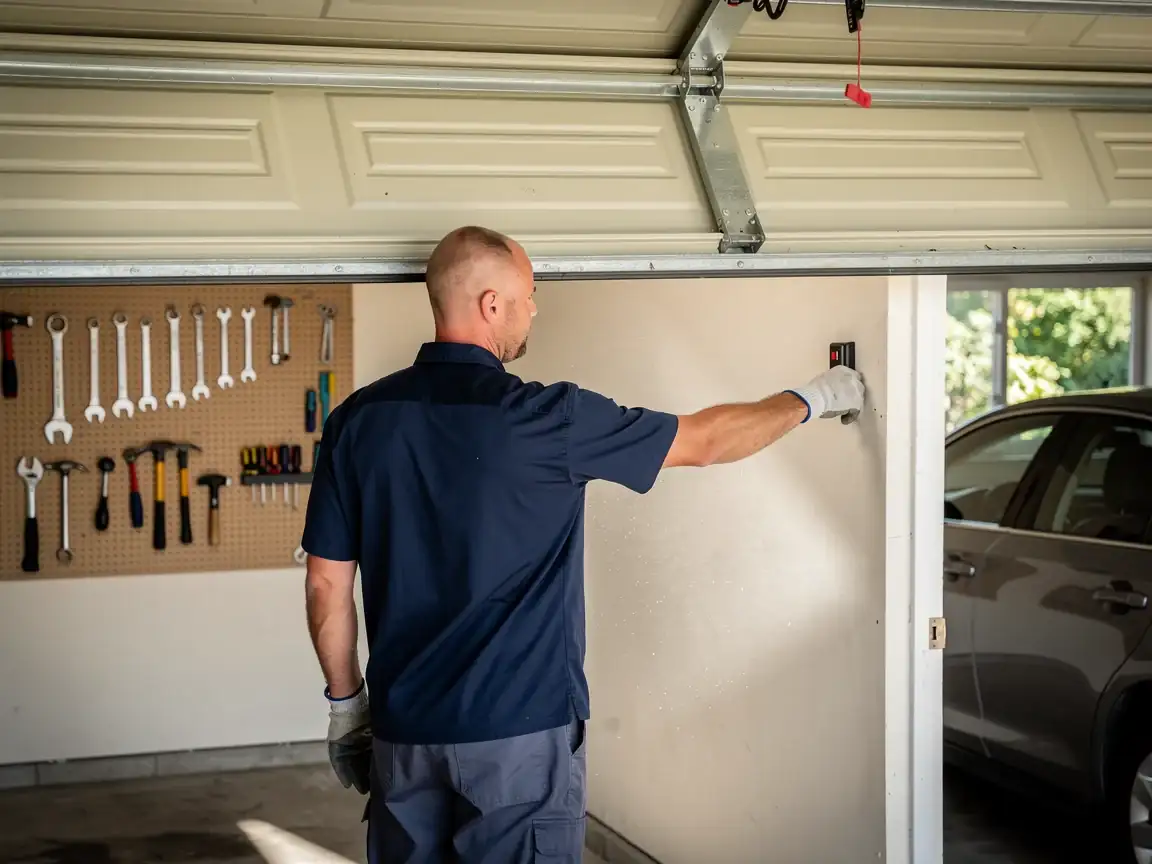
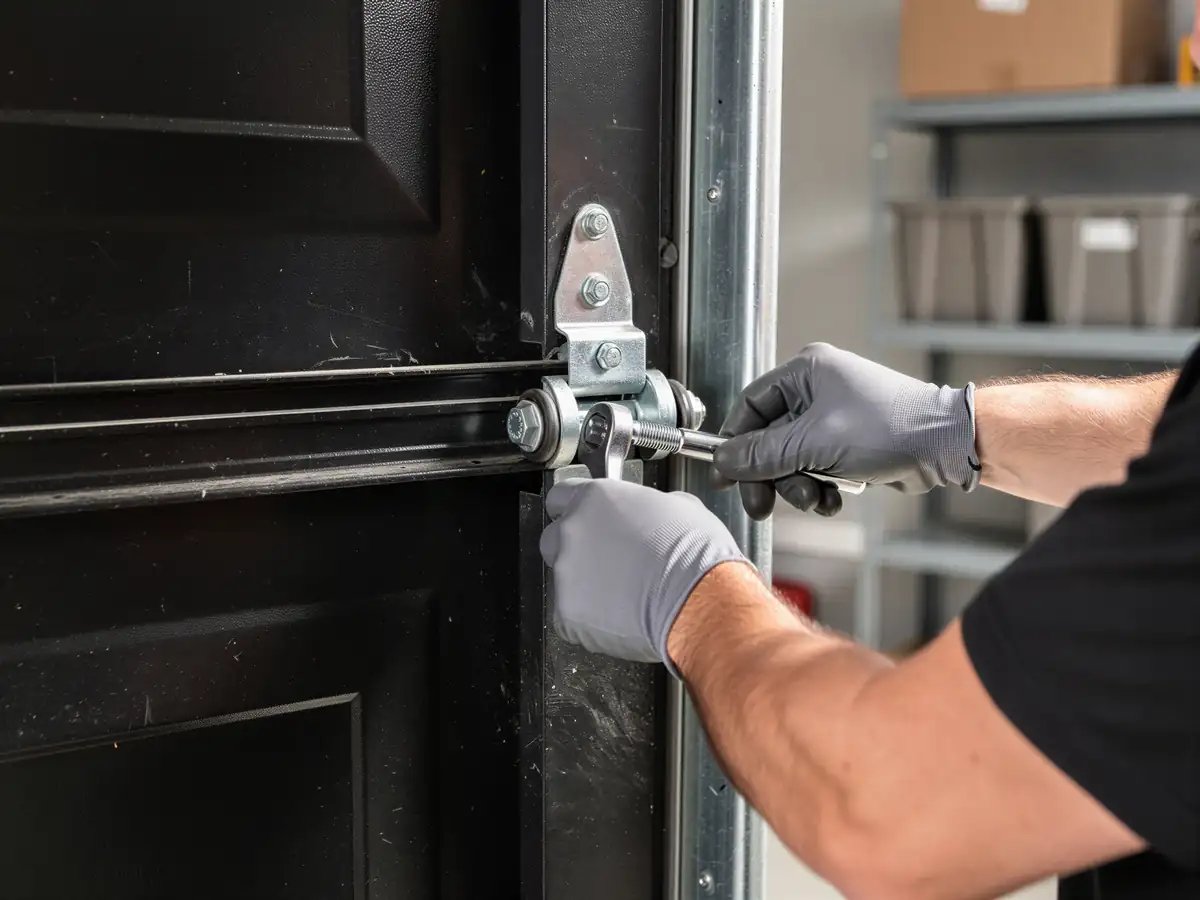
Photo-eye misalignment is the one thing worth checking yourself before you call: the two sensors near the floor on each track need to line up exactly, and a bumped sensor is a common reason a newer opener refuses to close. A torsion spring - on any door, any age - is not a DIY repair; the spring is under enough stored tension to cause serious injury, and on a 2011-era door you're also dealing with factory-matched hardware that's easy to mismatch if you don't have the original spec. If the door is reversing, grinding, or won't close and the sensors look aligned, that's a call, not a project.