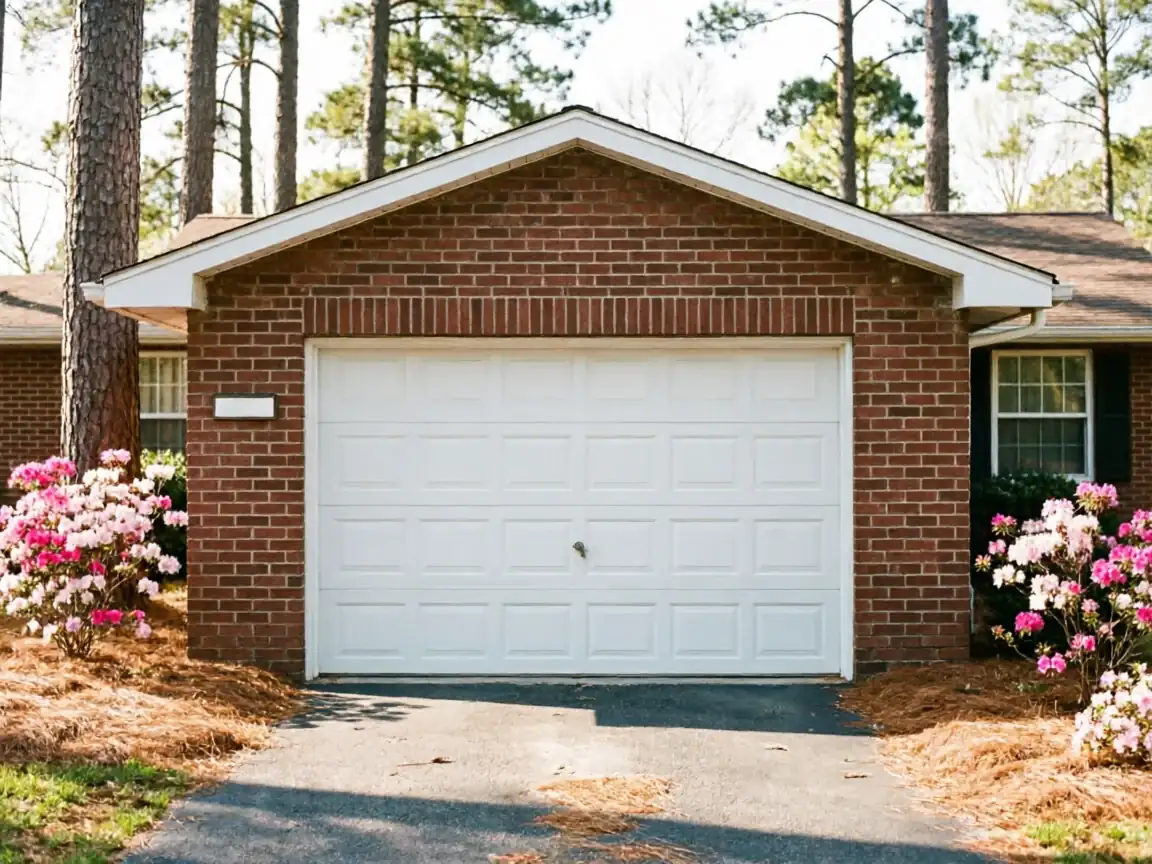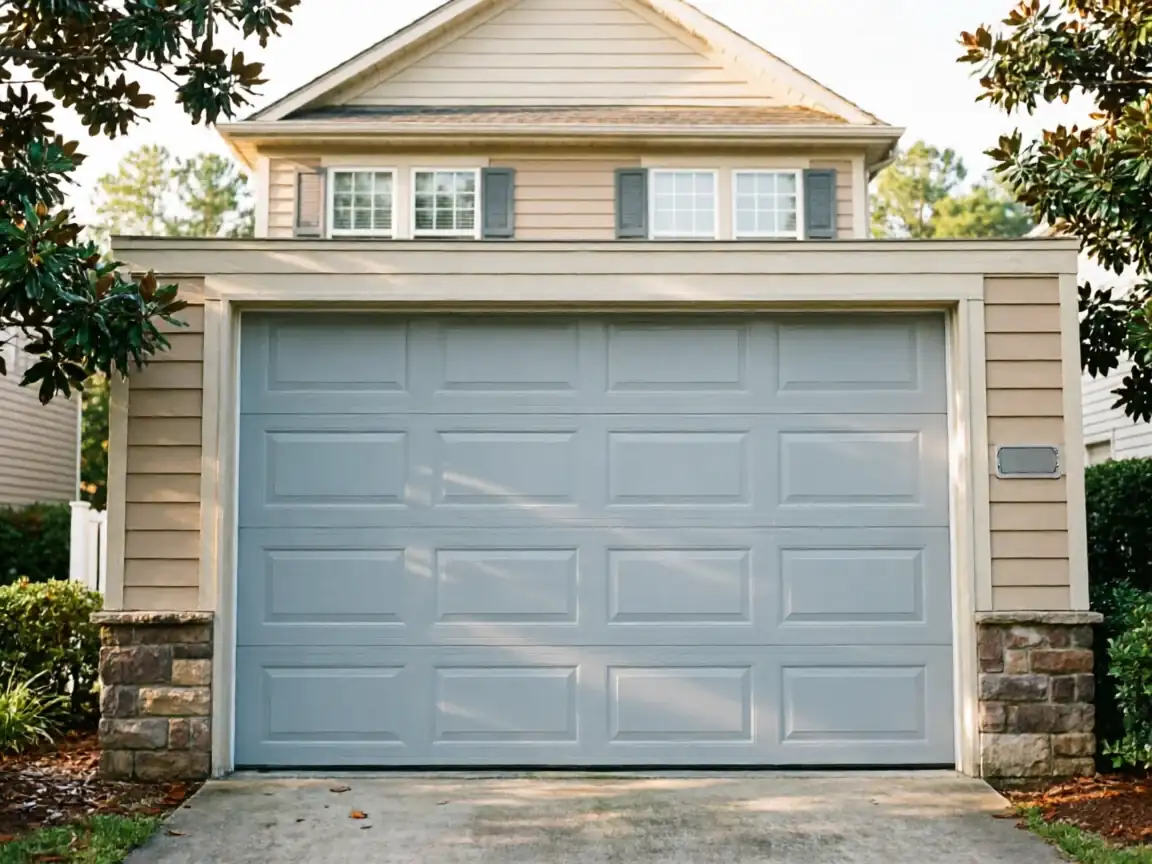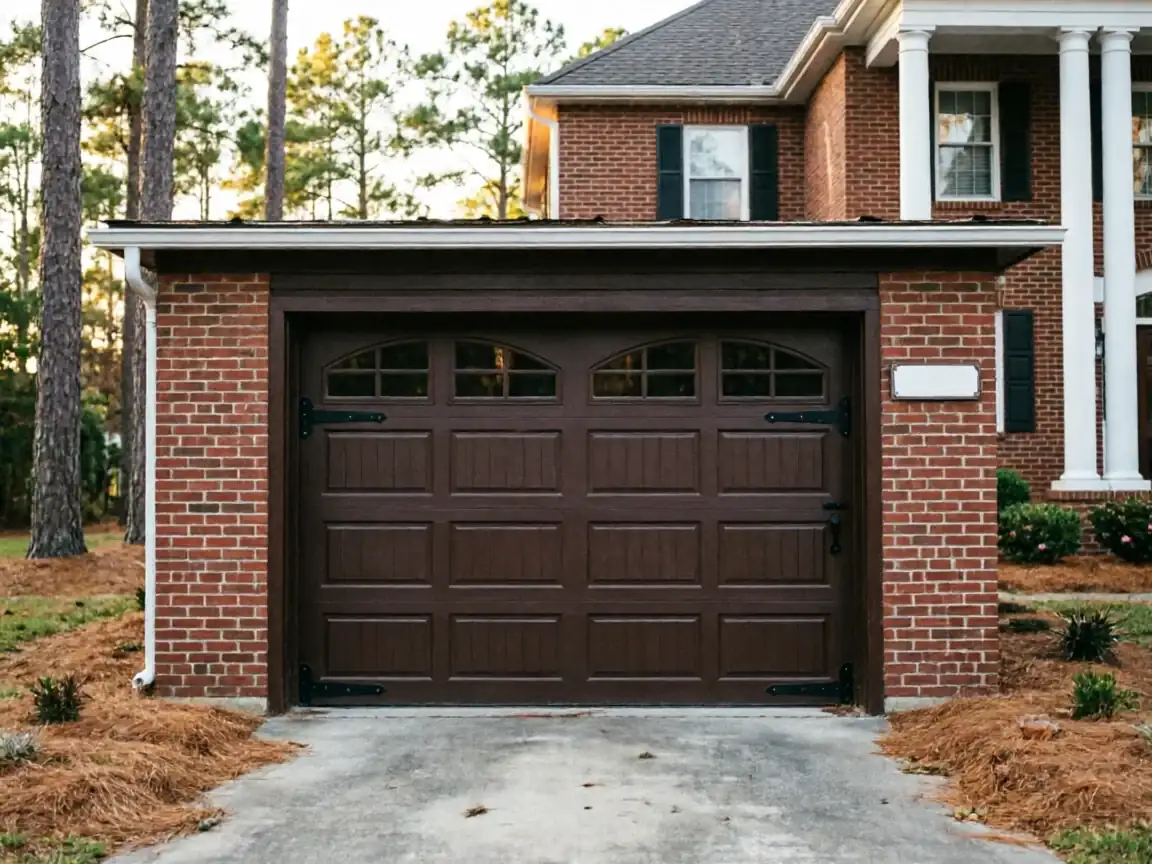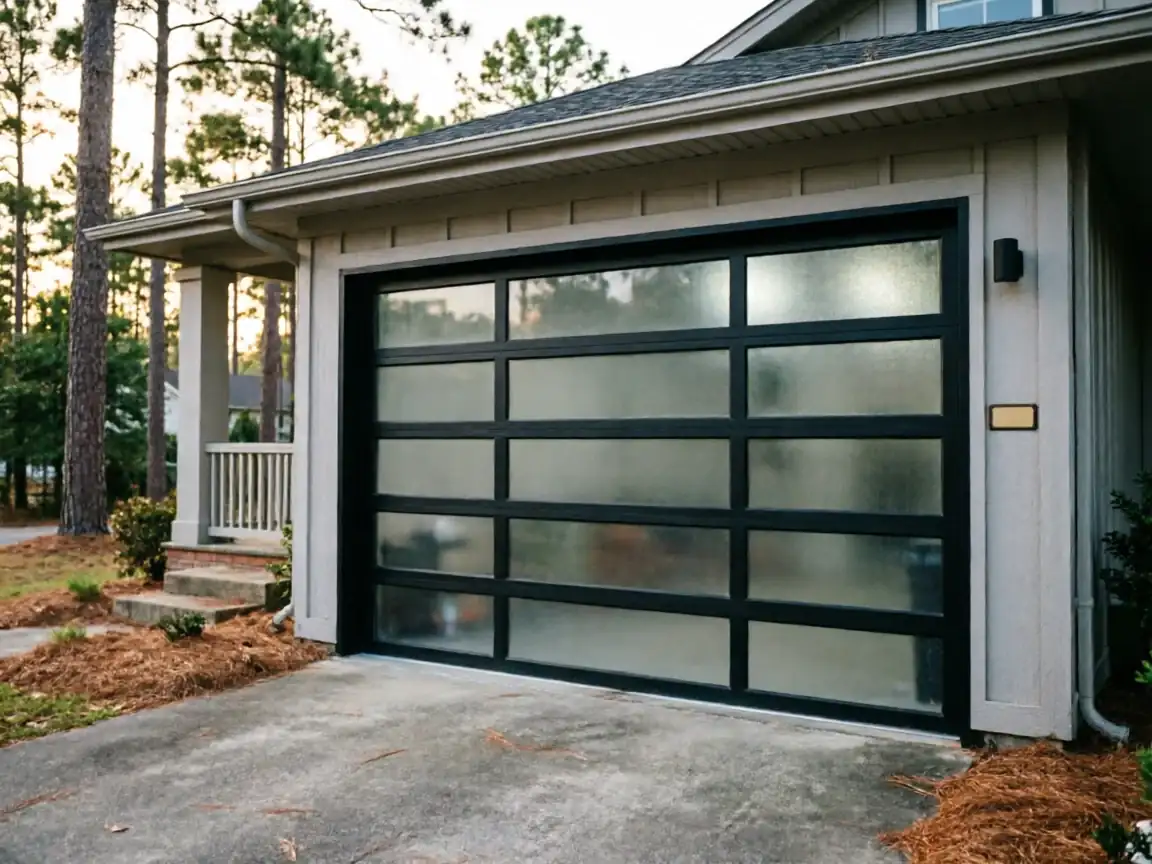
Why It Happens Here
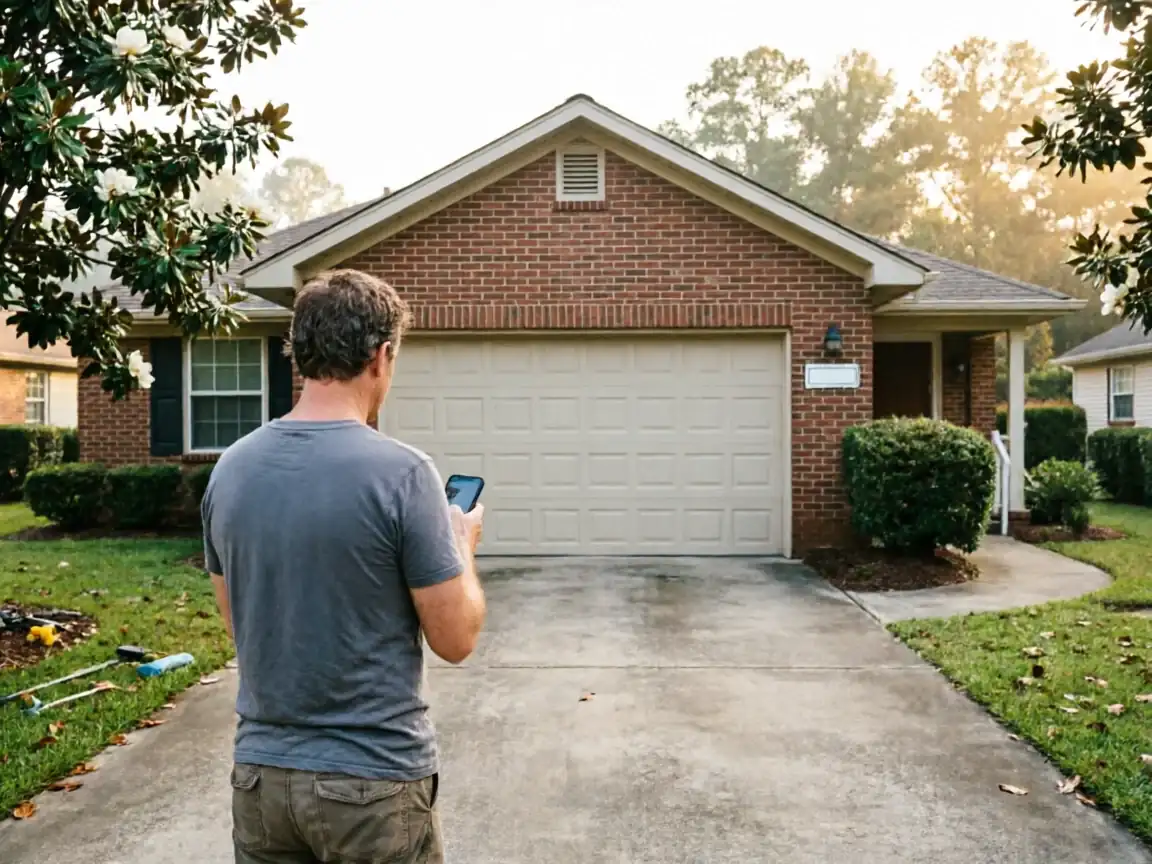
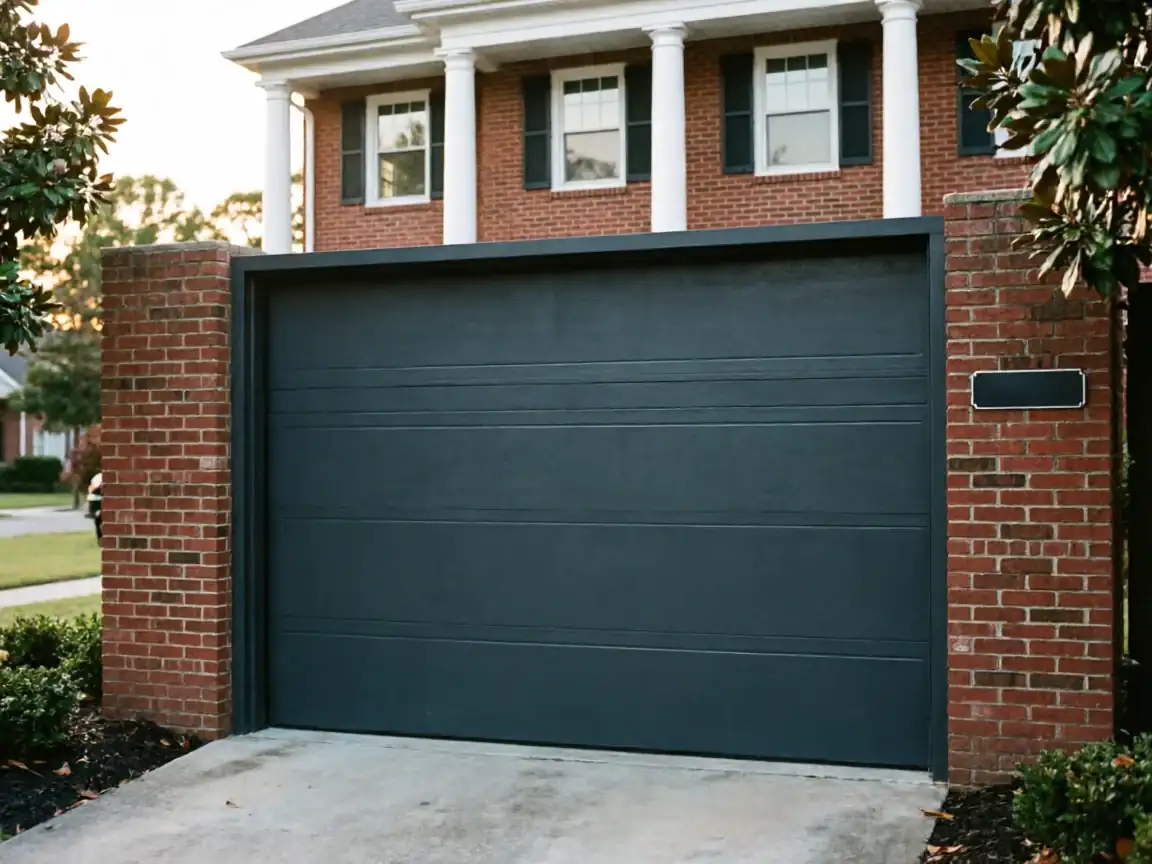
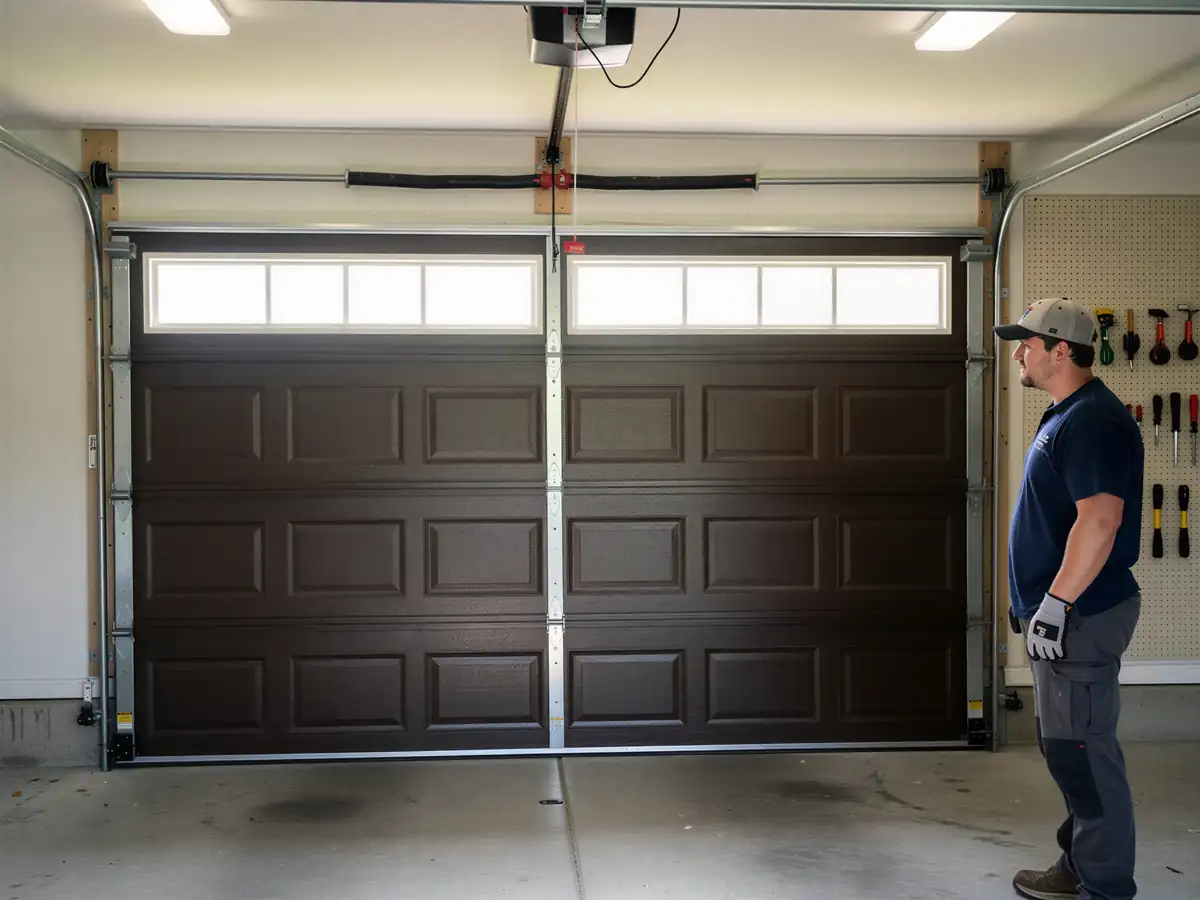
The fault we see most in Hamilton isn't rust or storm damage - it's a door that was never meant to last past its first fifteen years. Hamilton's housing stock has a median build year of 2011, newer than most of the towns we cover out of Columbus, and that matters more than people think. Builder-grade doors installed during that construction wave came with lighter-gauge steel, thinner insulation, and springs sized exactly to the weight of that one door - no more.
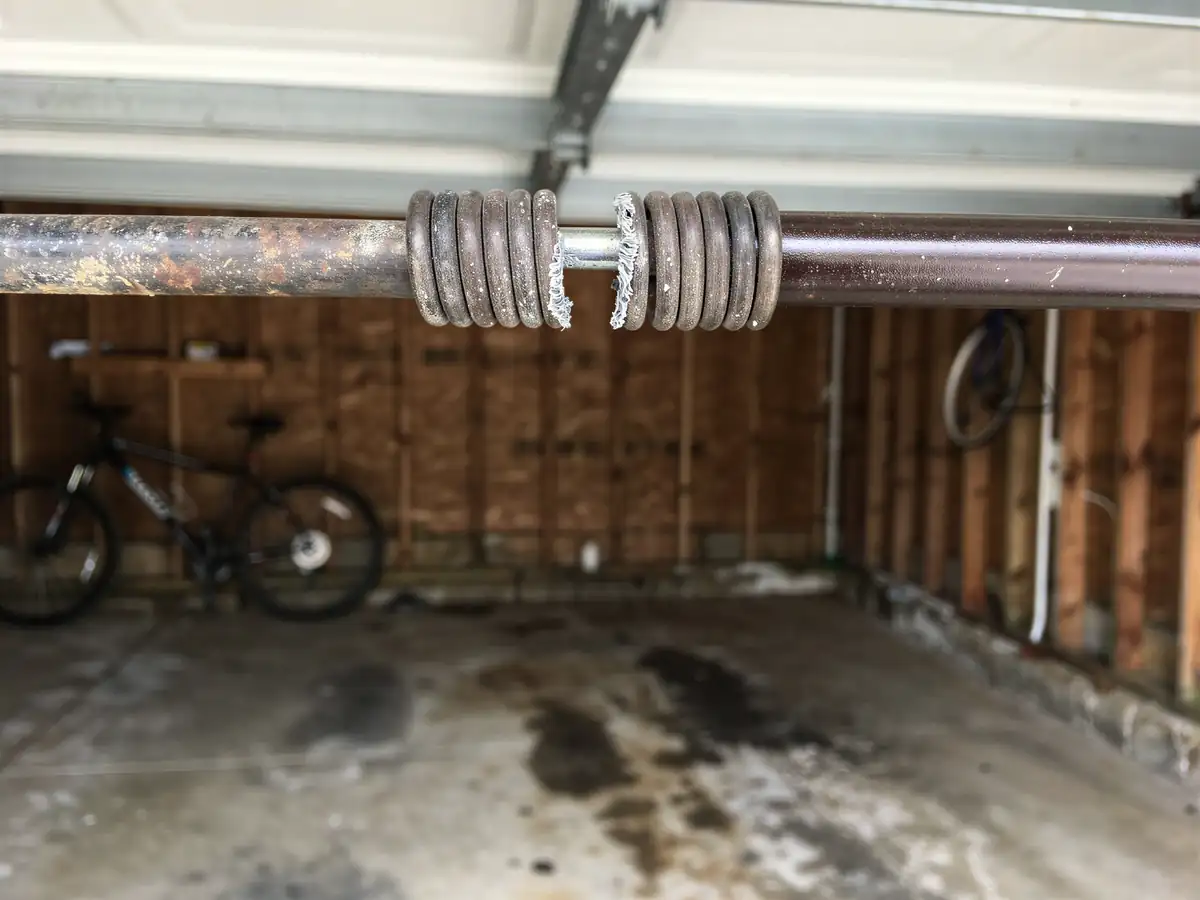
Fifteen-plus years on, those springs are at or past the end of their rated cycle count, and the factory opener that came with the house is usually on its original gearing, straining to lift a door whose torsion balance has drifted off. On an older street this would show up as a dozen small issues spread across decades. In Hamilton, with most homes built close together in time, it shows up as one issue hitting a lot of houses in the same few years - the original door and the original spring set both giving out around the same age.
How to Book
We run installs in Hamilton out of our Columbus crew - there's no branch or yard in town, so every job here is booked ahead and traveled to, about 18 miles each way. That means we don't do same-hour walk-up visits; we schedule the truck, confirm your door size and opener type over the phone, and come out with the door and hardware already matched to the job.
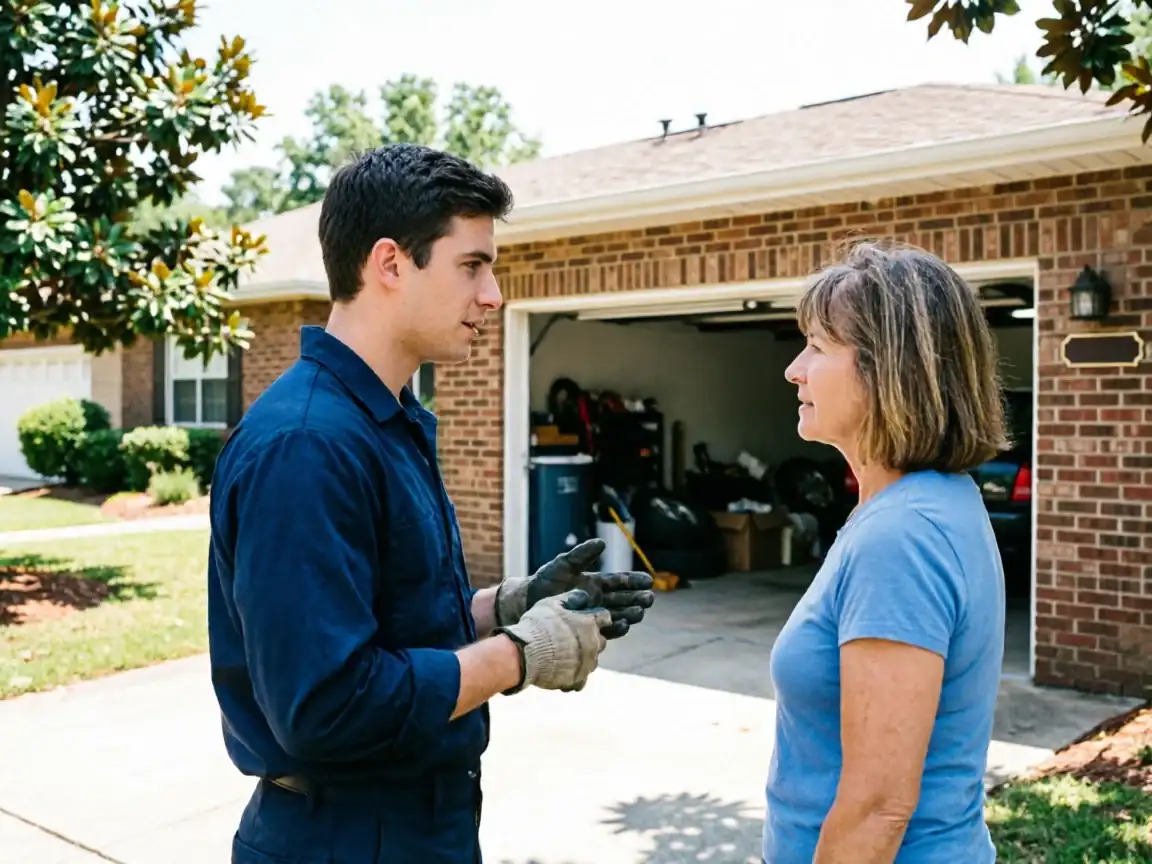
Give us the age of the house if you know it and whether the opener still works - that's usually enough to quote a replacement without a separate site visit for straightforward swaps. If the opening is non-standard or the framing has settled, we'll want to measure in person before we order the door. Either way, booking from Hamilton works the same as anywhere else we cover: we come to you, we don't ask you to come to us.
How Long It Takes
A standard single or double door swap on a Hamilton house
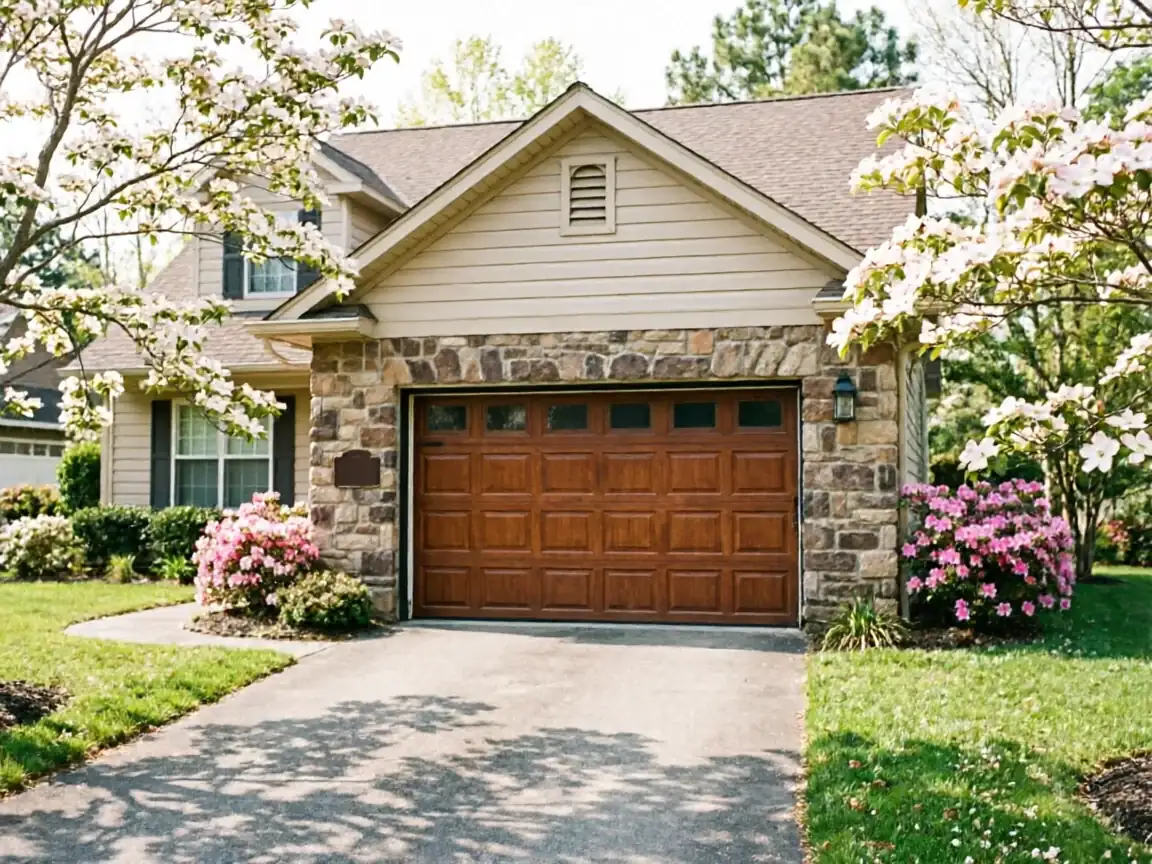
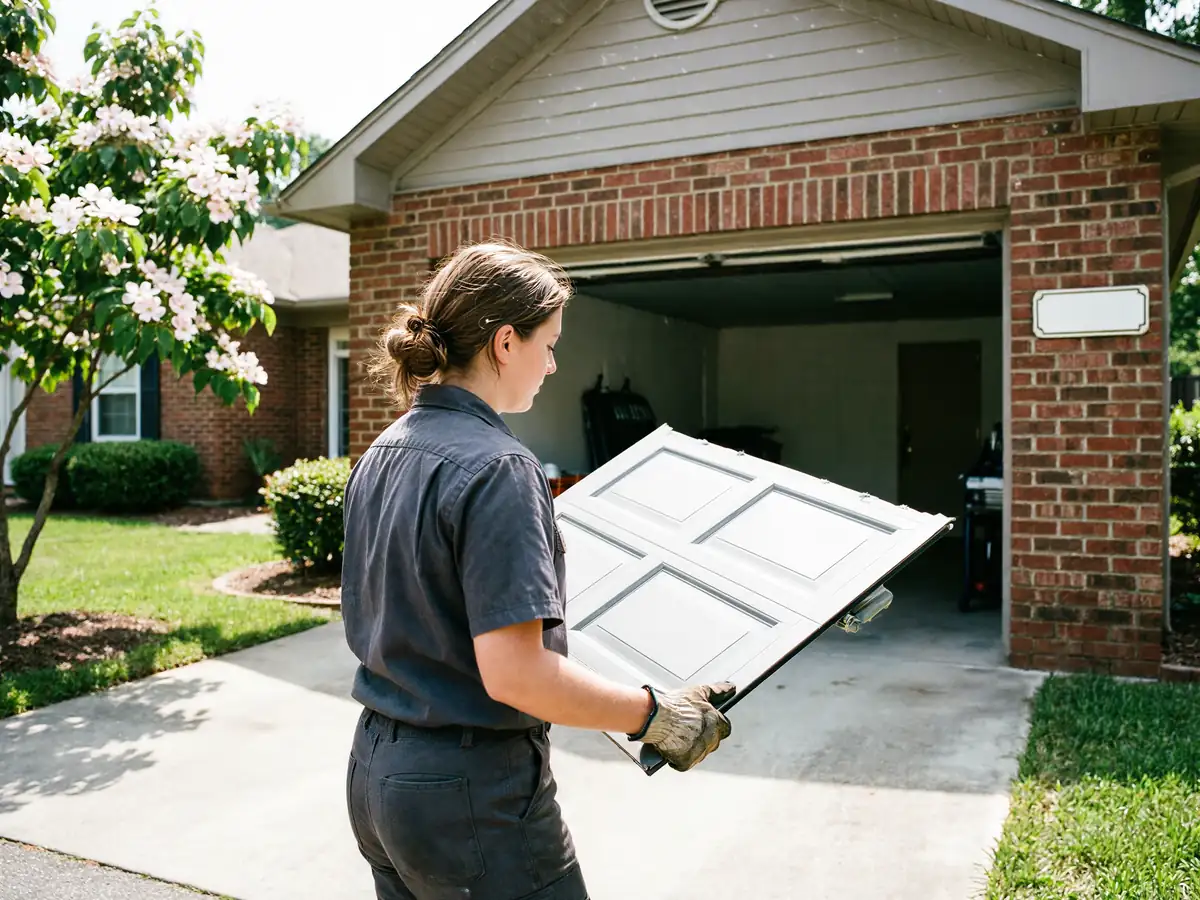
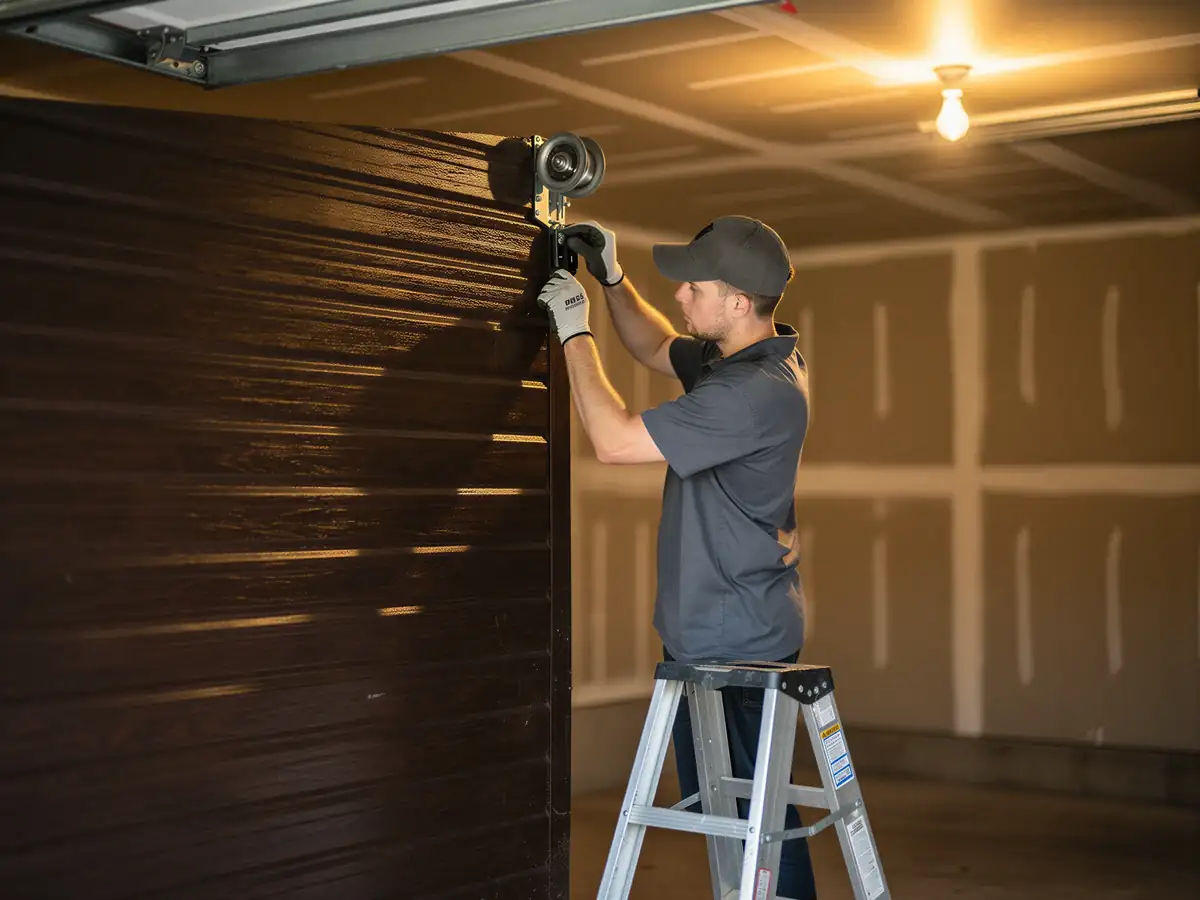
Where the opening is unchanged and we're not touching framing, is a one-visit job - the crew arrives, pulls the old door and springs, sets the new door, and balances it before they leave. The travel distance doesn't change the install itself, only the scheduling window, since we're routing the truck from Columbus rather than a yard down the street.
What adds time is custom sizing or an opening that's shifted since 2011
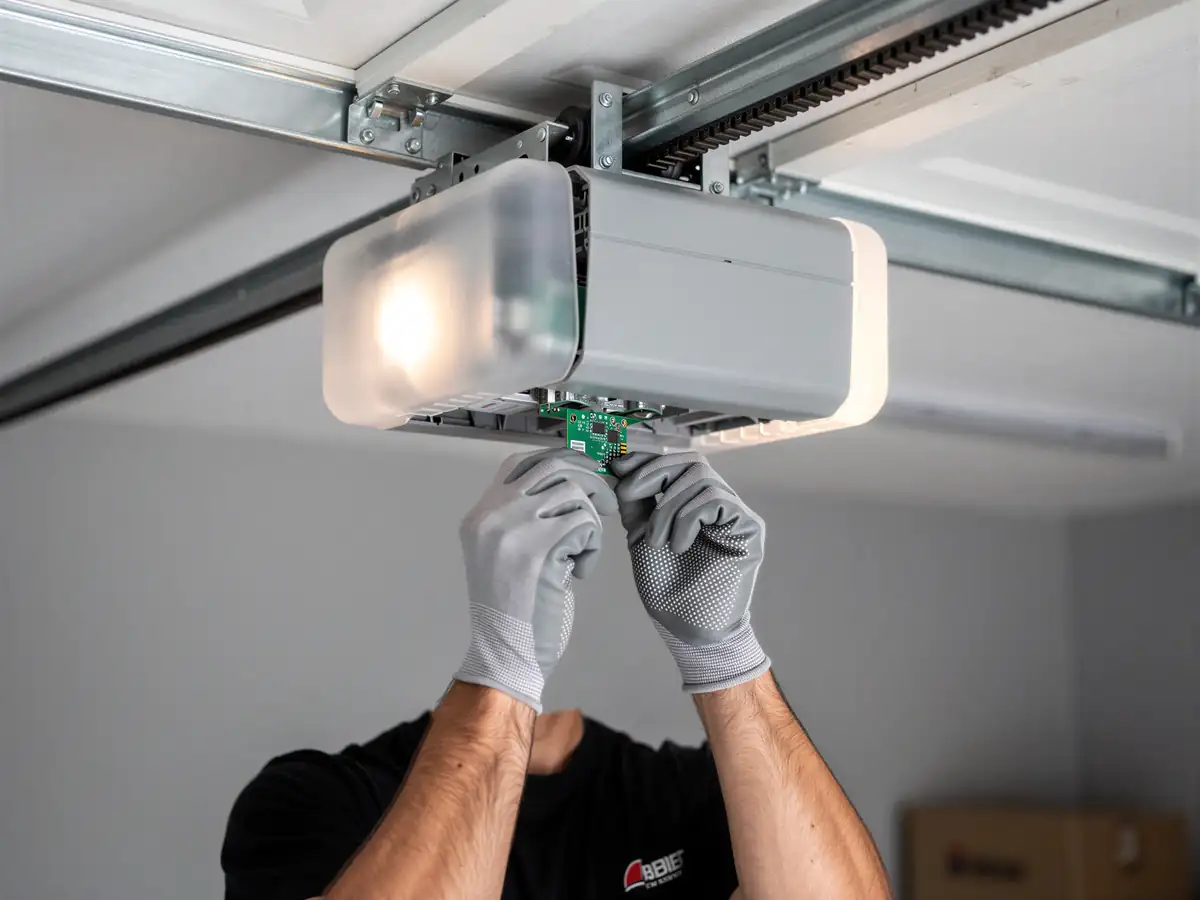
Not common on a 2011-median town, but it happens on the earlier end of that build range. If your opener is also original to the house, plan on that being replaced in the same visit rather than a separate call later, since swapping a worn opener onto a new door and then finding out the gearing's already failing is a bad use of everyone's time.
What You Are Seeing
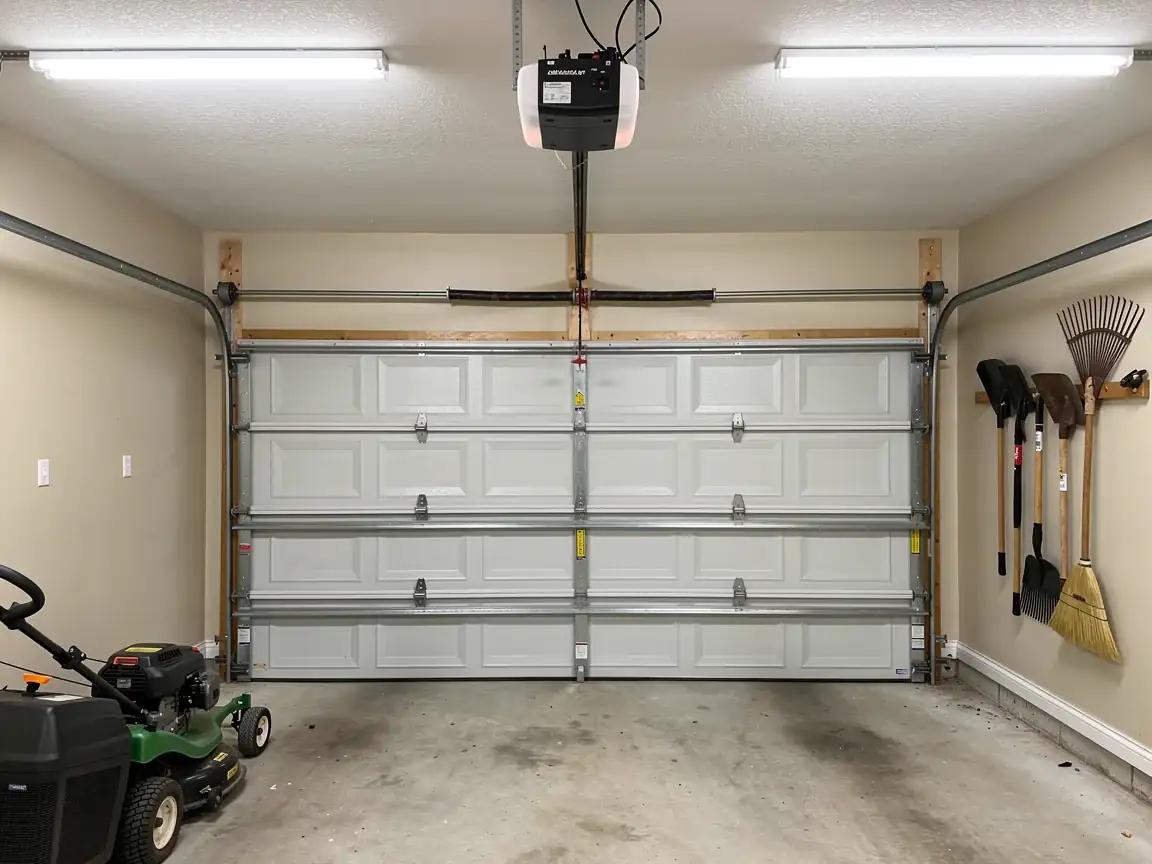
If your Hamilton house is anywhere near that 2011 median build year, here's what original equipment failing tends to look like. The door closes unevenly, dropping faster on one side as the torsion spring loses tension on just that one side. The opener strains and groans partway through the cycle instead of running smooth the whole way - that's the motor compensating for a spring that's no longer doing its share of the lift.
Panels on the original builder door often show stress dimpling near the bottom corners, where thinner steel has taken fifteen years of hinge and roller load. None of this is storm damage or misuse - it's a door built to a construction-grade spec reaching the end of what that spec was built for. Hamilton's mild climate with occasional freeze doesn't wear doors the way heat-cycling or coastal salt would elsewhere, so when we see failure out here, it's almost always age and cycle count, not weather.
Doing It Yourself
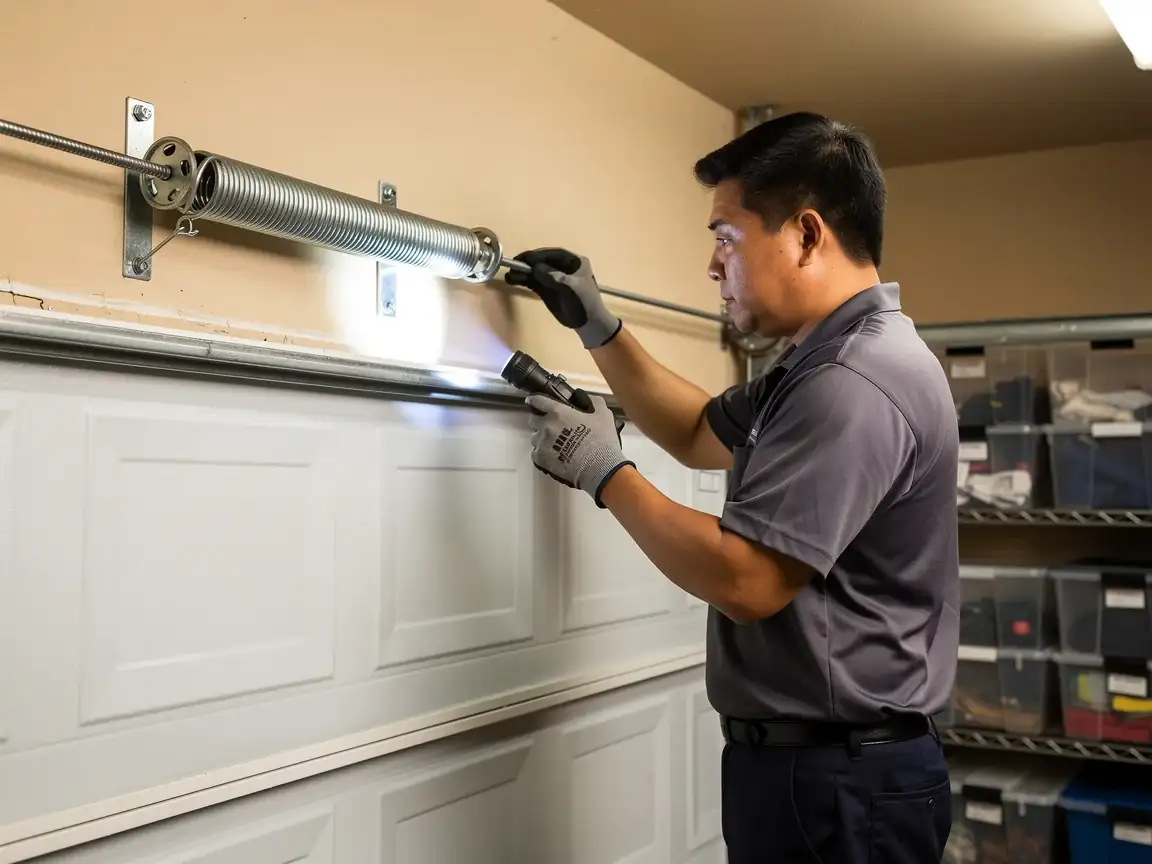
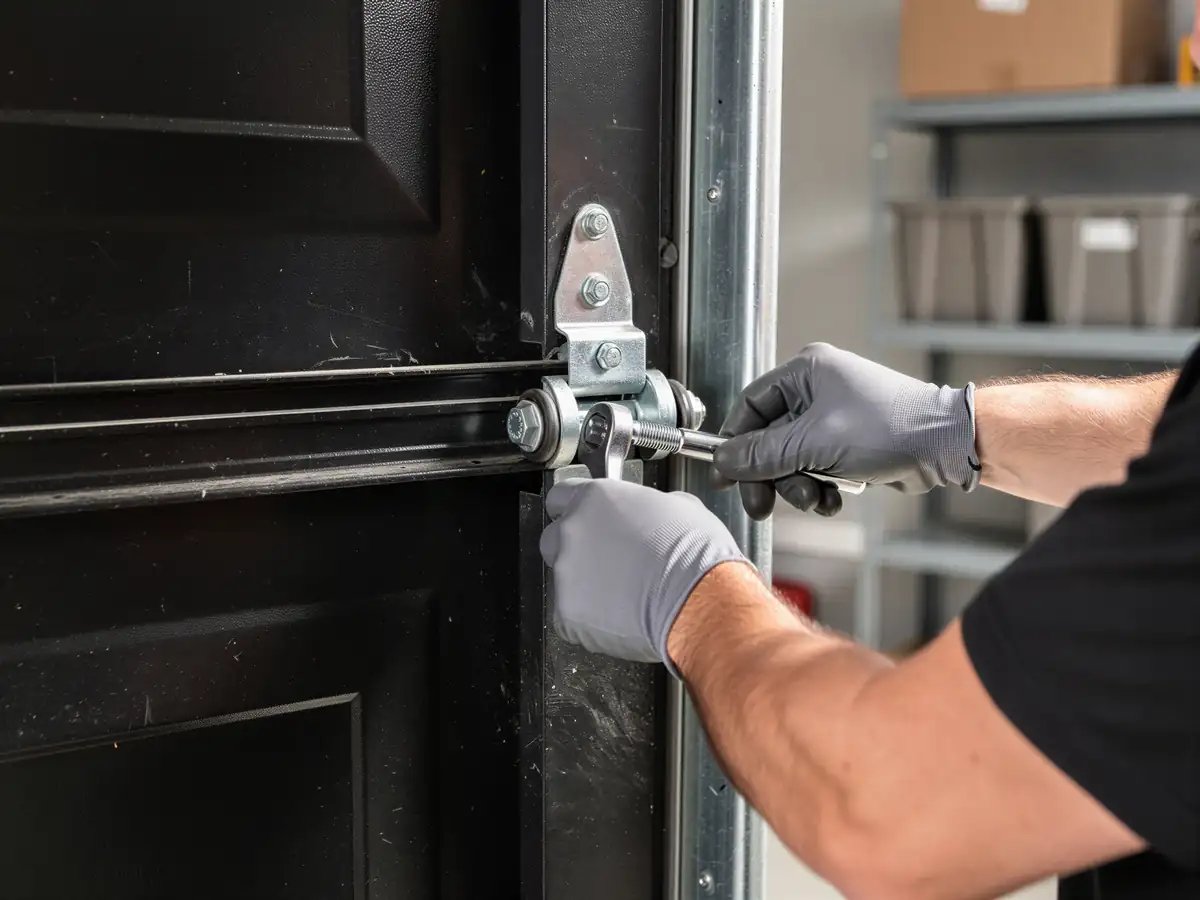
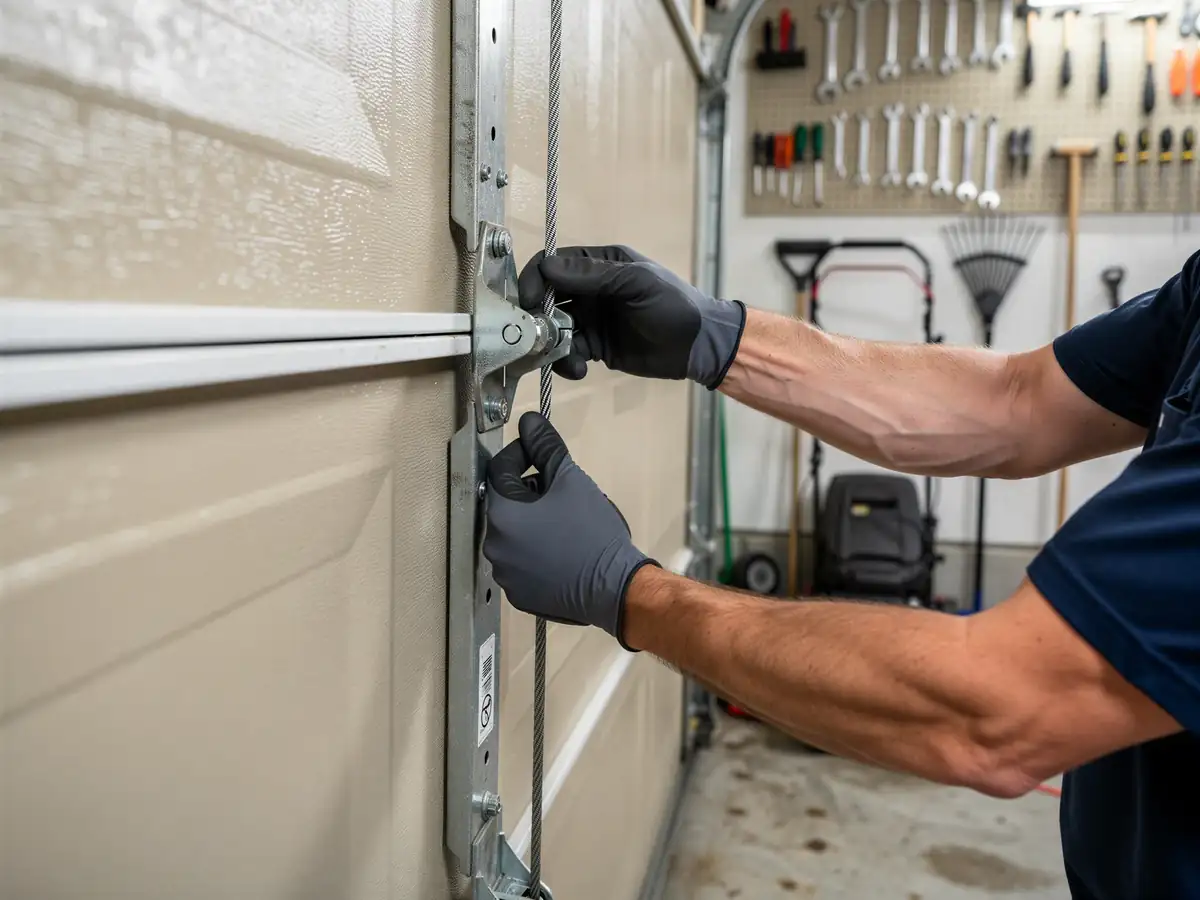
We'll say this plainly: do not touch a torsion spring yourself. A door that's old enough to be original to a 2011-built Hamilton house has a spring under enough stored tension to break a hand or worse if it's released wrong, and the tools to do it safely aren't something most homeowners keep in the garage.
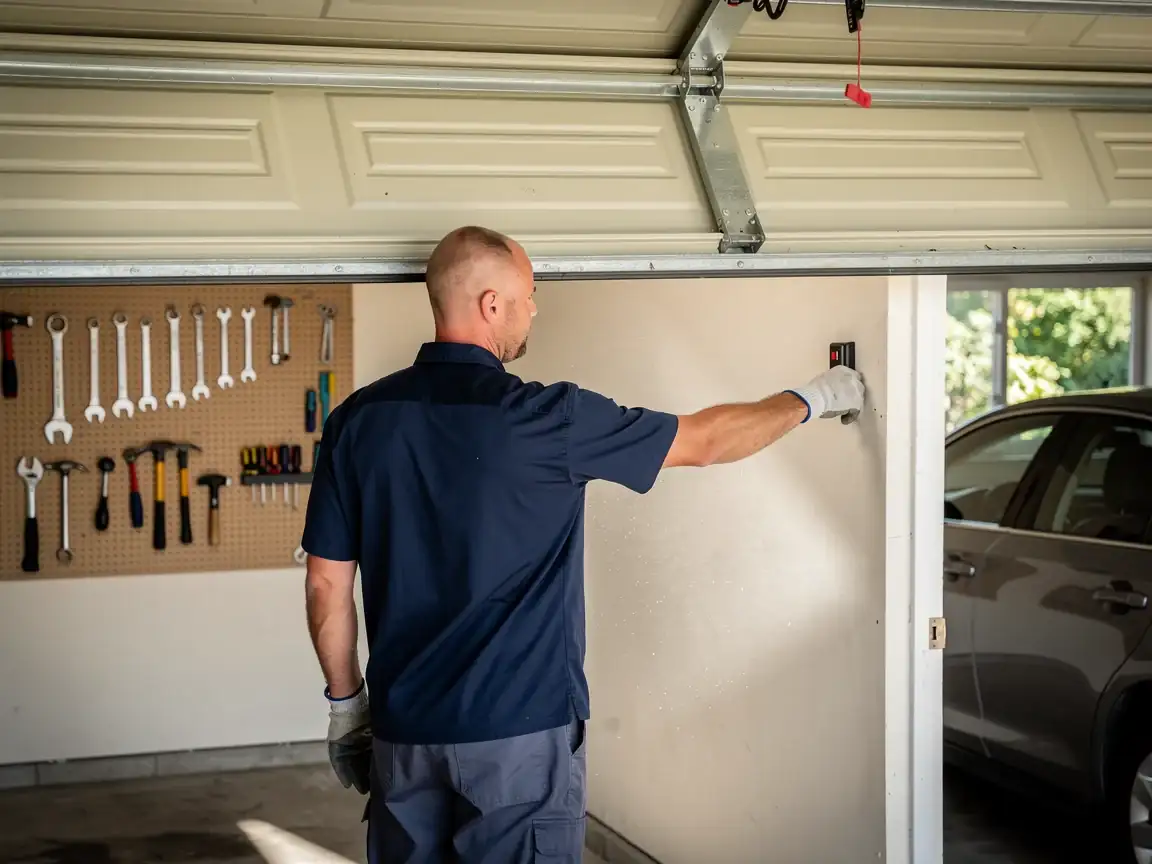
What you can reasonably do yourself is the diagnosis - listen for the strain, watch for the uneven drop, check whether the opener's safety reverse still works by setting a piece of wood under the door and running it down. That tells you whether you're looking at a spring issue, an opener issue, or both, and it's useful information to give us when you call. Past that, replacing a door and its hardware is a two-person, right-tool job, and a door hung wrong is worse than the door you started with.